Quick Answer
Gen Z did not abandon theaters; they saved the summer box office. See what is driving record Gen Z moviegoing and what it means for brand marketers.
What Actually Happened at the Box Office This Summer?
For years, the assumption in Hollywood was that Gen Z had traded the movie theater for a ninety-second recap on TikTok. Summer 2026 says otherwise.
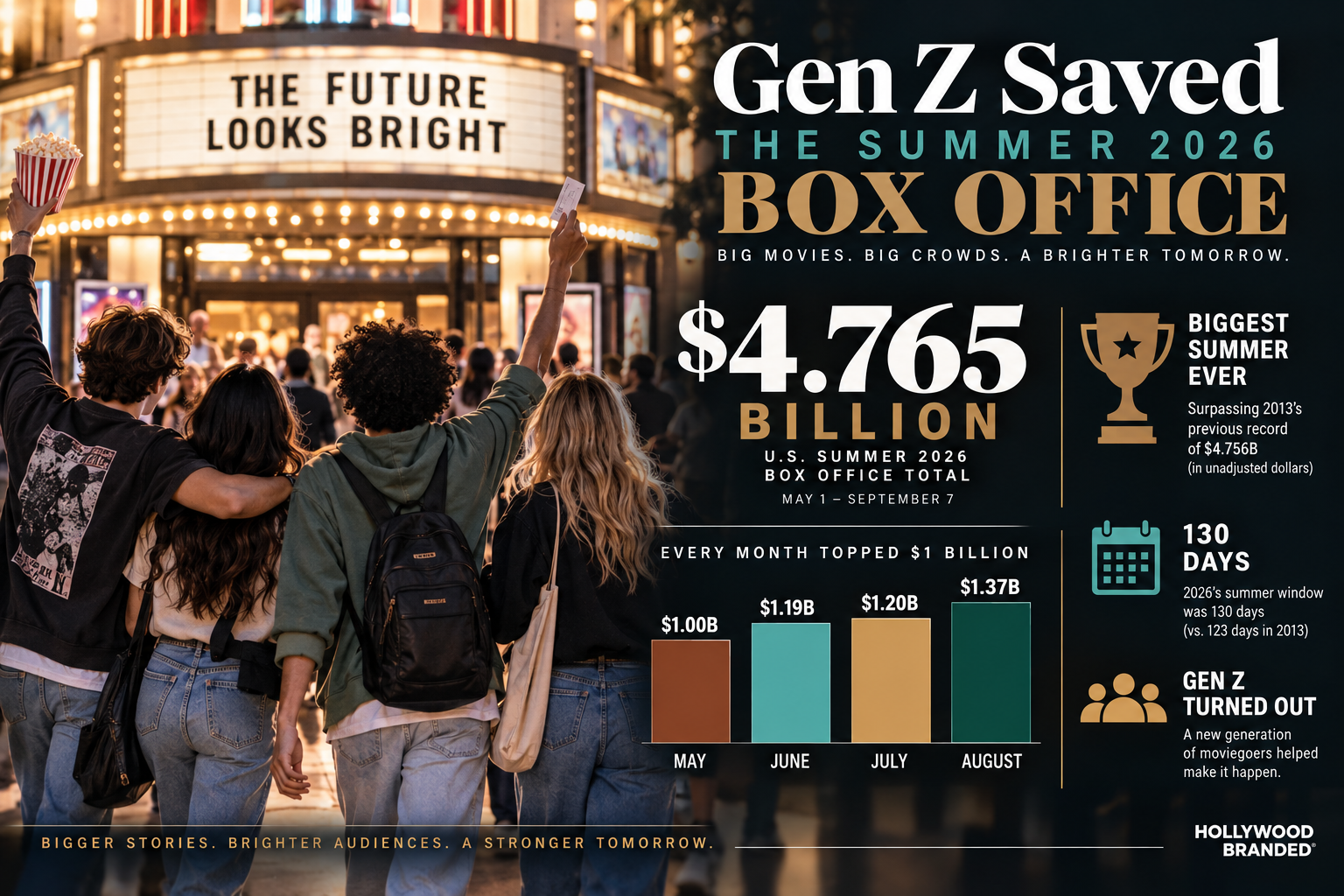
By Labor Day 2026, the domestic summer box office had reached $4.765 billion, the biggest summer haul in Hollywood history, and industry watchers are eyeing the first $10 billion box office year since before the pandemic. The generation getting credit for putting people back in theater seats is the exact one studios spent the last decade assuming had already checked out. In this article, Hollywood Branded explores what is actually driving Gen Z back into theaters this summer, and why brands should be paying close attention.

Do the numbers actually back this up?
A Fandango study of thousands of moviegoers found that Gen Z is now the most active theatrical demographic, going to the movies more often per year than millennials and spending more per trip on concessions and premium formats like IMAX. The overwhelming majority of Gen Z respondents said they had been to a theater at least once in the past year, and they were not just showing up; they were showing up often. Separate research backs this up: Gen Z is now 13 percent more likely to attend a film's opening weekend than older audiences, meaning they are not just going, they are going first. That data point matters because it shows Gen Z treating theatrical attendance as a social and communal experience rather than a passive one. The theater has become the destination, and the film is simply the anchor for a bigger night out.
This marks a real reversal from the narrative that dominated headlines for years. Streaming and short-form video were widely assumed to have permanently rewired younger audiences away from the theatrical experience altogether. Instead, Gen Z turned out to be the demographic keeping that experience alive, treating opening weekend the way past generations treated a concert or a big game. For an industry that spent years bracing for the decline of moviegoing, that is a significant shift worth building strategy around. It also means brands betting on streaming exclusively may be missing where the cultural energy is actually concentrated.
Is this just about the franchises?
The summer's tentpole releases performed as expected, but the story generating the most conversation involves two low-budget films from first-time directors in their twenties that turned into full-blown Gen Z cultural events. Both films built the kind of theatrical word of mouth that has become rare in recent years, driven by audiences who were not simply curious but genuinely afraid of missing out if they did not see the film opening weekend, in a theater, with a crowd. Neither film relied on a marketing budget that rivaled a major studio release. Instead, ticket sales were driven almost entirely by a generation deciding a movie was a cultural moment and needing to be part of it in person. That kind of organic momentum is difficult to manufacture and even harder to buy.
This pattern lines up with a broader trend Hollywood Branded has tracked across the YouTube to film pipeline, where creator-driven projects with minimal marketing spend have found outsized success with young audiences. It reinforces a lesson that applies well beyond these two specific titles: Gen Z is not tolerating the theater; they are treating it as the social experience it always used to be. That shift shows up clearly in how quickly word spreads once a film is anointed a must-see moment, often faster than any paid campaign could move. For brands, this means visibility inside the right project can outperform a much larger investment in traditional advertising placed around the wrong one. Choosing the right project, in other words, is quickly becoming more valuable than simply chasing the biggest possible audience.
Why are Gen Z audiences showing up in person?
Analysts have pointed to something worth paying close attention to: Gen Z's well-documented love of analog and handcrafted things, the same instinct behind the vinyl resurgence and the thrift shopping boom, is showing up in their taste in movies as well. Films built on practical effects and old school filmmaking craft, rather than leaning entirely on digital tricks, appear to be resonating strongly with a generation that grew up entirely online. That preference tracks with a familiar pattern across other categories: give a generation enough of the synthetic version of something and eventually they go looking for the real thing. This summer, the real thing was a crowded theater and a movie that felt handmade rather than manufactured. It is a preference brands courting Gen Z would be wise to take seriously well beyond the box office.
 Photo Credit: The New York Times
The Dune popcorn bucket is a useful example of this instinct playing out in real time. People lined up specifically for the physical object and posted it like premium merchandise, extending the film's cultural footprint in a way no conventional ad placement could have replicated at a comparable budget. Concession sponsorships, co-branded packaging, and lobby activations put a brand in front of an audience that has already arrived early and is already spending, before the trailers even start. Loyalty programs like AMC Stubs, Regal Crown Club, and Cinemark Movie Club, which combine tens of millions of members who already show up, spend, and come back, remain largely untapped by mainstream brand marketers. For a generation that treats the theater as a full evening experience rather than a one-and-done content delivery event, these touchpoints represent some of the most underused inventory in entertainment marketing today.
Why does this matter for brands?
For brand marketers, this is the headline: the theater is back as a cultural gathering place, and the audience driving that shift is the one every brand has spent a decade trying to figure out. That opens up real opportunity for brand partnerships and licensing plays tied specifically to theatrical releases, not just streaming platforms. It also means the event nature of moviegoing - the reason to be there opening weekend, in person, with friends - is exactly the kind of energy brands want to attach themselves to. A generation showing up for the communal experience is a generation primed for activations, integrations, and partnerships that feel like part of the moment rather than an advertisement bolted onto it. Brands that treat theatrical releases as a marketing afterthought risk missing one of the clearest openings the industry has seen in years.
 Photo Credit: Trip Advisor
What should brands take away from this summer?
The lesson from this summer is not simply that Gen Z still goes to the movies. It is that they will turn up in force for the right movie, at the right moment, for reasons that have very little to do with a traditional marketing campaign. That distinction matters for any brand trying to reach this generation authentically, because it shifts the strategic question from how much to spend to where and how to show up.
For entertainment marketers, the takeaway is clear: theatrical partnerships, concession activations, and loyalty program tie-ins deserve a bigger seat at the table than they have gotten in recent years. Gen Z has shown they are willing to make moviegoing an event again, and brands that build genuine, well-timed partnerships around that behavior stand to benefit from cultural relevance that no traditional ad buy can replicate.
Eager To Learn More?
Curious how Gen Z is reshaping entertainment and brand strategy? Explore more from Hollywood Branded below.
- Why Is Platform Loyalty Dead for Gen Z Entertainment Fans
- How YouTube Creators Are Taking Over Hollywood
- Jenna Ortega: The Gen Z Icon Taking Over Hollywood
- How a $6M Indie Film Beat Hollywood's Blockbusters at the 2025 Oscars
- 20 Reasons Horror Movies Are a Goldmine for Brands
Want to stay in the know with all things pop culture? Look no further than our Hot in Hollywood newsletter! Each week, we compile a list of the most talked-about moments in the entertainment industry, all for you to enjoy!