
Quick Answer
Explore how strategic brand collaborations and experiential marketing drive long-term growth and turn attention into lasting loyalty.
Why Collaboration Has Become a Marketing Essential
Brand collaborations are everywhere. It feels like nearly every day when you hop onto social media, you’re seeing another partnership announcement. A limited-edition drop. A new pop-up. A brand crossover no one saw coming. We already know the classic reasons brands collaborate – expanded reach, shared audiences, built-in buzz. The list goes on.
But lately, it feels different. More brands than ever are leaning into collaboration not as a side strategy, but as a core growth lever. In today’s world of social media, online culture, and constant content consumption, standing alone just doesn’t hit the same way anymore. The brands that are really winning aren’t just collaborating – they’re turning those partnerships into experiential moments that move consumers from hype to habit. In this article, Hollywood Branded takes a closer look at how winning brands are using strategic collaborations to drive long-term growth – and why experiential moments are what turn attention into longevity.
.png?width=1200&height=675&name=Sarah%20Blog%202%20Cover%20Image%20(7).png)
Collaboration Isn’t New, But the Strategy Is
Brand partnerships have been around forever. Co-branded packaging. Celebrity and Influencer endorsements. Capsule collections. All amazing forms of marketing. None of that is particularly new, however.
What has changed is how brands are using collaborations – not as one-off attention grabs, but as long-term positioning tools.
Today’s most effective collaborations are layered. They combine limited-time urgency with immersive experiences. They move beyond logo swaps into cross-category expansion, lifestyle integration, and real-world activations. They start on social, but they don’t stay there.
The strongest brands understand something critical: hype alone doesn’t build equity. Attention is easy to generate – but much harder to sustain. If a collaboration generates millions of impressions but doesn’t deepen brand affinity, drive real-world engagement, or shift perception, what real purpose did it serve?
That’s where strategy comes in. Winning brands build repeatable collaboration models. They align partnerships with their identity, but they also surprise people with the unexpected. And that surprise? That’s what creates excitement. They create moments consumers can participate in – not just scroll past. And they aren’t doing just one-off collaborations. We’re seeing them show up again and again.
While this shift is happening everywhere, cities like Los Angeles naturally amplify it. The density of influencers, high-traffic hotspots, and culturally engaged consumers makes LA uniquely positioned to elevate collaboration done right. As an LA resident, I can personally attest to the increasing number of brand collaboration pop-ups happening across the city. And more often than not, they deliver – converting online buzz into tangible demand and real-world excitement.
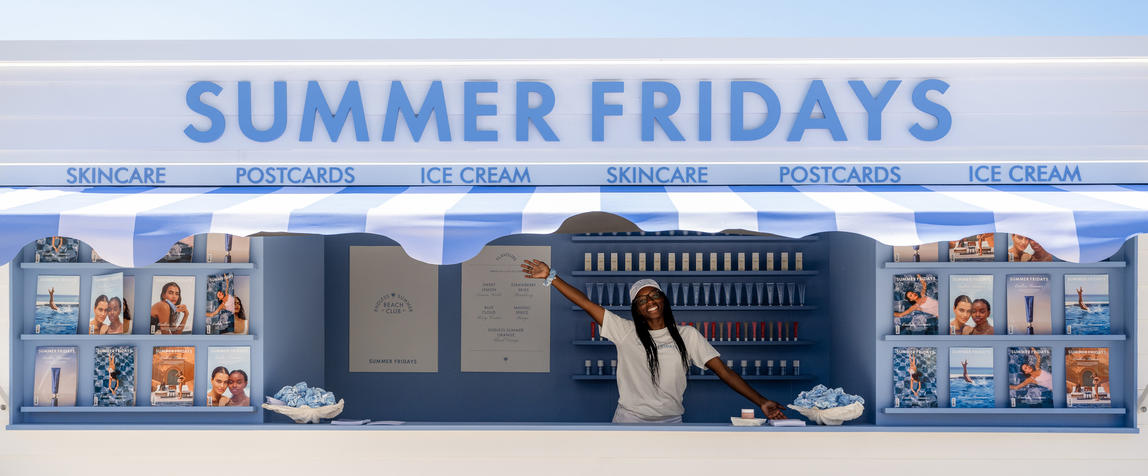 Photo Credit: Beauty Directory
Erewhon: When Collaboration Becomes the Brand
It may have all started with the infamous Hailey Bieber smoothie, but it didn’t stop there.
What began as a buzzy celebrity drink quickly evolved into something much bigger. Yes, the smoothie drops featuring names like Kendall Jenner and Sabrina Carpenter helped cement Erewhon as a cultural hotspot. Limited-time launches. Influencer amplification. Lines crowding the counter. But instead of treating those moments as one-off wins, Erewhon kept building. And building. Over time, collaboration stopped feeling like a marketing tactic and started feeling like part of the brand’s DNA.
The Lululemon x Erewhon partnership proved that this strategy extended far beyond beverages. That crossover wasn’t about a drink, it was about lifestyle alignment. Wellness meets wellness. Performance wear meets premium health culture. It made sense, but it was still unexpected enough to spark conversation. They’ve also partnered with brands like Skims, Alo Yoga, and other luxury and wellness labels, reinforcing their position at the center of aspirational living.
 Photo Credit: The Hollywood Reporter
Now, when Erewhon announces a new collaboration, people expect it. It’s not surprising that they’re doing one; the question is who it’s with next. Consumers don’t just shop at Erewhon anymore. They experience it. They anticipate the collaborations. They see it online – and then they go in-store to try it for themselves. They post the experience. They become part of the moment. That’s when you know collaboration has shifted from hype to positioning.
 Photo Credit: Hypebeast
La La Land Kind Cafe: When Mission Meets Momentum
If Erewhon made collaboration consistent, La La Land Kind Cafe made it aspirational.
La La Land isn’t just known for its bright yellow interiors and smiley-face branding. Its cafés are instantly recognizable – bright, high-energy, and intentionally designed for shareability. It feels uplifting the moment you walk in. The hype may have started with that distinctive aesthetic, but the brand has become just as known for its collaborations. And there have been a lot of them.
From partnerships with The Beverly Hills Hotel to Lululemon, Disney’s Mickey & Friends, and MALK, the brand shows up again and again. They’ve collaborated with viral influencers like Keith Lee. They’ve partnered with celebrities like Megan Moroney. They’ve aligned with everyone from wellness brands to hospitality icons to entertainment properties. Somehow, it never feels forced and just works.
 Photo Credit: ADWEEK
But it’s not just announcements. It’s limited-time flavor drops. Branded cups. Custom sleeves. Seasonal menu integrations that feel almost collectible. That’s where the experiential layer comes in.
La La Land doesn’t just post about collaborations. They build them into the physical experience. Into what you’re holding, what you’re tasting, and what you’re capturing on your phone. And that consistency matters.
Over time, collaboration hasn’t just been something La La Land does; it’s become something people expect from them. Their audience looks forward to the next drop, the next branded cup, the next limited-time activation. It’s not an occasional tactic. It feels embedded in the brand itself.
What makes it work is the combination of aesthetic and purpose. La La Land was founded on a mission to support and employ foster youth. That emotional foundation gives their brand depth. So when they collaborate, it doesn’t feel transactional – it feels community-driven.
You see it online. And then you go in person. And if you can't go in person, you wish you could. At this point, collaboration isn’t just part of La La Land’s strategy – it’s become part of its identity. Consumers know it, expect it, and love it.
 Photo Credit: lalalandkindcafe / Instragam

Summer Fridays: Turning Skincare Into a Lifestyle Brand
If there’s one brand that understands how to expand without diluting its identity, it’s Summer Fridays. At its core, Summer Fridays is a skincare company. But through strategic collaborations – especially experiential ones – it has positioned itself as something much bigger: a lifestyle brand.
The Gap x Summer Fridays holiday pop-up at The Grove is a perfect example. Summer Fridays took their co-branded clothing partnership a step further by creating a physical, immersive LA activation. The collaboration featured limited-edition apparel, on-site embroidery customization, and other interactive elements inside a seasonal, highly aesthetic setup at The Grove, LA's notorious pop-up location. By activating there, Summer Fridays brought the brand into real life in a way that felt elevated and intentional. Take a look at a consumer’s video from the event HERE.
But the brand didn’t stop at large-scale retail partnerships. Summer Fridays also partnered with Salted Butter Company, a buzzy bakery in Pasadena, for a limited-time collaboration that blended beauty and baked goods. They created specialty chocolate cloud croissants and other hot cocoa-inspired pastries, alongside exclusive lip balm tie-ins for early guests. The first 50 customers received limited-edition product perks – creating urgency and built-in foot traffic. Take a look at an attendee's video of the collab HERE.
 Photo Credit: itszeyma / Instagram
The collaboration made sense for the product they were promoting and added another sensory layer, taste, into the brand experience. Partnering with a local bakery, rather than another massive national brand, also showed range. It proved they can scale up with Gap at The Grove and scale down with a neighborhood favorite in Pasadena. The entire collaboration felt effortless and cohesive. The tones aligned, the visuals complemented each other, and the audiences naturally overlapped. It felt like a seamless extension of the Summer Fridays world.
Instead of staying confined to skincare shelves, Summer Fridays stepped into physical lifestyle moments – and importantly, those collaborations always feel aligned. That’s the difference between partnering for quick buzz and building long-term brand equity.
Summer Fridays isn’t partnering for shock value. They’re expanding their world intentionally. Each activation reinforces who they are while inviting consumers into new touchpoints, whether that’s apparel, pastries, or in-store experiences.
They’re not just selling skincare anymore. They’re selling a full aesthetic – a lifestyle people want to step into. And in a city like Los Angeles, where experiential retail and influencer culture naturally amplify moments, that kind of brand expansion doesn’t just land. It spreads.
 Photo Credit: Summer Fridays
PopUp Bagels: A Strategy Rooted in Anticipation
PopUp Bagels became one of the most talked-about bagel brands. Fans love the brand for the product itself – and they’ve stayed loyal because it consistently delivers. But instead of letting that hype plateau, PopUp has turned it into longevity through frequent, strategic collaborations that keep consumers excited week after week.
A huge part of that strategy lives on social. Every week, PopUp teases upcoming schmear drops and specialty flavors before they’re officially revealed, prompting followers to guess the flavor in the comments. It builds speculation before the product even launches – and the comment section becomes part of the campaign. To make it even more engaging, two correct guesses win a free dozen bagels, turning participation into both a game and an incentive. It’s not just social marketing, it’s interactive and real consumer engagement.
That anticipation becomes ritual. Followers check back weekly, tag friends, make their guesses, and then of course show up in-store once the drop goes live. The collaboration isn’t more than a product release, it’s a recurring event cycle that keeps consumers coming back again and again.
Take the Poppi partnership. To promote Poppi’s newly released Shirley Temple soda flavor, PopUp launched a limited-edition “Shirley Schmear.” It was fun, bold, and visually striking – and it made sense for both audiences. Poppi is already a brand well-versed in marketing and collaborations, but this partnership expanded the hype around its product launch even further. By integrating the new flavor into a limited, experiential food drop, Poppi transformed product buzz into something tangible – something consumers lined up for, could taste, and of course, post and review.
 Photo Credit: drinkpoppi & popupbagels / Instagram
Then there’s the Wingstop collaboration, which introduced a Lemon Pepper Cream Cheese inspired by Wingstop’s cult-favorite flavor. Unexpected? Definitely. But that surprise factor is exactly what sparked curiosity and conversation.
And here’s what makes PopUp’s model so effective – even when a collaboration sounds unusual, people still show up to try it. Sometimes because it’s unusual. The partnership itself becomes the draw.
They’ve also partnered with influencer Brett’s Bites on Dessert Bowl Butter and collaborated with Grillo’s Pickles for bold flavor integrations – partnerships that felt like natural extensions of the brand. Others, like Ocean Spray, leaned more unexpected. But that unpredictability is part of the appeal.
Whether it’s a seamless match or a slightly chaotic crossover, each partnership reinforces PopUp’s playful, highly craveable personality. The flavors rotate, the drops are limited, and access feels exclusive. That built-in scarcity keeps demand high, while the steady stream of collaborations ensures there’s always something new to look forward to.
With PopUp, the core product is what builds loyalty. The collaborations are what keep the momentum going. That balance – a strong core product paired with constant cultural engagement – is what allows early hype to evolve into long-term relevance.
.png?width=500&height=281&name=Sarah%20Blog%202%20Cover%20Image%20(2).png) Photo credit: popupbagels / Instagram
Photo credit: popupbagels / Instagram
Purely Elizabeth: Expanding Beyond the Pantry
Purely Elizabeth’s collaboration with Cha Cha Matcha is a great example of what it looks like when a brand truly activates a partnership – especially when it’s tied to a product launch.
The pop-up served as marketing for their new Purely Glow Salted Vanilla Pistachio Granola, giving the brand a physical, experiential way to introduce it to consumers. Instead of relying solely on retail placement or digital ads, Purely Elizabeth built a moment around the launch.
They hosted a full weekend pop-up at Cha Cha Matcha’s LA and NYC locations, turning the collaboration into an actual event people could show up for, and creating both accessibility and urgency.
Purely Elizabeth didn’t just utilize Cha Cha Matcha as a location to market its new product. They created a limited-edition Purely Glow matcha latte – pistachio-forward, topped with pistachio cold foam and other elevated add-ins – inspired by the granola and positioned as something you had to try while it was available. The best part? The drink didn’t disappear after one weekend. It extended for weeks, which is such a smart middle ground: short enough to feel exclusive, long enough to actually build momentum.
They also layered in the kind of details that make people stay — and post. There were perks for early guests (a gift for the first 50), plus experiential elements like live music and interactive moments. That’s exactly how you turn a product launch into a “you had to be there” experience. And of course, influencers were invited in to amplify it. But anyone could come, try it, film it, and be part of the moment – 0f course – it was all over socials. Check out one of these consumer-filmed videos posted on social of the pop-up HERE.
That’s what makes this strategic. Purely Elizabeth didn’t just gain visibility for a new granola flavor. They gained association: with an aesthetic café brand, with wellness culture, with LA’s weekend social scene, and with the kind of IRL experience that turns a pantry favorite into lifestyle content.
.png?width=1200&height=675&name=Sarah%20Blog%202%20Cover%20Image%20(3).png) Photo Credit: alexcrawfordphoto / Instagram
Photo Credit: alexcrawfordphoto / Instagram
Why Collaboration Is Built for Longevity
When you look across all of these brands, the pattern becomes pretty clear. They’re not collaborating just to collaborate. They’re not doing one random drop and moving on. They’re building it into how their brand operates.
Erewhon keeps people watching to see what’s next. La La Land has made partnerships part of its identity. Purely Elizabeth used a pop-up to launch a new product in a way that felt tangible. Summer Fridays continues expanding its world beyond skincare. PopUp Bagels keeps its audience engaged week after week through anticipation alone.
It’s not about the category. It’s about the consistency. The product is what earns loyalty. But collaboration – when done right – is what keeps things interesting. It gives consumers a reason to come back, to try something new, to stay engaged.
And the brands that are really winning understand that hype by itself doesn’t last. If you want longevity, you have to give people something to look forward to. That’s what strategic collaboration does. It turns attention into habit. And habit is what builds brands that stick around.
Eager To Learn More?
If you’re interested in how brand partnerships, experiential marketing, and entertainment strategy intersect, explore more insights from Hollywood Branded below:
- Why Beauty Brands Keep Partnering with Food [And Why it Works]
- How Poppi and Olipop Took Over the Prebiotic Soda Market with First-Mover Advantage and Brand Partnerships
-
The Marvelous Marketing Value of Pop-Up Activations For Brands
- How Pop Culture Partnerships Can Future-Proof a Brand in 2025
-
Beyond Hype: Nike x SKIMS, Calia On Project Runway & 2025 Collab Trends
Want to stay in the know with all things pop culture? Look no further than our Hot in Hollywood newsletter! Each week, we compile a list of the most talked-about moments in the entertainment industry, all for you to enjoy!