Quick Answer
What can brands learn from TV's iconic Thanksgiving episodes? Hollywood Branded shares how holiday nostalgia can fuel smarter pop culture marketing.
Why Do We Rewatch the Same Thanksgiving Episodes Every Year?
Every November, millions of people skip the new releases and go straight back to the same handful of Thanksgiving episodes they have already seen a dozen times. Monica with a turkey on her head, Barney waiting on his next slap and Lorelai trying to eat four dinners in one night have become as much a part of the holiday as stuffing and football.
That habit is more than comfort viewing, because it shows how deeply TV's most iconic Thanksgiving episodes are tied to the way we celebrate. For brands, this yearly ritual is a reminder that the moments people return to again and again are the most valuable places to be seen. In this article, Hollywood Branded shares what brands can learn from TV's most iconic Thanksgiving episodes and how to earn a seat at pop culture's holiday table.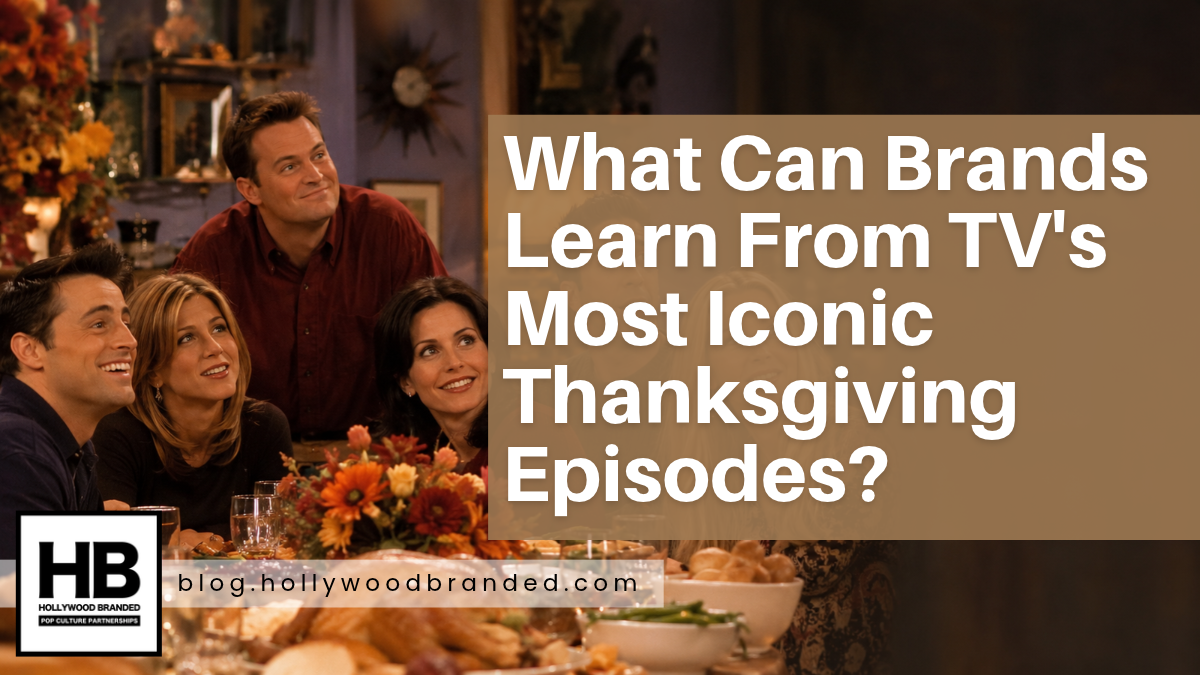
What Turns a Thanksgiving Episode Into a Pop Culture Classic?
The best Thanksgiving episodes rarely work because everything goes right. Friends made the holiday a running tradition across its ten seasons, and "The One With All the Thanksgivings" is still the episode fans quote most, thanks to flashbacks, a lost fingertip and a turkey worn as a hat. How I Met Your Mother turned a bet into a holiday ritual with "Slapsgiving," while Gilmore Girls gave us "A Deep-Fried Korean Thanksgiving," where Lorelai and Rory commit to more dinners than any human should attempt. Cheers had its famous "Thanksgiving Orphans" food fight, and WKRP in Cincinnati gave TV history its most infamous turkey drop in "Turkeys Away." Each of these episodes takes the pressure everyone feels around the holiday and turns it into something we can laugh at together.
Look closely and the same ingredients show up again and again. There is family chaos, a cooking disaster, a tradition that gets a little out of hand and a warm moment at the end that makes the mess feel worth it. These stories feel real because they mirror what happens in our own kitchens and dining rooms, only funnier. That relatability is exactly why viewers keep coming back, and why so many people now plan their own holiday around rewatching them. For marketers, it is a clear sign that audiences reward stories that feel honest, a little imperfect and full of heart.
 Photo Credit: IMbD
Where Do Brands Show Up at the Sitcom Thanksgiving Table?
Think about what fills the frame in a typical TV Thanksgiving scene. There is a kitchen packed with appliances and cookware, a table full of food and drinks, a living room with the game on, and usually someone rushing out the door for a forgotten ingredient. Every one of those details is a natural home for a brand, which is why holiday episodes are such a strong fit for product placement and brand integration. Product placement puts a product into the scene so it adds realism, while brand integration goes further and weaves the product into the story itself. Both work best when the brand helps tell the story rather than interrupting it.
What makes holiday content so valuable is its shelf life. A Thanksgiving episode does not air once and disappear, because it returns every year through reruns, cable marathons and streaming libraries. This season alone, TV Insider's Thanksgiving 2026 guide lists a Jeffersons Thanksgiving marathon on Antenna TV and holiday movies on Hallmark Channel on Thanksgiving Day, alongside the Macy's Parade and football. Networks also point to the business case, with NBCUniversal reporting that its holiday programming drives double-digit lifts in brand awareness and brand opinion compared with its non-holiday programming. A brand that becomes part of a beloved holiday story can keep showing up for years in a moment when viewers are relaxed, together and paying attention.
 Photo Credit: The Decider
How Are Real Brands Having Fun With Thanksgiving?
Some of the smartest holiday marketing borrows the same playful spirit that makes sitcom Thanksgivings so memorable. In 2025, KFC launched its "Cluck Turkey" campaign, a tongue-in-cheek "smear campaign" that urged people to ditch the bird and choose chicken instead. The chain pointed to a survey from The Vacationer that found 35% of consumers hate turkey, and paired the campaign with a $25 Extra Crispy Festive Feast. Billboards showed the Colonel with "CLUCK TURKEY" over his mouth, which is exactly the kind of cheeky moment that gets shared and talked about. It works because it gives people permission to say out loud what plenty of them were already thinking at the dinner table.
Butterball, the brand most people connect with the Thanksgiving turkey, is taking a different but equally fun approach. In 2026, the company launched "Care Hard. Cook Easy.," its first campaign with agency Carmichael Lynch, built to make turkey an everyday choice for a new generation of cooks. The campaign spans streaming and linear video, social, creator partnerships and custom media collaborations, and leans into humor through spots that spotlight enthusiastic brand ambassadors. Butterball's research also shows what really matters to people, with its 2026 Togetherness Report finding that family, food and relaxing top the list of what consumers look forward to about Thanksgiving. Whether a brand is poking fun at tradition or reinventing its role in it, the lesson is the same: lean into the emotions people already bring to the holiday.
 Photo Credit: KFC
How Can Your Brand Earn a Seat at Pop Culture's Holiday Table?
The biggest mistake brands make with holiday marketing is starting too late. Television episodes, films and streaming specials are often written and produced many months before they air, so the brands that appear in next year's holiday content are being considered long before the leftovers from this year are gone. That means the best time to plan for Thanksgiving 2027 is right now. Start by asking which emotions your brand naturally fits, whether that is the chaos of the kitchen, the comfort of the couch, the rush of travel or the fun of the big game. Once you know your role at the table, it becomes much easier to spot the stories, talent and moments that make sense.
 Photo Credit: Peanuts
What's the Real Recipe for Holiday Brand Relevance?
TV's most iconic Thanksgiving episodes prove that audiences do not want perfect holidays on screen. They want the burnt turkey, the family drama and the inside jokes that feel like their own, and they want to watch them again every single year. Brands like KFC and Butterball show that the same playful, honest energy can work in marketing too, whether that means teasing tradition or finding new ways to be part of it. For marketers, the takeaways are clear:
- Holiday content has a long shelf life, so the right placement or integration can keep earning attention year after year.
- Relatable beats perfect, because audiences connect with the messy, funny and human side of the holidays.
- Play with tradition thoughtfully, leaning into the emotions people already feel rather than fighting them.
- Plan early, since holiday stories are built months before they reach the screen.
This Thanksgiving, as you settle in for your own rewatch, pay attention to what fills the frame and what makes you laugh. Those details are a roadmap for how your brand can show up in the moments your audience treasures most.

Eager To Learn More?
If this got you thinking about how holidays and pop culture come together, these Hollywood Branded reads go deeper:
- How Thanksgiving Movies Shape Our Holiday Spirit
- Unlocking Thanksgiving Marketing Success: Creative Strategies for 2025
- How Holiday Movies Use Product Placement to Connect with Audiences
- When Should Christmas Music Start?
- Why Does "Thriller" Rise From the Grave Every Halloween?
Want to stay in the know with all things pop culture? Look no further than our Hot in Hollywood newsletter! Each week, we compile a list of the most talked-about moments in the entertainment industry, all for you to enjoy!