Quick Answer
How Levi's, Gillette and Beats turned FIFA's World Cup branding blackout into viral marketing wins that outperformed official sponsors in earned media reach.
The Best Marketing Play Nobody Planned
The 2026 FIFA World Cup ran from June 11 through July 19, with Spain ultimately claiming the title over Argentina in extra time at MetLife Stadium in New Jersey, and the United States played host to the biggest sporting event on the planet across 11 NFL stadiums from coast to coast. Billions of eyes tuned in globally, advertisers paid top dollar to be part of the spectacle, and stadium naming rights partners sat front and center for the whole thing. There was just one small catch: their logos were nowhere to be seen.
That is because FIFA's famously strict Clean Venue Policy required that every brand not wearing an official FIFA sponsorship badge get completely wiped from tournament venues, right down to the tape on individual seats. The result was one of the most unintentionally entertaining brand stories of the summer, as household names scrambled to cover up millions of dollars worth of signage while the whole world watched, laughed, and talked about it louder than any paid media campaign could have managed. In this article, Hollywood Branded discusses how the World Cup's branding blackout accidentally handed stadium naming rights partners some of the best earned media of their careers, and what every marketer should take from this accidental playbook.
So Why Did the Logos Have to Go?
If you have ever wondered why a stadium suddenly goes nameless during a major international sporting event, the answer is money, and a whole lot of it. FIFA demands strict brand compliance at its venues to protect its official sponsors, maintaining this exclusivity as paramount to securing the organization's estimated $1.8 billion in marketing revenue for 2026. The way FIFA sees it, if a company did not write a check to become an official FIFA partner, it does not get to benefit from the global broadcast audience. Full stop.
At its core, the Clean Venue Policy operates on a simple principle: companies that pay hundreds of millions of dollars to become official FIFA partners are granted commercial exclusivity throughout the tournament. To protect that exclusivity, FIFA intervened across stadiums, public spaces, player apparel and accessories, removing any unauthorized brand associations. The resulting cleanup was remarkably thorough. It extended far beyond the major sponsors displayed on stadium facades or embedded in venue names, reaching much smaller details: stickers, packaging, vending machines, hospitality products and any branding that could appear in official tournament imagery. In some cases, even product labels in media centers or hospitality areas were scrutinized. Heinz condiment dispensers were covered at multiple venues. A stadium employee went viral after revealing she had to put duct tape over the Nike swoosh on her own shoes because Adidas was the official tournament footwear sponsor. FIFA's enforcement operation did not have an off switch.
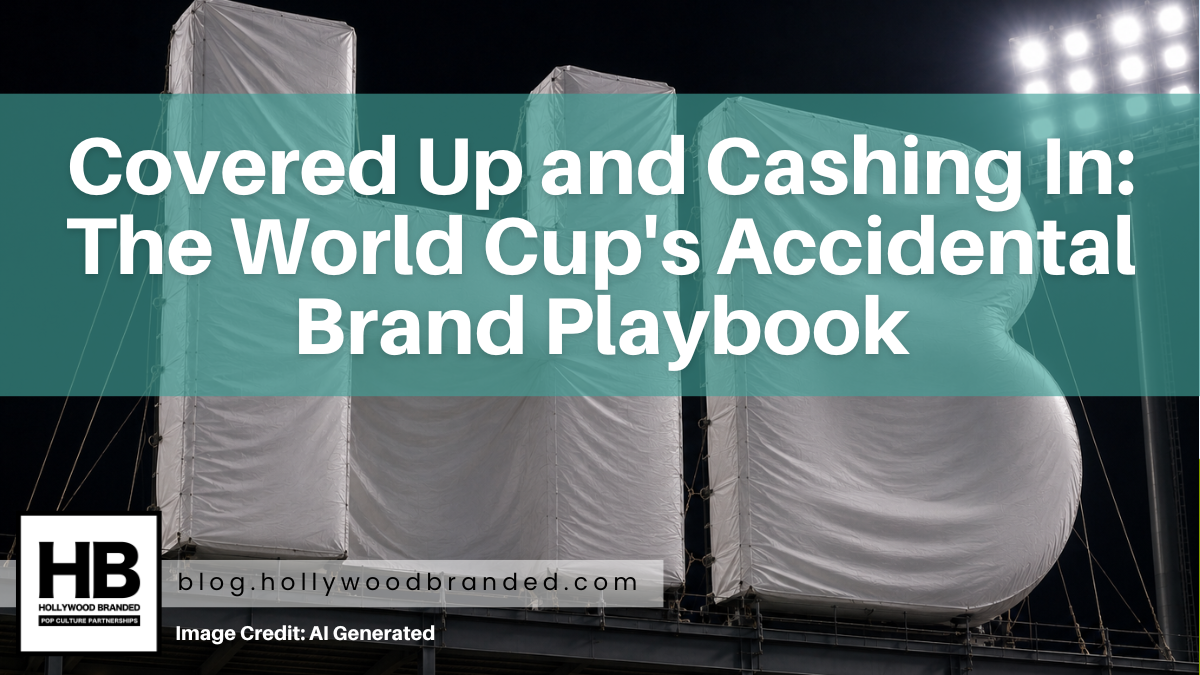
This affected everything from the signs inside the venue to the logos on the roof, to the beer sold at concession stands. On top of that, all of the stadiums were neutrally renamed during the run of the tournament, as is standard for international competitions. The regulatory guidelines superseded any existing contract between the stadium owners and their corporate naming rights partners, and this was the deal those brands accepted when their city bid to host a World Cup. Companies like digital personal financial firm SoFi, insurer MetLife and energy giant NRG, which each signed nine-figure deals to secure stadium naming rights, saw the venues they sponsor renamed Los Angeles Stadium, New York New Jersey Stadium and Houston Stadium for the world's most-watched sporting event. Nine figures. Covered in a tarp.
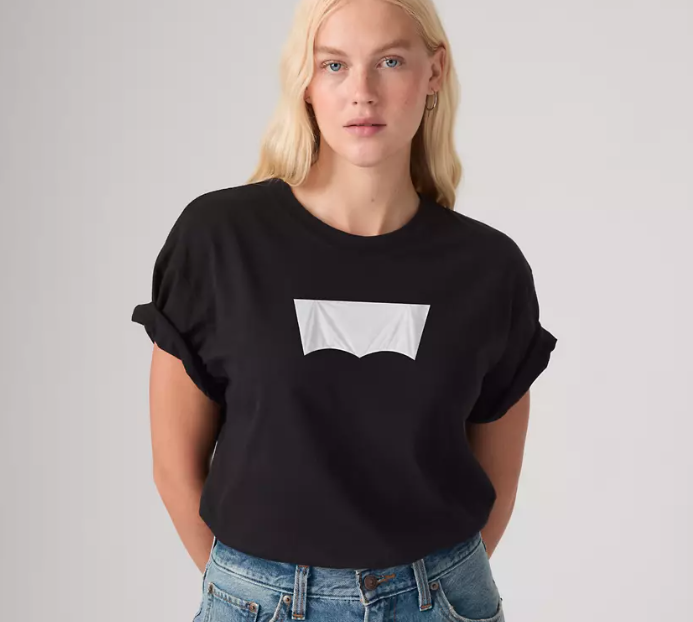
Image Credit: Levis.com
The Cover-Up That Couldn't Hide a Thing
Now let us get into the specifics, because the details here were genuinely jaw-dropping. For a few weeks, Levi's Stadium in Santa Clara had to change its name. FIFA rebranded it as San Francisco Bay Area Stadium, covering the iconic logo that had identified one of the NFL's most recognizable venues for more than a decade. Levi's holds a 10-year, $170 million naming rights deal for the venue, renewed as recently as 2024, which works out to roughly $17 million per year. That investment went dark for the duration of the tournament. Workers covered the Levi's logo with a white tarp at both the stadium entrance and above the scoreboard, erasing the denim brand's identity from one of the most-watched venues in the country.
What happened next is where the story got good. The attempt to hide the logo backfired, creating what is known as a Streisand Effect, where the distinctive, covered-up shape went viral on social media, generating more attention for the brand than the original signage might have. The Levi's batwing silhouette, even under a white tarp, was instantly recognizable to anyone who has ever owned a pair of jeans. Rather than disappearing, the covered logo became the thing everyone was talking about. Levi's embraced the irony. The brand updated its Instagram profile image to feature a covered logo and posted videos from the stadium showing the shrouded emblem at the entrance and above the scoreboard. Set to the viral "Nobody's Gonna Know" audio, the post had the caption: "Welcoming the world to the beautiful [redacted] stadium!" The internet loved every second of it, with the video racking up more than 12 million views on TikTok alone. Then Levi's kept going. The brand covered up the logo at its retail stores around the world, including locations in Berlin, Hong Kong, Mexico, Milan, Paris, and the UAE, posting an Instagram update showing the covered signs and consumer reactions with the caption: "Come visit, if you can find us!" What started inside one stadium became a global campaign, entirely driven by a compliance requirement.
Meanwhile, up in Foxborough, Massachusetts, Gillette Stadium faced its own remarkable compliance saga. Gillette Stadium was transformed into Boston Stadium for the 2026 World Cup, with most references to the stadium's name covered up as part of FIFA policy. From the name displayed on the side of the 64,146-seat stadium to the massive Gillette logo atop the 22,200-square-foot video board, all vestiges of the stadium sponsor were under wraps. The detail that truly captured the internet's imagination was what happened inside. Someone, somewhere, was handed tens of thousands of tiny pieces of tape and told to cover a razor logo one seat at a time, all so a non-sponsor would not sneak any free exposure during a televised soccer match. But rather than quietly complying, Gillette played the moment brilliantly. On Instagram, the brand posted a photo of the covered stadium with the caption: "At least we got to choose how to cover it," with the logo appearing to be covered in shaving cream. The stadium logo was in fact covered by fabric, but the digitally edited image of a big heap of shaving foam still got a lot of love from consumers and marketers, because it was on-brand, self-aware, and genuinely funny. Gillette did not need a press release or a media buy. A single social post that leaned into the absurdity of the situation did the work for them.
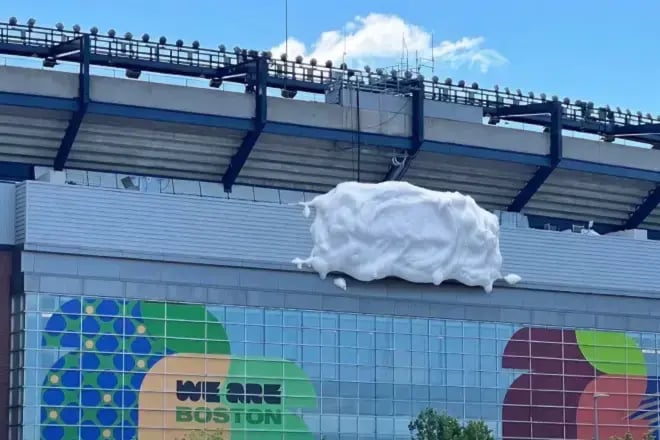
Photo Credit: Gillette
The Rest of the Blackout Roster
Levi's and Gillette were the two brands that generated the most buzz, but they were far from alone in the blackout. Ten US stadiums hosting World Cup matches all underwent the same treatment, with SoFi Stadium becoming Los Angeles Stadium, AT&T Stadium becoming Dallas Stadium, MetLife Stadium becoming New York New Jersey Stadium, NRG Stadium becoming Houston Stadium, Hard Rock Stadium becoming Miami Stadium, Lincoln Financial Field becoming Philadelphia Stadium, and Lumen Field becoming Seattle Stadium. That was an extraordinary collection of household names, simultaneously invisible during one of the largest sporting events in history.
Some brands chose humor over compliance theater. In Seattle, telecommunications company Lumen filmed a tongue-in-cheek video from the stadium it sponsors. "As international fans fly in from across the world to our city, our stadium, my job is to ensure our brand is nowhere," Chief Strategy and Marketing Officer Ryan Asdourian said in the clip. Wearing a hardhat and neon safety vest, the executive was shown combing the stadium for Lumen branding, with the result being that its logo was prominently displayed in the video, at least. The self-aware humor landed well, positioning Lumen as a brand that understood the moment rather than one sulking about it.
The restrictions extended beyond stadium naming rights into athlete partnerships as well, creating a second wave of viral content nobody planned for. Beats by Dre sent footballers a mysterious new pair of unreleased headphones to wear pre-game at the World Cup, but FIFA ordered Jamal Musiala to cover the Beats by Dre logo on his headphones with a strip of tape before Germany's 7-1 win against Curaçao. Undeterred, the Apple-owned brand immediately swapped its Instagram profile photo with a piece of white tape covering the logo to match the headphones. Then there was the curious case of Mercedes-Benz Stadium in Atlanta, which earned its own kind of notoriety as the one venue that could not fully comply. Atlanta's Mercedes-Benz Stadium was unable to figure out a way to cover up a giant logo of the luxury carmaker on the building's roof, made up of eight giant panels that rotate to close like the aperture in a camera lens. Unable to mask the logo without damaging the roof, FIFA allowed the stadium to leave it as is. Whether by accident or infrastructure, Mercedes-Benz arguably won the compliance lottery, though the stadium still answered to the generic rename of Atlanta Stadium for the duration of the tournament.
How Restriction Became the Campaign
Here is the part where brand marketers should really be paying attention, because the numbers behind what happened were not just impressive, they were staggering. An analysis covering global online media and social media platforms showed that Levi's dominated the media reach ranking despite not being a World Cup sponsor, achieving a reach of 158 million and outperforming Adidas, Coca-Cola and McDonald's, among others. Positive coverage of Levi's campaign outweighed negative coverage by roughly 6:1. To put that in context, those are the official FIFA partners, each paying enormous sums to be associated with the tournament. Levi's, by being forced to cover its logo and responding with good humor, beat them all in earned media reach. According to Meltwater, Levi's led the strongest example of non-sponsor visibility, with its mentions increasing by 44% since the start of the World Cup and engagement with the company increasing nearly four times after it leaned into the stadium covering marketing.
The brands that leaned in were consistently rewarded, while those that quietly accepted the situation got nothing. Levi's did not stop at social content. The brand released a "Nobody's Gonna Know Logo Tee," a black relaxed-fit tee featuring a playful take on its most recognizable icon, with the logo effectively removed from view, listed on Levi's US site for $35. Levi's described it with the line: "If you know, you know," adding: "Turns out, less can say more." The viral moment had become a product line. The campaign was also well received by the market, with JPMorgan raising its price target for Levi Strauss shares from $30 to $32, maintaining an Overweight rating, in early July 2026. Meanwhile, Heinz took a page from the same playbook at the product level, launching a limited-edition bottle with a blacked-out label marketed as the "Unofficial Stadium Ketchup," turning a piece of tape into a product concept, a press release, and a social moment in one move.
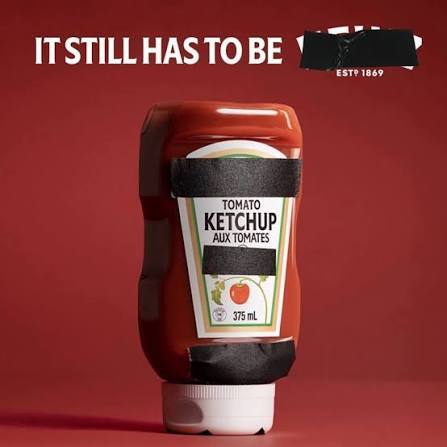
Photo Credit: Heinz
The Lesson That Outlasts the Tournament
The 2026 World Cup ran 39 days, ended with Spain lifting the trophy for the second time in their history, and generated one of the most instructive brand case studies in recent memory, and none of it came from a planned campaign. Levi's did not need its name on a stadium to be recognized. The shape of the logo was enough. Gillette did not need signage on its scoreboard to stay culturally relevant. The story of 64,000 pieces of blue tape, topped off with a social post dripping in virtual shaving cream, told the story for them. Beats by Dre did not need its logo on a player's headphones to get attention. The taped-over version went more viral than the original ever would have. In every case, the brands with deep enough visual equity and the cultural awareness to meet the moment came out ahead.
The practical takeaways here extend well beyond the World Cup and apply to any brand navigating a major sponsorship landscape. First, invest in distinctive brand assets, not just names. A shape, a color, a silhouette: these are the things that survive a blackout. Second, when restrictions hit, lean in. The worst thing a brand can do in a moment like this is nothing. The best thing they can do is what Levi's did: acknowledge the absurdity, make people laugh, use the conversation as the media channel, and then extend it into product before the moment fades. Third, and most importantly, remember that attention and placement are two very different currencies. Official FIFA sponsors paid enormous sums to be inside those venues. Several non-sponsors ended up with more cultural conversation than most of the official partners combined, simply by responding quickly and authentically to a situation that was never part of any media plan. The World Cup is over, but the lesson is not. The next major global event is already on the calendar, and the brands that will win it are the ones building the speed, the visual equity, and the cultural awareness to move when the moment arrives.
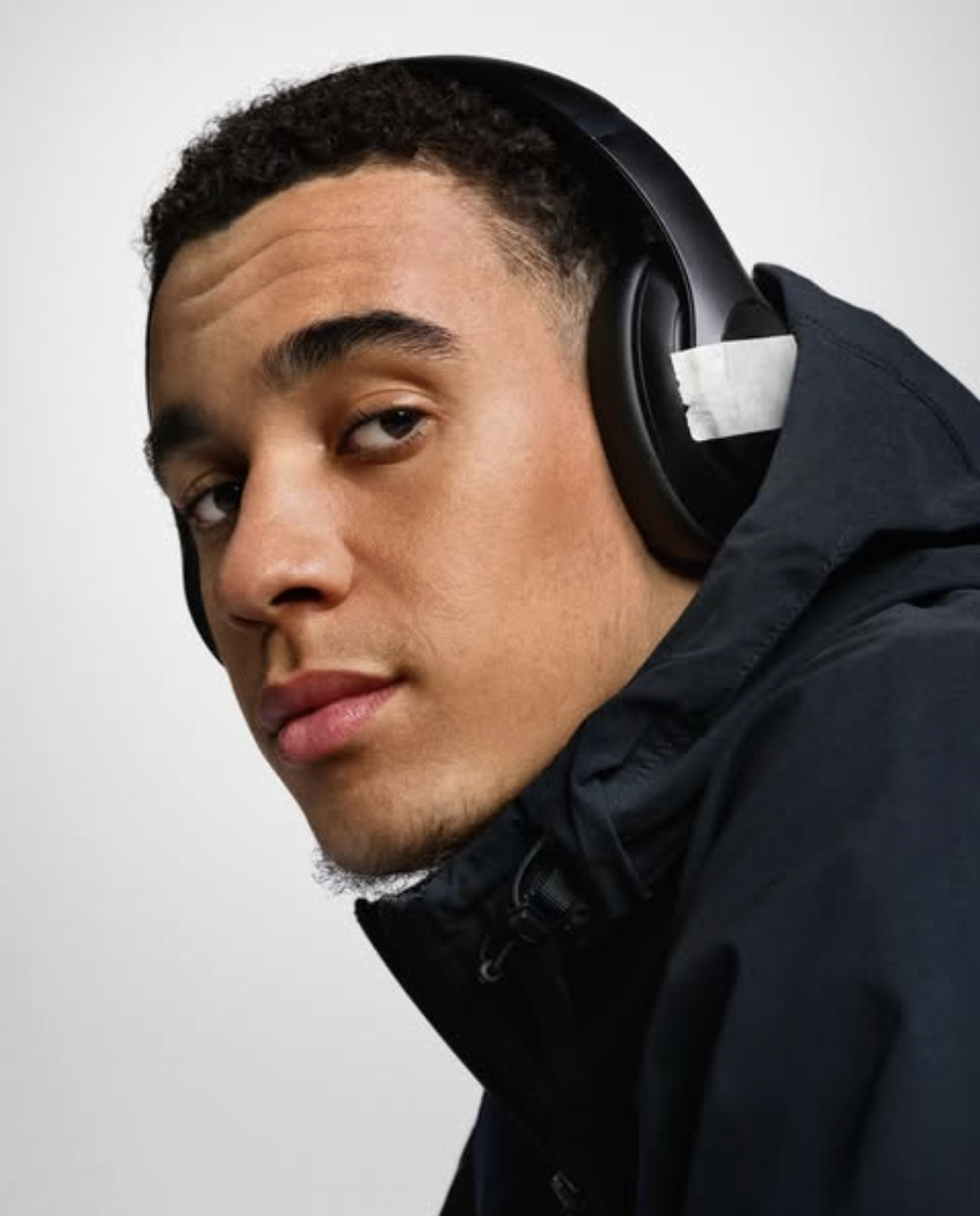
Photo Credit: Beats
Eager To Learn More?
The World Cup branding story is a timely reminder of how the rules of sponsorship, visibility, and brand recognition are constantly evolving. If you want to go deeper on how smart brands navigate the world of sports marketing, entertainment partnerships, and high-stakes sponsorship strategy, the Hollywood Branded blog has you covered.
- The Olympic Sponsorship Ladder: Entering the LA 2028 Marketing Game
- How the World Cup Became America's Real 250th Birthday Party
- Winning Strategies: How Sports Brands Leverage Partnerships for Marketing Success
- Influencer Marketing in Sports: Leveraging Athlete Endorsements
- Maximizing Brand Partnerships in College Football
Want to stay in the know with all things pop culture? Look no further than our Hot in Hollywood newsletter! Each week, we compile a list of the most talked-about moments in the entertainment industry, all for you to enjoy!