Dear Stacy: From the Office of WTF
A beverage brand manager watched the company's bottle show up all over a prestige drama finale, and the jokes swallowed the ending. Her boss wants to repost the clips. Legal says stay quiet. This one is about what a brand buys when it buys screen time.
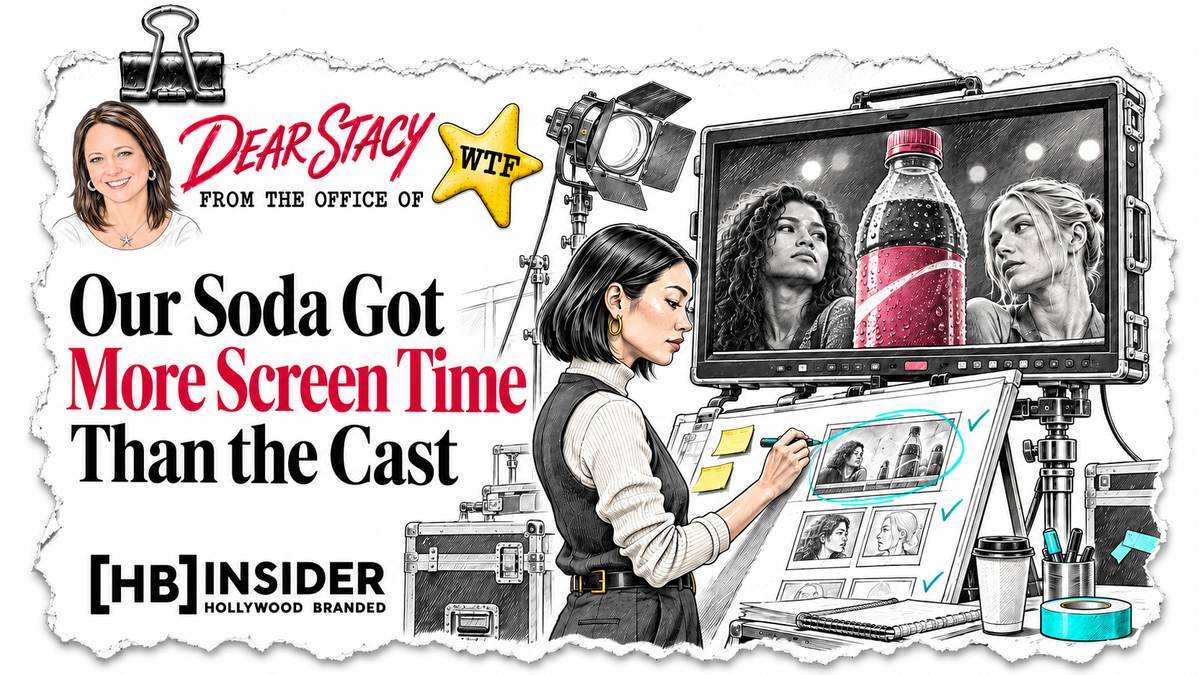
✦ From the Set ✦ · Own GoalsOur Soda Got More Screen Time Than the Cast
Dear Stacy,
I'm a brand manager at a beverage company. Our bottle showed up again and again in the season finale of a buzzy prestige drama, in close-ups, in the background, in the back of an ambulance. Fans noticed. They're posting that our drink got more screen time than one of the main characters, and the jokes have swallowed the conversation about the actual ending. In one scene the lead is handed our soda along with prescription pills, which is not the moment I would have picked. My boss wants to repost the clips and celebrate the reach. Legal says stay silent. Who wins this one?
Signed, Fizzy About the Details
Dear Fizzy,
Legal wins this round. Do not repost the clips. Then use this episode to change how your company signs off on screen appearances.
The Season 3 finale of HBO's Euphoria, in June 2026, is the version of your letter everyone saw. TVLine described a scene where Alamo pours two Coca-Colas, one for himself and one for Rue (Zendaya), to take with prescription painkillers, and another where a character drinks a Coke in an ambulance while the camera keeps the bottle in view. Fans on Reddit joked that Jules (Hunter Schafer) had less screen time than the Coke, and one said it felt like watching an hour-long ad. Daily Times reported that some viewers read the repeated bottles as deliberate commentary on addiction and consumer culture. Neither HBO nor Coca-Cola commented in that coverage, and no paid deal has been confirmed, so treat it as an apparent placement.
Two perception problems are stacked here.
The first is frequency. When the camera lingers on a bottle more than once, viewers assume a deal, whether one exists or not, and the brand becomes the topic.
The second is context. A drink handed over with painkillers in a show about addiction carries meaning, and a brand has no good role in that debate.
Reposting would claim the scene. If you did not pay for it, you would be adopting the hardest moment of the episode as marketing. If you did, you would be confirming it.
Brands buy cultural association, not screen time. A bottle in the wrong scene ties you to the wrong thing, and a longer shot ties it tighter.
Perception Control is the value at stake. It does not matter what anyone intended with that shot. It matters what viewers experienced, and when the bottle upstages the cast, the show and the brand both lose, and the fans notice first.
When we negotiate an integration, the scene description matters as much as the screen time. A brand can ask how the product is used and what is happening around it, then pass on moments that do not fit. In 30 years of reading scene breakdowns, I have found the bad fits are usually obvious on the page.
The Move
Before you agree to any on-screen appearance, ask for the scene description and put substance use on your list of contexts you will not appear in.
The Value: Perception Control · Chapter: Own Goals
Parody letter inspired by reporting from TVLine and Daily Times. The letter writer is fictional.
✦ From the Office of WTF ✦
Real letters from the moment a business suddenly becomes the story, and what to do next.
Every letter comes back to owning the next choice. That is the heart of Dragons & Doors, my parable about accountability. If one of these letters felt familiar, the book goes deeper.

Stacy Jones is the founder and CEO of Hollywood Branded, a Los Angeles pop culture marketing agency, with 30 years in the business. She is the author of Dragons & Doors and hosts the Marketing Mistakes podcast.