Quick Answer
More than 5 Billion watched the 2026 FIFA World Cup. Hollywood Branded breaks down the brand playbook for winning soccer's biggest global cultural moment.
The World Is Watching (And So Are Your Customers)
The 2026 FIFA World Cup drew more than 5 billion viewers, making it the most-watched tournament in the event's history and the single largest shared cultural moment brands got access to this decade. For marketers, that scale wasn't just impressive; it was a preview of what's possible when a brand thinks bigger than a traditional sponsorship buy.
The tournament spanned 48 teams, 104 matches, and 16 host cities across the United States, Mexico, and Canada, turning it into a 39-day marketing marathon rather than a single event. Brands ranging from FIFA's official partners to small local businesses in host cities found creative ways to show up in the cultural conversation, whether or not they held an official sponsorship. In this article, Hollywood Branded breaks down the playbook brands used to ride this global cultural moment, from official sponsorship tiers to experiential activations that fans actually remember.
-3.png?width=1200&height=675&name=top%20maroon%20rectangle%20w%20white%20link%20(3)-3.png)
Official Sponsor vs. Ambush Marketing: Know the Rules
Before any brand plans its next cultural moment campaign, it helps to understand how FIFA structured its commercial partnerships for this tournament. The 2026 World Cup ran on a tiered pyramid, with a small group of FIFA Partners sitting at the top, a second tier of World Cup Sponsors investing tens of millions for tournament-specific rights, and a brand new Host City Supporters program that let each of the 16 host cities sign up to ten local businesses for city-level activation. This layered approach meant opportunities existed at nearly every budget level, not just for the household names writing nine-figure checks. Brands like Lay's, Michelob Ultra, Coca-Cola, Visa, and Adidas occupied the top tiers, while regional players and local businesses bought category-specific or city-specific visibility further down the pyramid.
For brands without an official deal, the rules were stricter. FIFA aggressively protects its marks, meaning terms like the tournament name, official emblems, mascots, and trophy imagery couldn't be used commercially without a license, and campaigns that created an unauthorized commercial association with the event risked being flagged as ambush marketing. Even so, brands could still lean into the cultural moment. Referencing the sport itself, national colors, summer sport energy, or general soccer fever remained fair game, giving non-sponsors a real lane to participate without legal exposure. Getting this distinction right was often the difference between a campaign that rode the wave and one that drew a cease and desist letter.
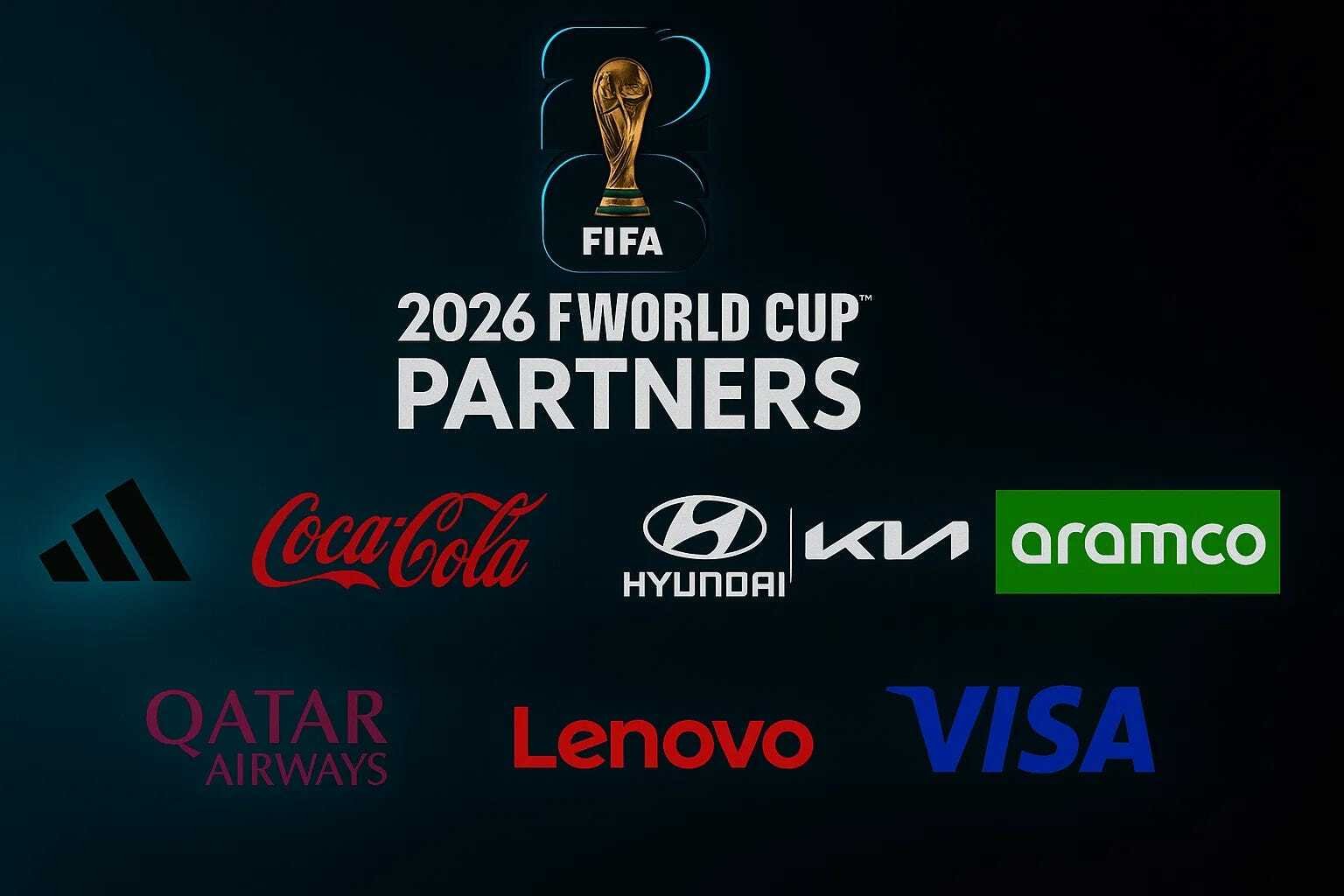
Image Credit: Playmaker Creative Club
Beyond the Broadcast: How Brands Won With Experiential
If there's one lesson from this tournament, it's that showing up in person outperformed a media buy alone. Bank of America's personalized Fan Bands, distributed at fan festivals across host cities, became one of the most talked-about giveaways of the tournament, with lines stretching for hours as fans customized bracelets with team colors and city-specific charms. Dove Men+Care brought a two-day activation to Toronto called The Commentators, where local sports broadcasters delivered play-by-play commentary on everyday moments, turning a simple street activation into shareable social content. GoGo squeeZ took a similar grassroots approach, launching its own pop-up series at transit hubs like Penn Station after tournament organizers didn't respond to a request for stadium access, proving that creative workarounds can be just as effective as an official activation.
Adidas opened its campaign months early with the Originals Night Market in West Hollywood, blending music, dance, and local food vendors to celebrate the cultural diversity of soccer fans well before a ball was kicked. Tequila brand Don Julio 1942 took experiential to another level entirely, docking a 200-foot branded megayacht on the Hudson River during Finals Week for a multi-day takeover featuring athlete appearances, DJ sets, and elevated dining. Eventbrite data showed US World Cup-related experiences were up more than 400 percent compared to the 2022 tournament, with attendance climbing even higher, a clear signal that fans wanted to feel the moment together, not just watch it from a couch.
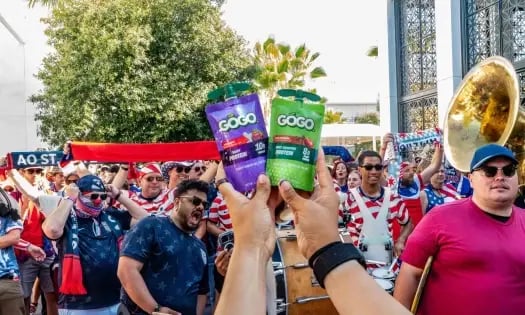
Image Credit: DesignRush News
The Content Playbook: What Actually Worked
Beyond the activations happening on the ground, the advertising itself told a clear story about what resonated with World Cup audiences. Adidas set the bar early with its Backyard Legends campaign, a cinematic hero film built around football nostalgia and street culture that industry outlets called the strongest creative of the cycle. Nike took a different approach entirely, skipping the traditional hero film in favor of a 12-week content rollout designed to sustain presence across the full length of the tournament rather than front-loading attention into one big launch moment. Lay's built its "No Lay's, No Game" campaign around fan access, including a celebrity-studded group chat, reinforcing that giving fans a role in the story consistently outperformed campaigns that only showcased the brand or the athletes.
Not every swing landed cleanly. Coca-Cola's use of AI to fill a production gap drew public backlash, while Adidas used similar technology more successfully to digitally de-age three legendary players for a nostalgic ensemble cast, a reminder that AI can enhance a campaign only when it serves the story rather than substituting for genuine craft. Research from YouGov found that 40 percent of US World Cup followers actively noticed tournament sponsors, and 21 percent said sponsorship influenced them to try a brand for the first time, proof that audiences paid closer attention to this marketing than brands might have assumed. With more than half of official sponsors holding their fresh creative until the tournament reached its final matches, the competitive bar for standout content kept rising all the way through the final.

Lessons for Brands Without a FIFA Deal
The World Cup may be over, but its biggest lesson for non-sponsor brands carries forward to the next global cultural moment. Local businesses that pursued the new Host City Supporter tier proved that smaller companies can buy meaningful city-level visibility without the price tag of a global partnership, a model other properties may look to replicate. Brands of every size leaned into generic soccer-themed creative, national colors, and summer sport energy, all of which stayed safely outside FIFA's protected marks while still tapping into the cultural excitement, a template that translates directly to the next major sporting or entertainment event. TikTok was confirmed as FIFA's first-ever official preferred platform for this tournament, and with a large share of fans admitting they scrolled on a second screen during matches, that same platform priority should carry into how brands plan for whatever cultural moment comes next.
Timing mattered just as much as platform. Half-time windows offered some of the most reliable engagement of any match night, making short-form, reactive content especially valuable for brands without deep production budgets. Match day recipe series, watch party hosting guides, and creator-led reaction content all proved to be effective formats for brands looking to participate without triggering ambush marketing concerns. The brands that won this tournament, sponsor or not, shared one thing in common: they treated the World Cup as an ongoing conversation with fans rather than a single advertising moment to buy into.
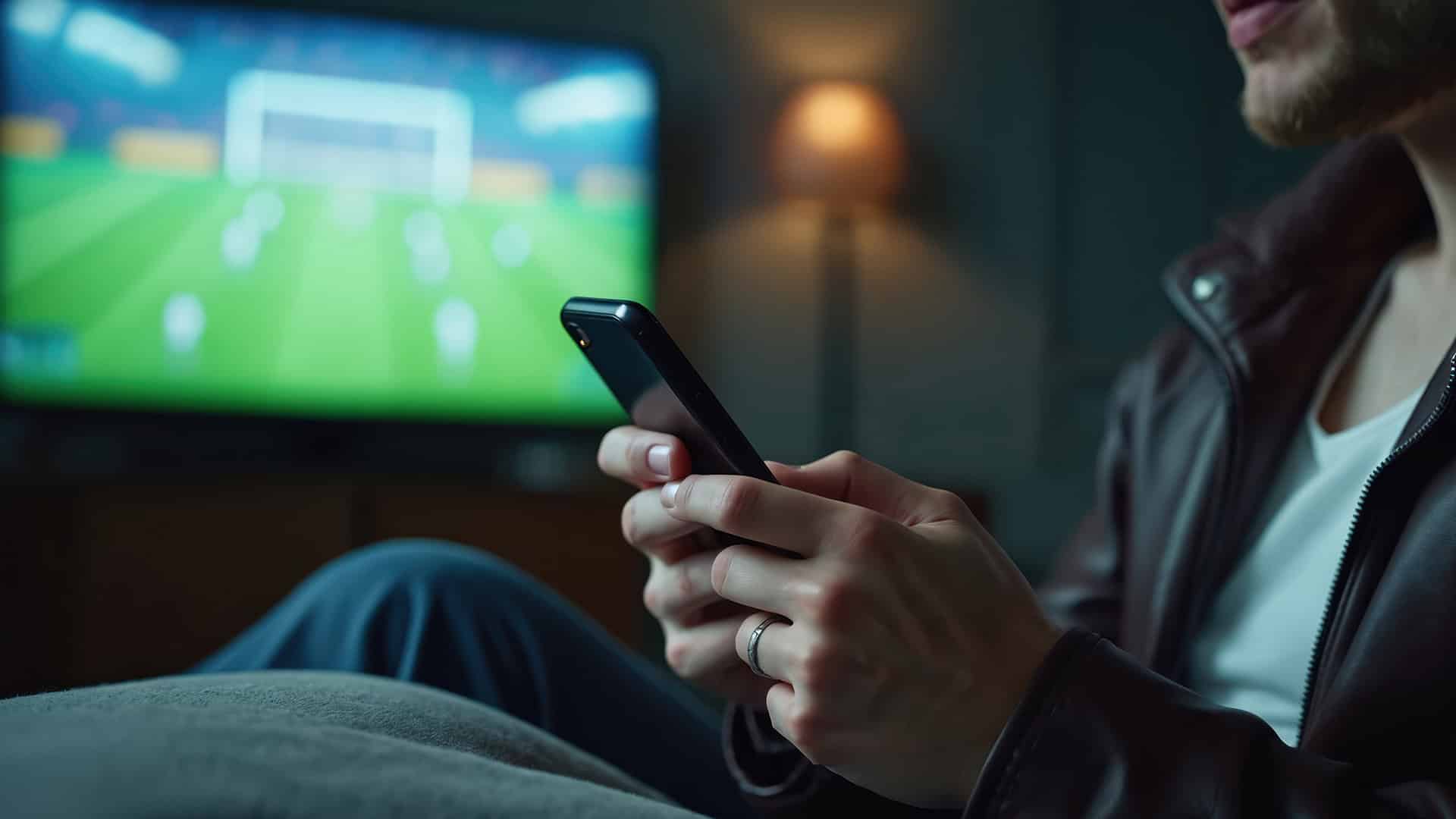
Image Credit: Sports Video Group, 2026
The Final Whistle: What Comes Next
Now that the 2026 World Cup has crowned a champion, the bigger takeaway for brand marketers extends well past soccer. This tournament offered one of the clearest examples yet of how global cultural properties, from the Olympics to awards season to the next viral streaming release, are being treated less like media buys and more like platforms for ongoing engagement. Brands that showed up early, built for the full length of the moment rather than a single broadcast window, and gave fans a genuine role in the story are the ones fans will remember long after the trophy was lifted.
For marketers, the real work happens well before kickoff and continues long after the final whistle. Whether a brand had a nine-figure sponsorship or a single local activation in one host city, this tournament proved that authenticity, timing, and cultural fluency matter more than budget size alone. As the next global cultural moment approaches, whatever it may be, the brands that internalize these lessons now will be the ones ready to move first.
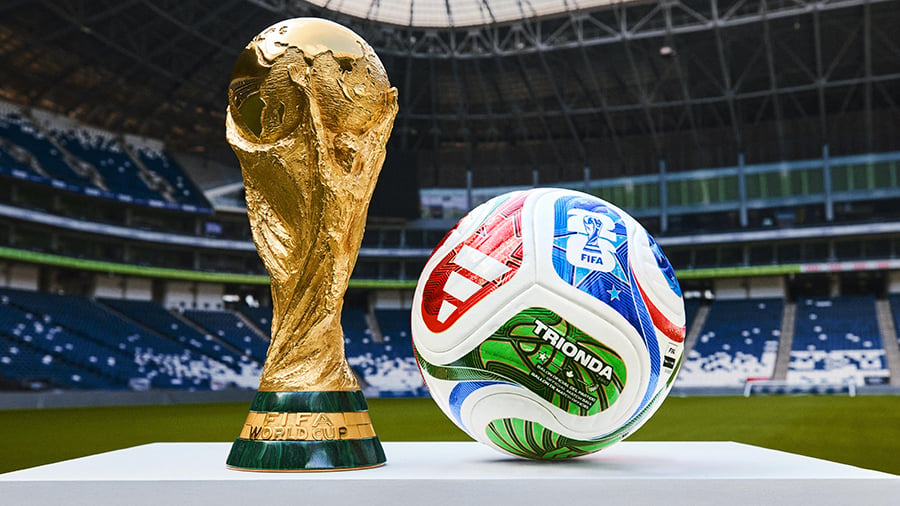
Image Credit: SGB Media, 2025
Eager To Learn More?
If the FIFA World Cup has you thinking about how brands can win big through strategic partnerships, these related reads dive deeper into what's working right now.
- Brand Partnerships Doing It Right in 2026
- How Brands Are Using Established IPs
- The Branding Power Of The Golden Globes
- Transmedia Storytelling As A Marketing Tactic
- Rise Of eSports During COVID-19
Want to stay in the know with all things pop culture? Look no further than our Hot in Hollywood newsletter! Each week, we compile a list of the most talked-about moments in the entertainment industry, all for you to enjoy!