Quick Answer
Microdramas are Hollywood's fastest-growing brand partnership model. See the engagement data, partnership paths, and speed-to-market edge for 2026.
the Format Every Brand Marketer Is Suddenly Talking About
A few years ago, "microdrama" would have gotten you a blank stare in most marketing meetings. Now it is showing up in pitch decks, pricing conversations, and CMO briefings across the industry. The format has moved from a niche mobile habit to a legitimate production category, and brands that ignore it are ceding ground to competitors who are already testing it.
This is not the same conversation the industry was having a year ago about micro-dramas and emotional storytelling. That angle matters, and we have covered it. What deserves its own spotlight now is the business side: how fast this format moves, how brands actually structure a deal, and why the economics look nothing like a typical entertainment partnership. In this article, Hollywood Branded discusses the operational and financial mechanics behind microdrama brand partnerships, and why 2026 is the year to seriously evaluate the format.

What Is a Microdrama, Really (And Why It's Not Quibi 2.0)
A microdrama is a short-form, serialized video series shot vertically for mobile viewing, typically broken into episodes lasting 60 to 90 seconds, with a full season often running dozens of chapters. The format originated in China, where it is known as duanju, and built a loyal, binge-hungry audience years before it crossed over to Western platforms like ReelShort and DramaBox. What makes it different from a standard short-form video is structure: microdramas follow the same storytelling fundamentals as television, with cliffhangers, recurring characters, and season arcs, just compressed into a phone-sized runtime.
The comparison everyone reaches for is Quibi, the short-form streaming platform that launched with billions in funding and shut down within a year. It is a fair comparison to raise, and also the wrong one to lean on for too long. Quibi tried to import expensive, traditionally produced content into a mobile-first box and asked audiences to pay for it before they had a reason to. Microdramas flipped that model: low production costs, free-to-watch early episodes that hook viewers on every social channel, and a monetization structure that only asks for money once someone is already invested in the story. Recent funding activity backs up that the format is being treated as durable infrastructure rather than a fad. HOLYWATER, one of the category's Western players, closed a $22 million raise in early 2026, and in a single week this year four separate studios launched new microdrama ventures or content deals, signaling that Hollywood veterans are treating this as a production lane, not an experiment. The SAG-AFTRA union has also begun drafting terms to formally bring microdrama productions into its fold, which is its own signal that the format has outgrown "niche."

AI Generated Image
The Engagement Numbers Brands Can't Ignore
Skepticism about a new format usually fades once the attention data shows up, and microdrama attention data is hard to argue with. Industry reporting on the category has repeatedly pointed to average daily watch times on leading microdrama apps that outpace legacy streaming platforms, a genuinely surprising stat given how young the format is in the U.S. market. That is not a one-off spike either. Apps in this space are reporting daily active user counts in the tens of millions and monthly actives well beyond that, with total download counts climbing into the hundreds of millions across top platforms.
What is more relevant to brand marketers than the raw numbers is where that attention is concentrated. The audience skews female and spans a wide age range, and it is a genuinely global audience rather than a regional pocket, with meaningful viewership across North America, Europe, and Latin America. Marketing muscle behind these platforms is substantial too: leading players report tens of millions of combined social followers across Instagram, TikTok, YouTube, and Facebook, feeding hundreds of millions of app downloads and millions of daily in-app viewers. For a brand evaluating where to place a bet on a new content format, that combination, real watch time, real scale, and real paid distribution behind it, is a much stronger signal than a viral moment that fades in a week.
Two Ways In: Own the Story vs. Show Up Inside One
Brands generally have two structurally different paths into the microdrama space, and the right one depends on how much creative control and long-term asset ownership a brand actually wants. The first path is a branded microdrama: a custom, original series built from the ground up around the brand, where the brand names the concept, shapes the storyline, and approves every piece of creative before it airs. Because the brand owns the resulting content and actor footage outright, that series becomes a reusable asset the brand can repurpose across its own channels well after the original release window closes. Procter & Gamble's Native brand took this exact approach in February 2026 with "The Golden Pear Affair," a full feature-length microsoap produced in partnership with P&G Studios and dentsu Entertainment, releasing all 55 episodes at once and using the cast's own social platforms to drive continued viewing. It is a public, on-the-record example of a legacy brand treating a microdrama as owned entertainment rather than a one-off ad buy.
The second path is brand integration: weaving a product into a series that is already in production, or already a hit, rather than building something from scratch. This route typically spans multiple titles and genres at once instead of a single show, with placements showing up as storyline moments, dialogue mentions, logo visibility, or full in-scene shopping moments, and it runs inside the free episodes where the audience is largest. It is a meaningfully faster, lighter lift than building an original series, which makes it the better entry point for a brand that wants to test the format before committing to owning a full production. Brands running this kind of integration across a slate of titles have reported reach in the hundreds of millions of views, which is a scale most single-show product placement deals cannot match. Choosing between the two paths really comes down to timeline, budget, and whether the brand wants a reusable content asset or simply wants visibility inside stories that already have an audience.

Speed to Market: Why Microdramas Beat Hollywood's Clock
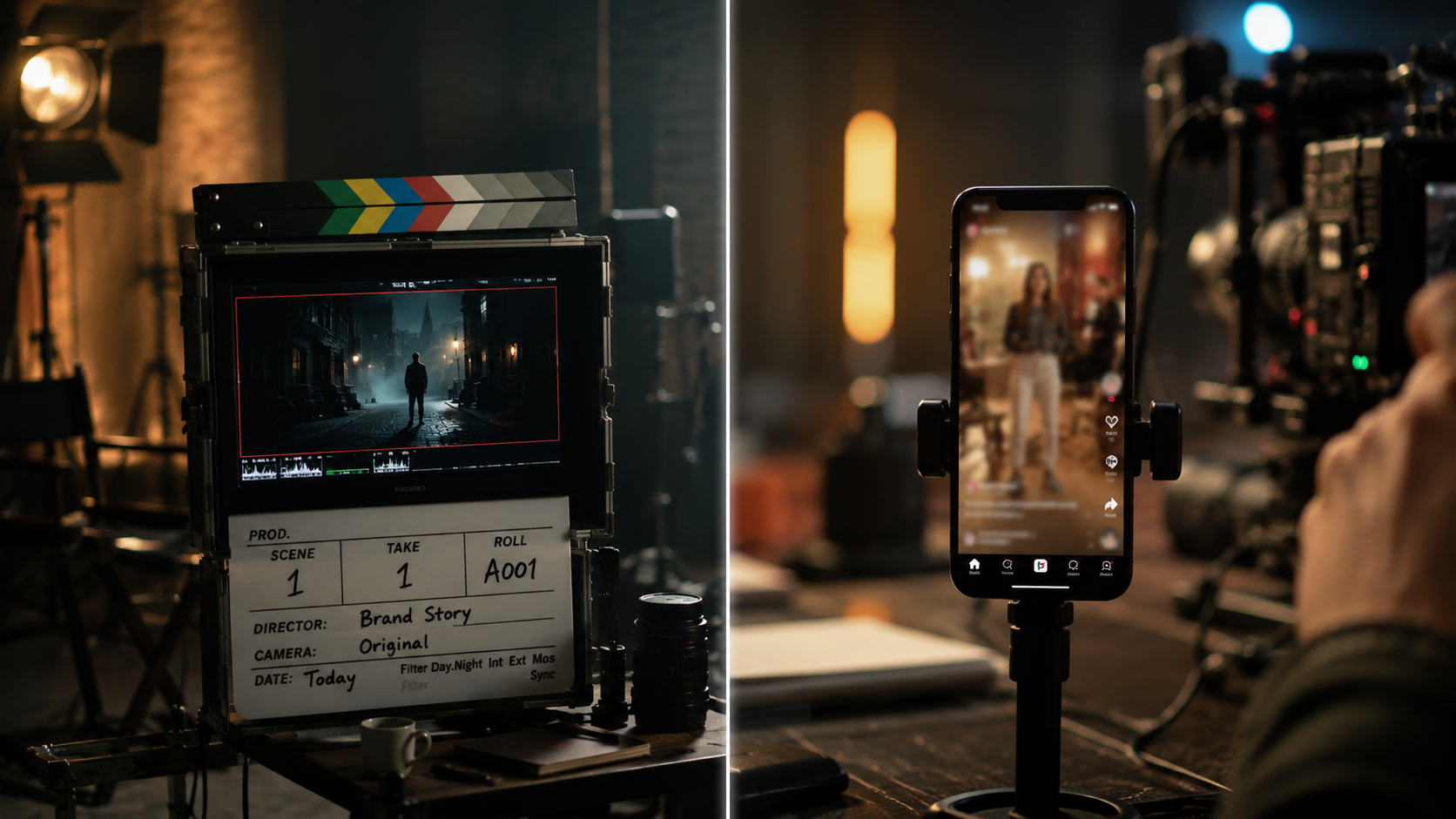
Every brand marketer who has ever waited on a traditional entertainment partnership knows the timeline problem: development, financing, production, and release can easily stretch into years, by which point the cultural moment the brand wanted to ride has already passed. Microdramas compress that entire cycle dramatically. Industry norms for the format put concept-to-screen timelines at around four months, covering concept development, scripting, production, and release, which is close to what a traditional production spends just waiting on a greenlight.
That speed unlocks a kind of marketing agility brands rarely get from entertainment partnerships. A microdrama can be built around a holiday, a product launch, or a cultural moment while it is still relevant, instead of guessing eighteen months out what will still matter by release. It also lowers the stakes of experimentation considerably: a brand can test how one series performs before committing further budget, rather than making an all-or-nothing bet the way a traditional film or television partnership demands. For a marketing team used to locking in a media plan a year in advance, the ability to greenlight, produce, and release inside a single fiscal quarter is a genuinely different operating model, and it is one of the clearest reasons this format is pulling budget away from slower-moving entertainment partnerships.
AI Generated Image
What This Means for Brand Marketers Heading Into 2027 Planning
Microdramas are not a passing trend riding the coattails of vertical video. They are a distinct production category with real funding behind them, real union attention, and engagement numbers that rival or beat platforms brands have trusted for a decade. The two-path structure, own a custom series outright or integrate into ones already winning, gives marketers a real choice depending on budget, timeline, and how much long-term content ownership matters to their strategy.
For brands building 2027 plans right now, the takeaway is straightforward: this is worth a real evaluation, not a wait-and-see approach. The format's speed to market means a brand can test it this year and still have time to scale what works before competitors catch up. Hollywood Branded works with brands across both microdrama partnership models, from custom branded series to multi-title integrations, and can help map which path fits a specific brand's goals, timeline, and budget.
Eager To Learn More?
Whether you're looking to expand your knowledge or find inspiration for your own brand partnership strategy, here are a few more posts worth exploring:
- Micro-dramas: The New Frontier in Brand Storytelling
- Behind the Scenes: How Major Studios Collaborate with Brands for Mutual Success
- What Paid Influence Gets Wrong and Ownership Marketing Gets Rights
- Influencer Pricing 2.0: A Brand's Guide to Analytics-Driven Creator Rates in 2026
- Content-First, Creator-Led: What's Next for Influencer Marketing
Want to stay in the know with all things pop culture? Look no further than our Hot in Hollywood newsletter! Each week, we compile a list of the most talked-about moments in the entertainment industry, all for you to enjoy!