Quick Answer
See what the USC vs. Oregon sideline crisis teaches PR pros and brands about crisis management, social media lockdowns and public apologies that land.
Why did one sideline reaction become a national story?
When USC linebacker Desman Stephens II was seen smiling and celebrating while Oregon quarterback Dante Moore received medical attention during the USC vs. Oregon game on September 26, 2026, the reaction became a bigger story than the hit itself. Within hours, one on-field moment turned into a national conversation about sportsmanship, accountability and crisis management.
The late hit left Moore with a concussion, a targeting ejection and led to a one-game suspension from USC the next day. In this article, Hollywood Branded discusses how the USC vs. Oregon sideline moment became pop culture, how crisis teams respond when a reaction goes viral and what PR pros and brands can learn from it.
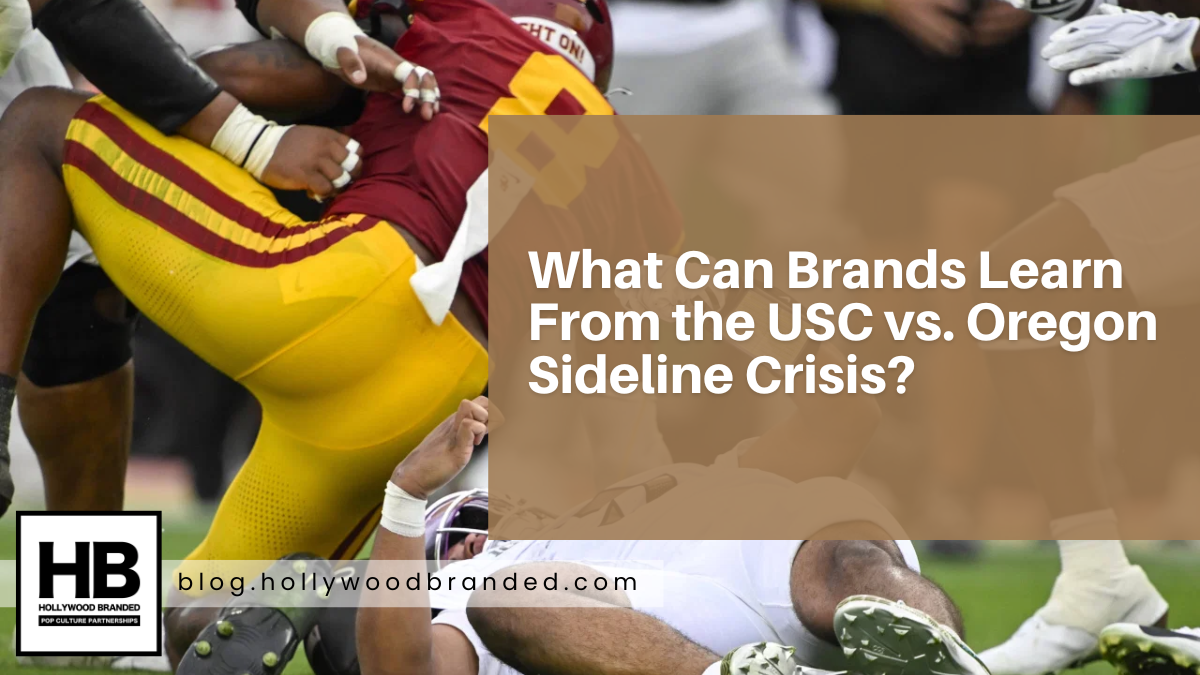
Photo Credit: Essentially Sports/IMAGO
sports in pop culture
Yes - sports play an active role in pop culture. A moment like this on the field becomes a pop culture moment when the emotion tells a clearer story than the play itself. Targeting calls happen often enough in college football that the hit alone might have faded after the weekend highlight reels. What pushed this one into the national spotlight was the reaction of Stephens while Moore was placed on a backboard and taken off the field by ambulance. You do not need to understand the targeting rule to understand that reaction, and that is exactly why it traveled so fast.
Clips like this jump from sports accounts to meme pages to morning shows because they touch on something universal - how we expect people to act when someone gets hurt.
The story also grew because the biggest voices in sports weighed in quickly. Each new take gave fans another reason to share, react and pick a side. For PR and communications professionals, this is the part that matters most, because a crisis is rarely just the incident. It is the story people tell about the incident afterward, and once that story crosses from sports coverage into general pop culture, the people involved lose control of it unless they respond quickly and clearly.
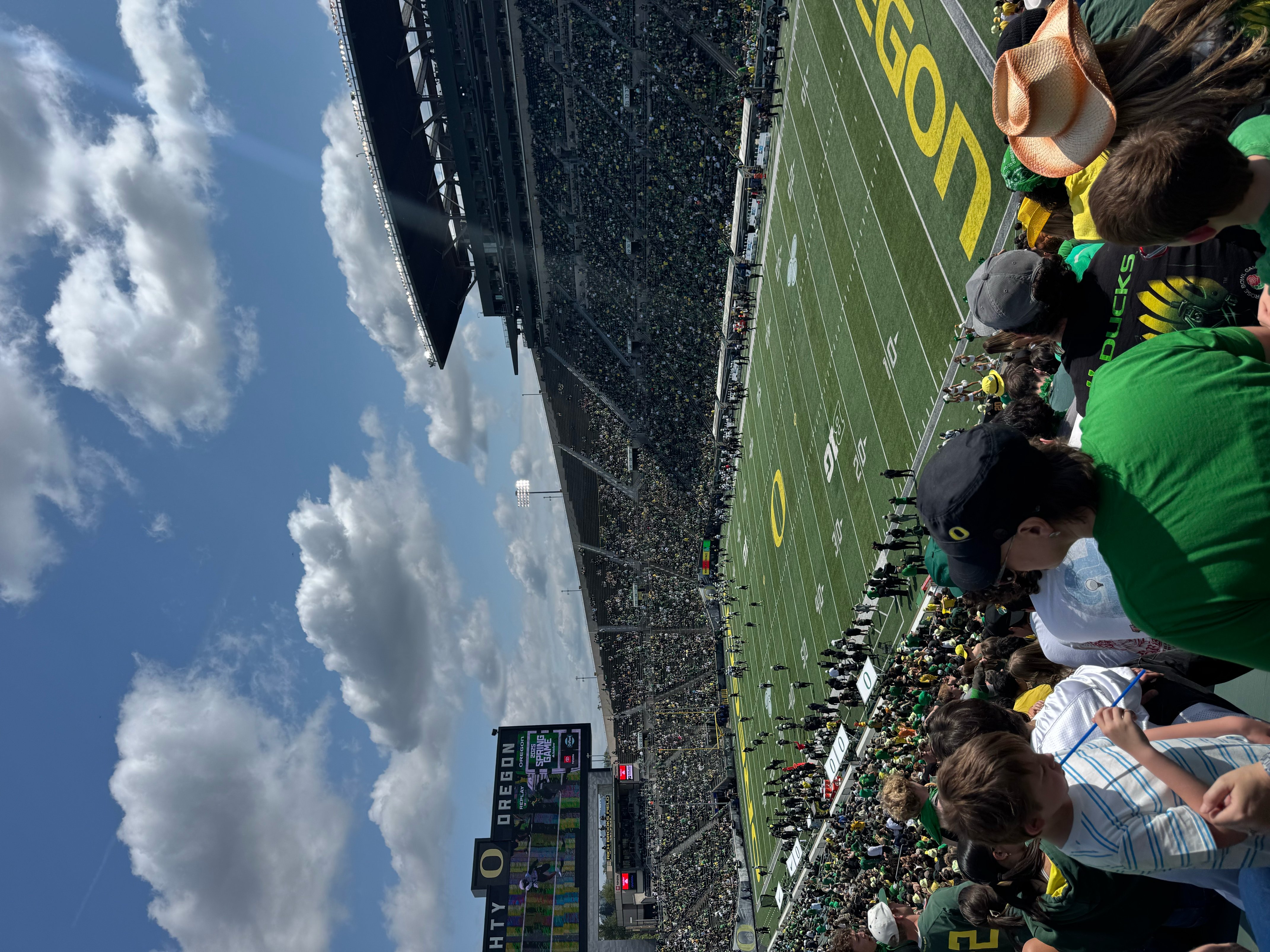 Courtesy of yours truly, a Duck alum. Sco Ducks!
what happens inside a crisis team in the first 24 hours?
In the first 24 hours of a crisis, a strong team focuses on four jobs: confirming the facts, protecting the people involved, aligning every stakeholder and deciding who speaks and when. Crisis management is the process an organization uses to respond to an event that threatens its reputation, and speed only helps when it is paired with accuracy. For a university athletic department, the stakeholders are wide: the athlete, the coaching staff, the athletic director, the conference, the opposing program and the fans.
Every one of them needs to hear a consistent message, which is why organized teams rarely respond in the heat of the moment. The goal is to move fast enough to shape the story without moving so fast that the first statement has to be walked back.
The first 24 hours of a crisis response usually follow this order:
- Confirm what happened, using video, officials and the people involved.
- Check on the safety and wellbeing of everyone affected, including the injured player.
- Align leadership on the decision, such as a suspension or other discipline.
- Decide who speaks - the organization, the coach, the individual or all three.
- Release the statement and prepare for follow-up questions.
USC's response followed that pattern closely. The game was played on Saturday, and on Sunday the program announced a one-game suspension along with statements from head coach Lincoln Riley and from Stephens himself. Riley said, "Desman's actions in last night's game are unacceptable and are not reflective of USC Football nor of his personal character."
According to CBS Sports, the Big Ten endorsed the decision, and USC chose to discipline Stephens even though this season's updated targeting rules no longer carry over an automatic suspension for a first offense. That choice sent a signal that the program was acting on its values, not just the minimum a rulebook required.
 Photo Credit: Yahoo! Images/Getty
the social media repercussions
Going dark on social media during a crisis is a protective move, and in this case it was a reasonable one, but it only works when a real statement follows soon after. According to The Spun, Stephens set his Instagram account to private roughly 20 minutes after the hit, after more than 1,800 comments flooded his recent posts. Other outlets, including Bleacher Report, reported that the account was deactivated, so the exact status is less important than the speed. The same report noted that some users shared personal information about his family in the comments, which is where online anger crosses into doxxing and real safety risk. When the comments section turns into a threat, closing it is not hiding, but basic protection for the person and the people around them.
Although, silence can read as avoidance, and a locked account with no explanation leaves a hole that fans and media will fill on their own. That is why the most effective playbook pairs a quick lockdown with a clear statement from the person or organization within a day. For athletes, creators and talent, the lesson is to plan for this before it happens. A simple social media crisis plan covers who has access to accounts, how to filter or limit comments, who approves a holding statement and when the person returns to posting. Brands that partner with talent should ask whether that plan exists before a contract is signed, not after a clip goes viral.
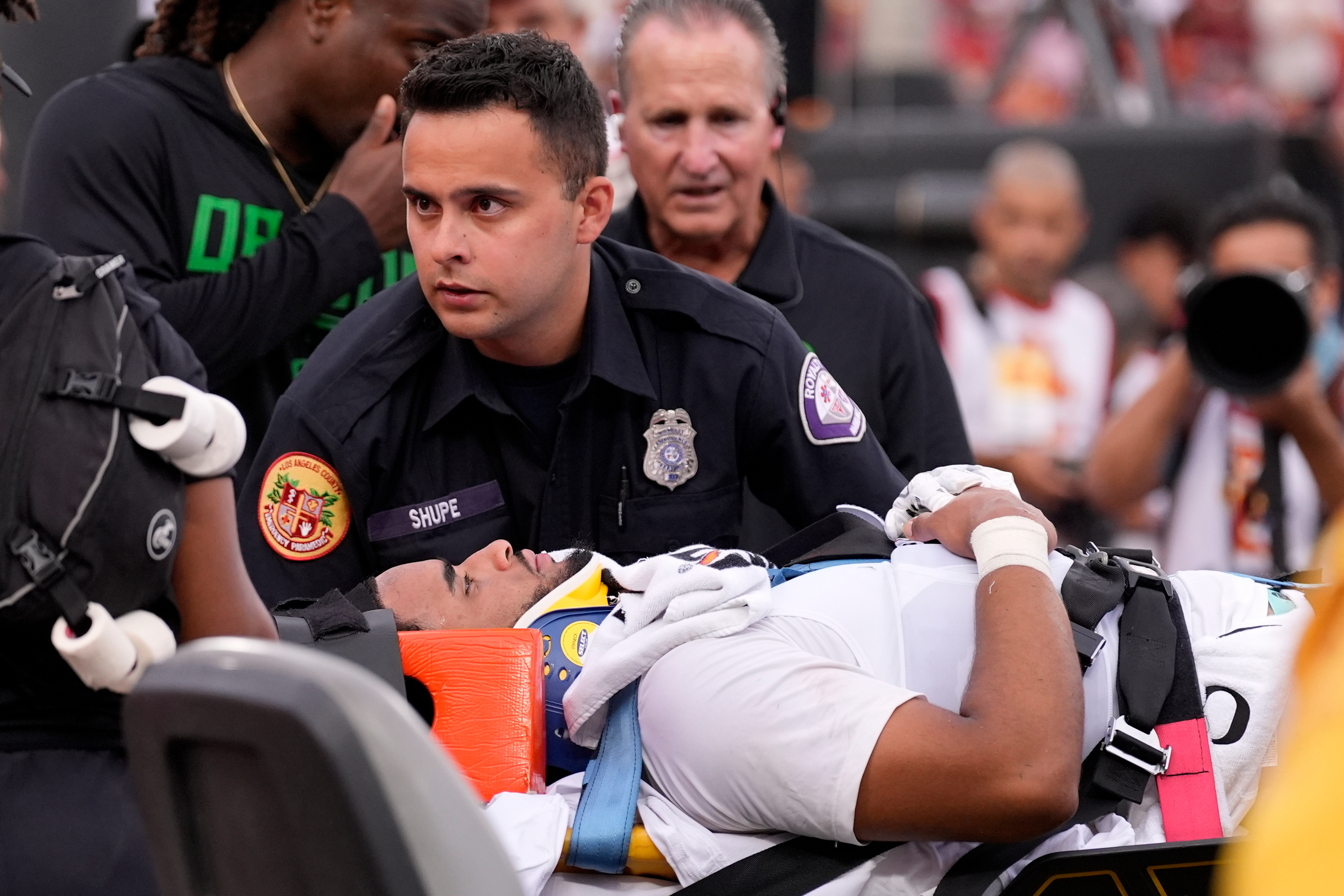
Photo Credit: OPB/Mark J. Terrill/AP
what makes an apology land?
A public apology lands when it takes full ownership, names the person who was harmed, describes what was wrong without excuses and commits to change. Stephens' statement, released by USC Athletics, checked each of those boxes:
I want to sincerely apologize for my actions during yesterday's game. Seeing a player injured like that is incredibly serious, and my reaction in the moments afterward was completely inappropriate and inexcusable. Regardless of what was going through my mind at the time, there is no justification for smiling or celebrating while another player receives medical attention. I take full responsibility for my actions. That is not the person or teammate I want to be, and I will learn from this. I am deeply sorry to Dante, his family and everyone who saw my reaction. It is not representative of USC or our program. I hope he makes a full and speedy recovery.
Still, words are only part of an apology, and audiences judge actions from the moment too. After his ejection, Stephens remained on the USC sideline for the second half, and when Riley was asked why, he answered, "Because he's on our football team." That line reflects real team loyalty, and many coaches would say the same, but in a crisis it can read as defensive when it is heard before the apology.
Some fans also questioned whether the statement sounded like his own words, which is common when a polished statement follows a very human mistake. The takeaway for communications teams is that loyalty and accountability can exist together, but they have to be communicated together.

what should marketers take away from this moment?
The USC vs. Oregon sideline crisis shows that in today's pop culture, a reaction can matter more than the action, and the response in the next 24 hours decides what the story becomes. USC moved quickly with a suspension, a coach's statement and a personal apology, while the athlete's lockdown on social media protected him from the worst of the online response. At the same time, the sideline decision and the tone of early comments showed how easily loyalty can be read as defensiveness when it is not paired with accountability. For PR pros, comms teams and brands, this is a reminder that crisis management is not only about what you say. It is about what people see, what they share and how quickly you give them a clear, honest story to replace the viral one.
Eager To Learn More?
If this breakdown got you thinking about how brands and talent handle high-pressure moments, these Hollywood Branded articles go deeper on crisis response, athlete partnerships and protecting your brand.
- The Road to Recovery: Rebuilding Trust After a PR Crisis
- A Great Case Study Of PR Crisis Control: The Grammys 2020
- Celebrity Endorsements: Safeguarding Your Brand's Reputation Against Misdeeds
- Maximizing Brand Partnerships in College Football
- How NIL Policies Are Transforming College Athletics and Branding Opportunities
Want to stay in the know with all things pop culture? Look no further than our Hot in Hollywood newsletter! Each week, we compile a list of the most talked-about moments in the entertainment industry, all for you to enjoy!