Quick Answer
Mark Ruffalo shows brands that talent values come with every partnership. Vet public stances, audience fit, and scripts before signing or placing.
Why Should Brand Marketers Be Paying Attention to Mark Ruffalo Right Now?
Mark Ruffalo had the kind of summer most actors only dream about, returning as Bruce Banner in Spider-Man: Brand New Day, a film that has grossed more than $2.4 billion worldwide since opening on July 31, 2026. And, being conformed to return in the MCU's latest blockbuster,Avengers:Doomsday, that critics are tracking to gross a unheard of $3 billion in its theatrical run. Yet the Hulk is only half the story, because Ruffalo is also one of the most outspoken activists working in Hollywood today.
That combination makes him a fascinating case study in values-driven celebrity, where a star's beliefs are as visible to audiences as his roles. For brand marketers weighing talent partnerships, product placement, or any brand integration tied to a public figure, Ruffalo's career offers a clear lens on authenticity, alignment, and risk. In this article, Hollywood Branded discusses what Mark Ruffalo's career teaches brands about values-driven celebrity and how to evaluate talent before signing a partnership.
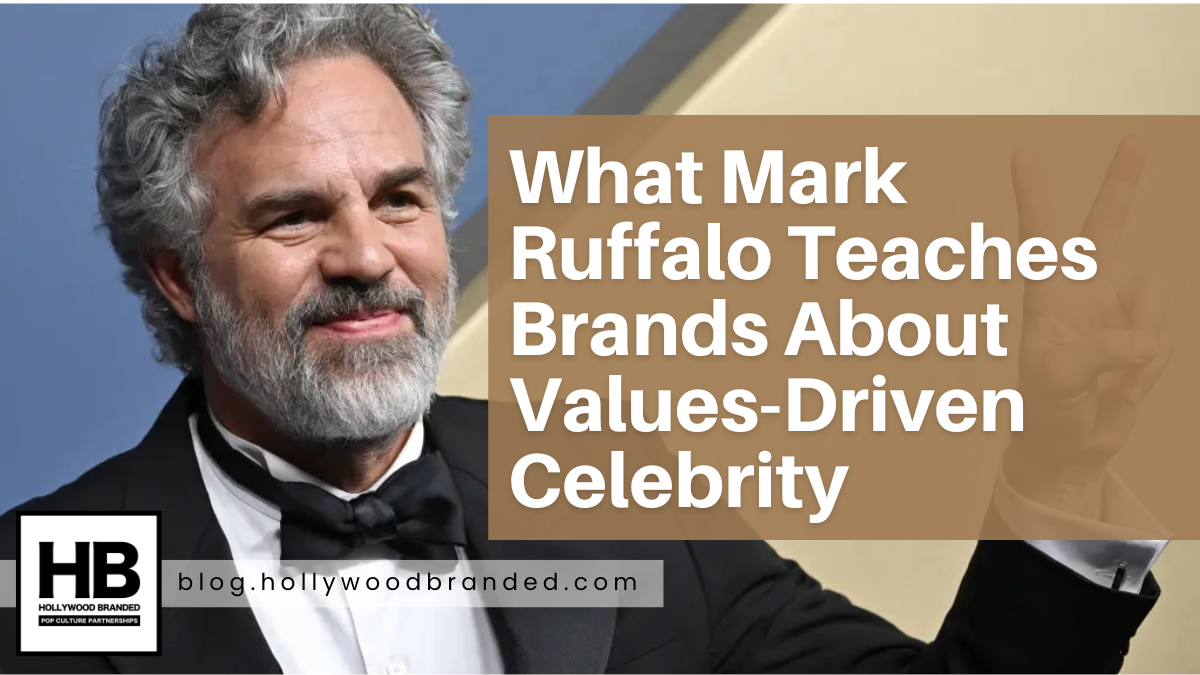
Photo Credit: Chris Chew/UPI/Shutterstock
How Did Mark Ruffalo Build a Career That Spans Blockbusters and Indie Dramas?
Ruffalo's path to superhero status started far from a green screen. He built his reputation in theater, and his stage work in Kenneth Lonergan's This Is Our Youth led to the lead role in Lonergan's film directorial debut, You Can Count on Me, in 2000. From there, he moved between romantic comedies like 13 Going on 30, thrillers like Zodiac and Collateral, and prestige dramas that earned him Academy Award nominations for The Kids Are All Right, Foxcatcher, Spotlight, and Poor Things. He also won a Primetime Emmy for HBO's I Know This Much Is True, and in 2025 he returned to HBO to lead the crime drama Task from Mare of Easttown creator Brad Ingelsby. His run as Bruce Banner, which began with The Avengers in 2012, introduced him to an entirely new generation of fans without pulling him away from the character work that built his name.
For brands, the lesson here is that audience breadth comes from range, not repetition. Ruffalo reaches Marvel fans, awards voters, and prestige TV viewers at the same time, and each group sees a slightly different version of him. What stays constant is the persona underneath the roles: earnest, a little rumpled, and deeply human. That consistency is what makes him believable whether he is playing a scientist who turns green or a reporter chasing the truth in Spotlight. Brands evaluating talent should look for the same quality, because a consistent public persona is far easier to align with than a string of disconnected hits that each tell a different story. It also means the partnership is more likely to age well, since audiences already have a stable sense of who the talent is and what they represent.
 Photo Credit: Marvel Studios
What Happens When a Celebrity's Values Are Louder Than His Roles?
Ruffalo's activism is not a side project that only surfaces during awards season. According to a Sierra magazine profile, he became an environmental activist around 2010, when energy companies threatened to frack for natural gas near his farm in New York State. That same year he founded the nonprofit Water Defense, and he has since spoken at anti-fracking rallies, protested pipelines, and campaigned publicly on climate and clean water. He is equally vocal on labor and political issues, and his commentary regularly makes headlines of its own.
He has also been one of Hollywood's most visible voices calling for a ceasefire in Gaza, including through the Artists4Ceasefire collective, a stance that has drawn both strong support and sharp criticism. In early 2026, for example, rumors about his future in the Marvel franchise spread quickly online before he addressed them publicly, and he went on to appear in Brand New Day that summer.
This is where values-driven celebrity gets interesting for marketers. A star with clear convictions brings built-in credibility with audiences who share those values, and that kind of trust is difficult to buy any other way. The same convictions can create friction with audiences who disagree, and a brand standing next to that star will inherit some of both reactions. Neither outcome is automatically good or bad, since the right answer depends entirely on who the brand is trying to reach and what the brand itself stands for. The real mistake is assuming a celebrity's values will stay quiet just because a campaign brief does not mention them. Smart brands plan for those values from day one, deciding in advance whether they are a feature of the partnership or a factor to manage carefully.
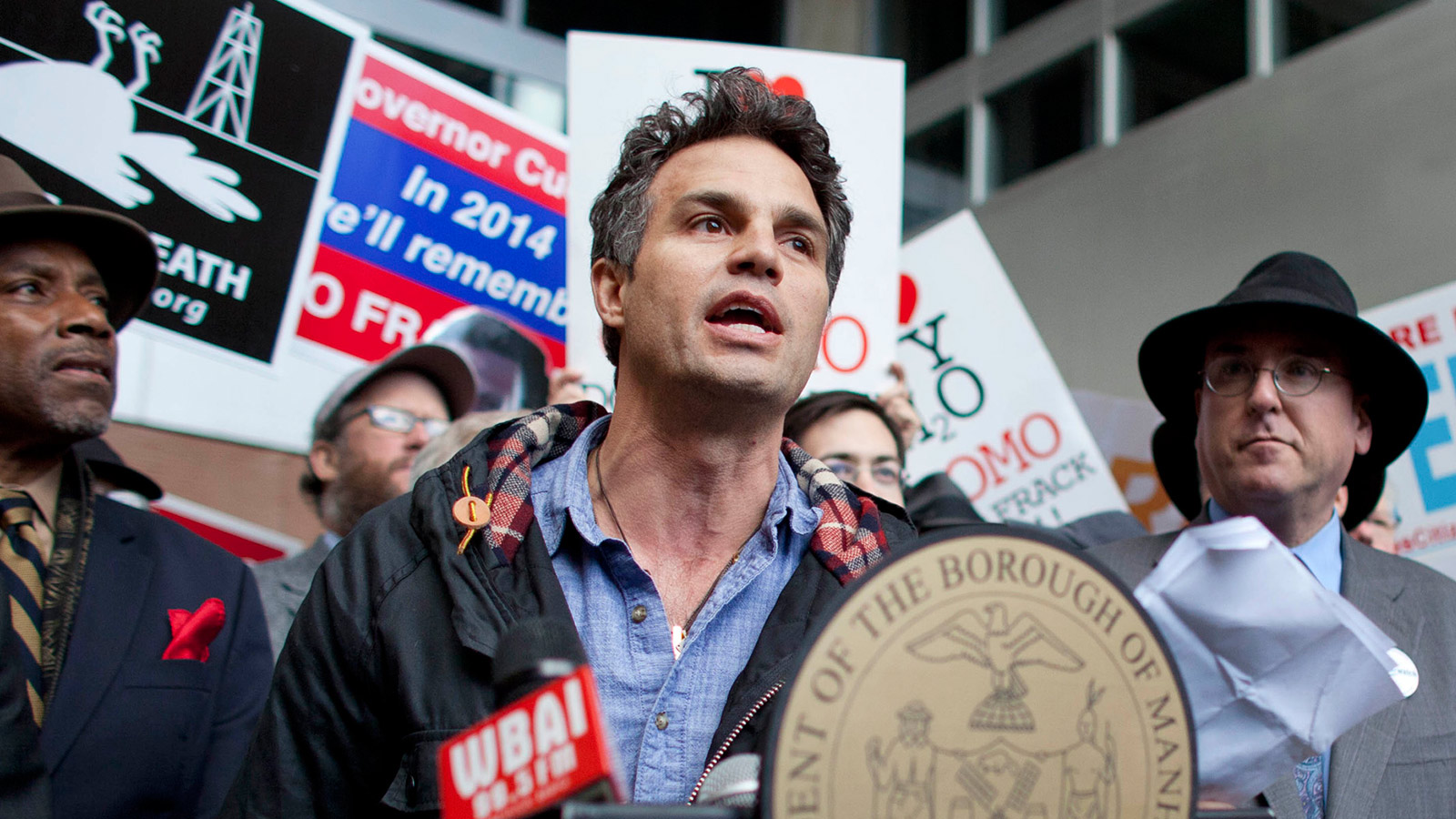 Photo Credit: Reuters/Andrew Burton
What Can Dark Waters Teach Brands About How Hollywood Portrays Corporations?
Dark Waters, released in 2019 and directed by Todd Haynes, is the project where Ruffalo's activism and his acting fully merged. Ruffalo produced the film and starred as Rob Bilott, the Ohio attorney who spent roughly two decades in a legal battle with DuPont over PFOA contamination in Parkersburg, West Virginia. The project took shape after Ruffalo read Nathaniel Rich's 2016 New York Times Magazine profile of Bilott and saw a story that deserved a much wider audience. He has described Bilott as a real-life hero, a framing that shaped how the film positioned its protagonist against the company. Sierra reported that until Dark Waters, Ruffalo had largely kept his politics separate from his acting career. The result was a mainstream Hollywood film in which a real, recognizable corporation sits at the center of the story as the antagonist.
Most brands will never face a Dark Waters situation, but every brand should understand the principle behind it. Hollywood tells stories about companies, products, and entire industries all the time, and the storytellers decide how those brands come across on screen. That is why Hollywood Branded's approach to product placement starts with the script, not the logo. Before a brand commits to an opportunity, our team reviews the scene, the character using the product, and the context around it to understand whether the portrayal will help or hurt. Not every villain association is negative, since a powerful antagonist can still signal luxury or status, but that is a judgment call best made with the full script in hand. A placement that looks exciting on paper can backfire quickly if the brand lands in a scene that makes audiences cringe for the wrong reasons.

How Should Brands Evaluate Values-Driven Talent Before a Partnership?
The Ruffalo case points to a practical question every brand should answer before signing talent: do the celebrity's public values support the brand's story, or compete with it? Start with a full review of the talent's public statements, causes, and past partnerships, going back well beyond the last few months of social posts. Then compare the talent's audience with your own, because a star can be enormously popular and still be the wrong fit for a specific customer base. Look honestly at your brand's own record as well, since values-driven talent will be skeptical of any partner whose practices contradict the causes they champion. Finally, consider how the partnership would read in a headline if either side were asked about it publicly. That simple gut check often surfaces concerns that a spreadsheet of follower counts and engagement rates never will.
The strongest partnerships are built on mutual benefit, where the brand gains credibility and reach and the talent gains a partner that genuinely fits the story they are telling. That matters even more with talent like Ruffalo, whose reputation is tied to his convictions, because the partnership itself becomes part of his public narrative.
Hollywood Branded builds strategy before outreach, identifying which talent, creators, or productions fit a brand's goals and audience, and vetting those options before any conversation begins. Contracts matter too, including disclosure expectations, approval rights, and a clear plan for handling unexpected news on either side. When that homework is done up front, brands can pursue bold, values-forward partnerships with their eyes open rather than simply hoping nothing goes wrong.

Photo Credit: Mary Cybulski/Focus Features/Variety
What Is the Real Takeaway From the Ruffalo Playbook for Brands?
Mark Ruffalo shows that a celebrity can be a global blockbuster star and a committed activist at the same time, and that audiences often respect him for the consistency. For brand marketers, his career is a reminder that talent brings its full identity to every project and every partnership, including beliefs that may never appear in the brief.
The bigger opportunity is that values-driven talent is not something to fear or avoid. Audiences today are quick to spot partnerships that feel purely transactional, and they tend to reward brands that show up alongside people and stories that genuinely match what the brand believes.
 Photo Credit: CBS Photo Archive / CBS via Getty Images
Eager To Learn More?
Want to go deeper on celebrity partnerships, brand safety, and making product placement work for your brand? Start with these reads from the Hollywood Branded blog:
-
- The Hidden Rulebook of Fame: What Brands Miss Before They Sign
- Celebrity Endorsements: Safeguarding Your Brand's Reputation Against Misdeeds
- How To #16: Make Your Product Placement Positive For A Home Run
- How Celebrity Endorsements & Product Placements Shape Pop Culture
- Hollywood Branded's Blueprint for Effective Product Placement
Want to stay in the know with all things pop culture? Look no further than our Hot in Hollywood newsletter! Each week, we compile a list of the most talked-about moments in the entertainment industry, all for you to enjoy!