Quick Answer
Microdrama marketing is booming. Learn why brands are racing into vertical storytelling and what separates the wins from the failures.
The New Two-Minute Obsession
Crocs launched a five-episode vertical series called "Charmed to Meet You" on ReelShort this past Valentine's Day. It wasn't a product demo. It was a story where a shoe charm doubled as the plot device, and it climbed straight into the platform's top ten and stayed there.
That's the pull of the microdrama: bite-sized, vertical, wildly addictive episodes that somehow deliver a full beginning, middle, and end in under two minutes. Brands are pouring into this format right now because the audience is already there, watching in massive numbers, and the infrastructure behind it, the platforms, the production pipelines, the ad dollars, is moving faster than almost anything else in entertainment marketing. In this article, Hollywood Branded shares what's driving the microdrama boom, why most branded attempts at it fail, and what marketers need to know before committing budget to this format.
.png?width=1200&height=675&name=top%20white%20rectangle%20%20with%20black%20link%20(10).png)
The Anatomy of a Microdrama (Why the Cliffhanger Is the Business Model)
Every microdrama episode runs somewhere between 60 and 120 seconds, and that runtime isn't a stylistic choice, it's an engineered structure. The first few seconds are the hook, the moment designed to grab attention before a viewer's thumb can scroll away. The middle stretch, often just 40 to 50 seconds, escalates the situation and raises the emotional stakes. Then, in the final five seconds, the episode delivers a cliffhanger, an unresolved moment specific enough to make the viewer desperate for what happens next. That cliffhanger resolves in the first ten seconds of the following episode, right before a new hook arrives, and the cycle repeats. This rhythm is why viewers report averaging 20 to 22 episodes in a single sitting. It's not casual viewing, it's what the industry calls micro-bingeing.
For brand marketers, this structure changes everything about how integration has to work. With only 40 to 50 seconds of actual story content per episode, there's no room for a brand to sit outside the plot as a sponsor logo or a cutaway shot. The brand has to live inside the hook, the escalation, or the cliffhanger itself, or it simply gets lost. This is exactly why Crocs' shoe charm worked as a plot device rather than a prop, and why Maybelline wove a concealer into the emotional beats of a meet-cute rather than showing it in a demo. The specificity matters too. A cliffhanger built around "will she choose him?" pulls a viewer forward. A vague "what happens next?" does not. Brands that understand this rhythm can build integration that feels inseparable from the story. Brands that don't end up producing something that looks like an ad wearing a story's clothing, and audiences notice the difference immediately.
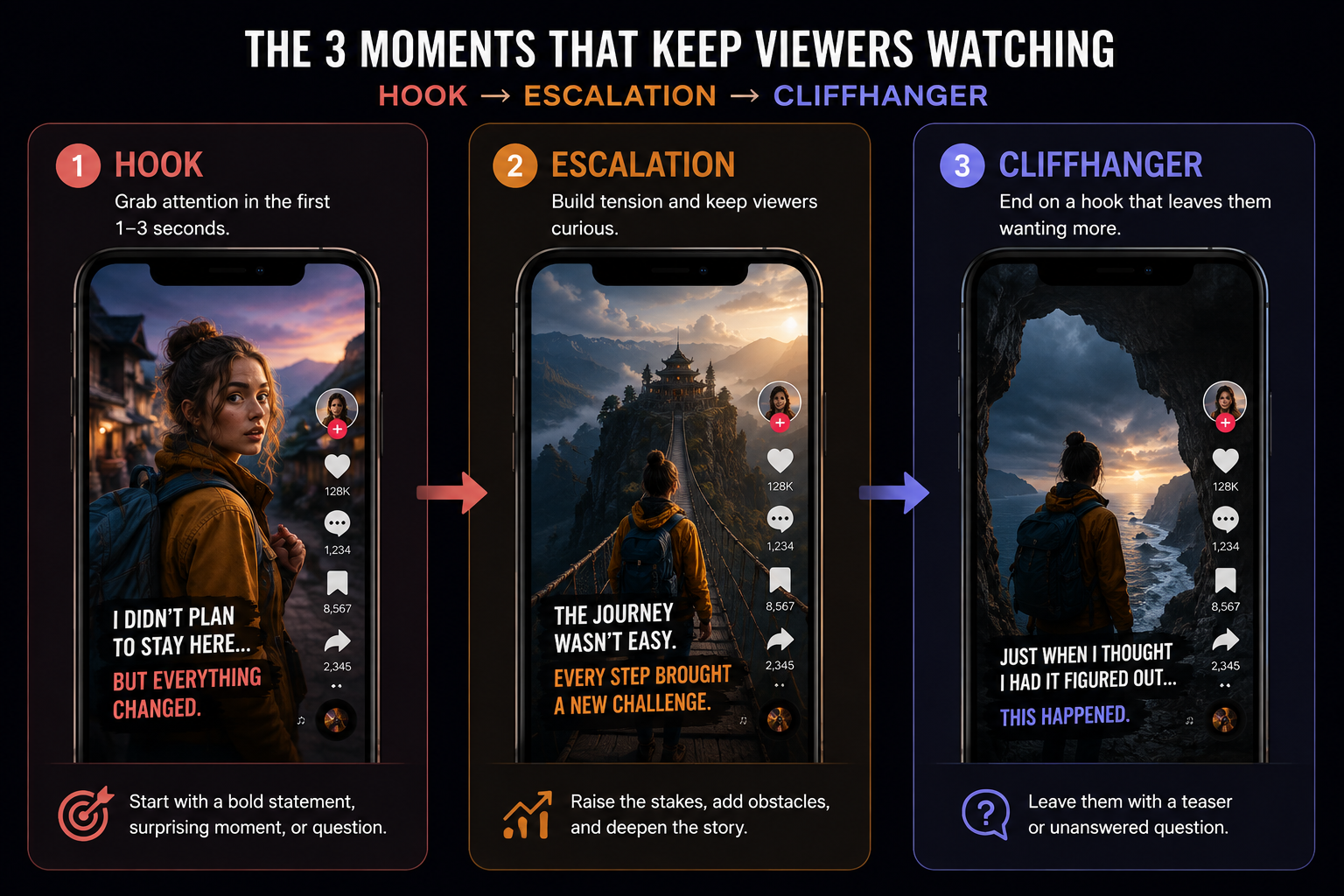 AI Generated Image
The Market Moved: Microdrama Growth by the Numbers
The scale of this shift is hard to overstate. The global microdrama market hit roughly $11 billion in 2025, with projections putting it at $14 to $20 billion by the end of this year, nearly three times the growth rate of FAST channels, which not long ago were considered the fastest-growing segment in streaming. In the US alone, the market sits at about $1.5 billion and is accelerating quickly. In the first quarter of this year, short-drama apps recorded 850 million paid downloads, up 140 percent year over year, with 5.78 billion hours watched in that same window. Numbers like that don't describe growth, they describe migration, an entire viewing habit relocating to a new format almost overnight.
Major platforms are backing this shift with real capital, not just experimentation budgets. Google has committed production money to the space. TelevisaUnivision expanded from a single microdrama series to thirty in its most recent upfront presentation. TikTok has built dedicated infrastructure specifically to support this content type. When platforms with this much reach move capital in one direction that decisively, it stops being a passing trend and starts being the direction the market is actually heading. Brand marketers watching from the sidelines are, in effect, watching their audience move to a new home while deciding whether to follow.
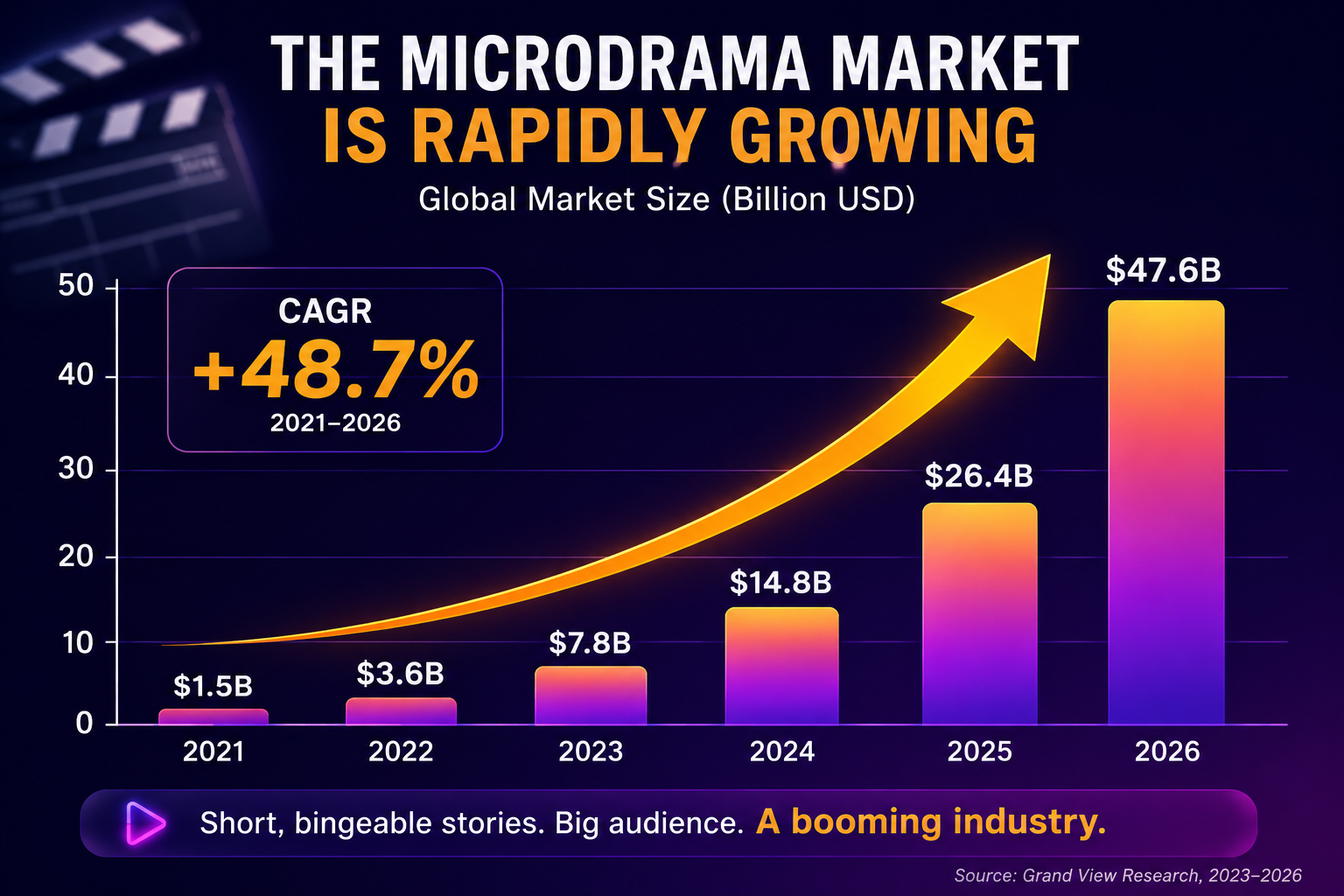 AI Generated Image
Why Most Brands Fail (and What Actually Works)
The typical failure pattern is easy to spot once you know what to look for. A CMO gets excited about the format, calls an agency, allocates budget, and a talented director gets hired to produce something polished. But somewhere in that process, the brand becomes the star of the story instead of a detail within it, and the audience leaves almost immediately. Viewers register the shift in tone the moment they sense they're being marketed to rather than entertained, and that friction kills engagement fast.
The brands succeeding in this space made one decision before production ever started: the premise has to work even if you strip the brand out of it entirely. Maybelline's "Hot Frosty" is a clean example. The concealer wasn't demonstrated on screen, it was folded into a meet-cute, and the story worked with or without the product visible, though the product made it richer. MCoBeauty took a similar approach with an escape room series featuring Tana Mongeau, where beauty products functioned as puzzle clues rather than the reason the series existed. JCPenney embedded its brand inside a telenovela format the audience already trusted, and the result was 16 million impressions and 5.6 million views.
Patience matters here too. Bilt's first attempt at a microdrama series failed, not because of weak production values, but because the characters existed to deliver brand information instead of carrying real narrative momentum. Rather than walking away, the team rebuilt the series around a protagonist arriving in New York City, kept the same budget, and the rebuilt version went viral. The lesson holds across every example: the format works consistently. It's weak storytelling that doesn't.

The Real Opportunity Is Ownership
Most branded entertainment is built to end. A brand funds it, produces it, amplifies it during the campaign window, and then moves on to the next thing. That's spend, not investment. Smarter brands are starting to treat microdrama production as an opportunity to build lasting equity instead. A single production day can generate multiple assets: alternate edits for different platforms, lifestyle imagery for paid campaigns, and talent content that feeds both brand and creator channels at once. One shoot becomes organic content, paid media, press material, and earned coverage simultaneously.
The bigger opportunity, though, is ownership of the intellectual property itself. When a brand funds a traditional commercial, the production company typically owns it. When a brand funds social content, the platform controls distribution. And when a brand funds a microdrama on someone else's platform without negotiating terms, it's paying for exposure without building any lasting equity. The smarter structure involves negotiating IP ownership directly with the platform: the brand produces, the platform distributes, and the brand retains rights to repurpose, expand, merchandise, or license the content elsewhere. Some brands are even taking equity stakes as co-producers, which means if a series becomes a franchise or its characters get licensed, the brand participates in that upside rather than watching it happen from the outside. Marketers spending serious budget in this space would do well to think like investors and ask what the IP is actually worth beyond the initial campaign window.
 AI Generated Image
The Moment Is Now
Two years ago, microdramas were experimental territory where brands could test freely with little downside and no real competition for attention. That window has closed. Platform money is locked in, studios are building out full content slates, and top creators are already signed to exclusive deals. Production quality alone is no longer a differentiator, it's simply the price of entry. What separates the brands that win now is a combination of speed and story quality working together.
Brands that can move from concept to market within the next few quarters, backed by a genuinely strong story, stand to own meaningful space in this format and pick up real PR coverage along the way. Brands that spend six months developing a series only to discover the premise doesn't hold up are already behind before they launch. Before committing budget, marketers should ask themselves a few hard questions: Does the premise work without the brand embedded in it? What does success actually mean, immediate sales, cultural relevance, or long-term IP value? And is this a one-off campaign or the first season of something with franchise potential? The brands treating microdrama as a business asset rather than a marketing checkbox are the ones positioned to benefit as this format matures. The opportunity is real, the infrastructure is in place, and the marketers who move now with strong storytelling will be the ones who own this space before it gets crowded.
 AI Generated Image
Eager To Learn More?
If microdrama marketing has you rethinking your content strategy, these related reads dig deeper into the trends shaping short-form and entertainment marketing today:
- Micro-Dramas: The New Frontier in Brand Storytelling
- The 15 Second Attention Span
- Measuring the Effectiveness of Product Placement: Key Metrics and Insights
- Product Placement Versus Brand Integration Explained
- Content-First, Creator-Led: What's Next for Influencer Marketing
Want to stay in the know with all things pop culture? Look no further than our Hot in Hollywood newsletter! Each week, we compile a list of the most talked-about moments in the entertainment industry, all for you to enjoy!