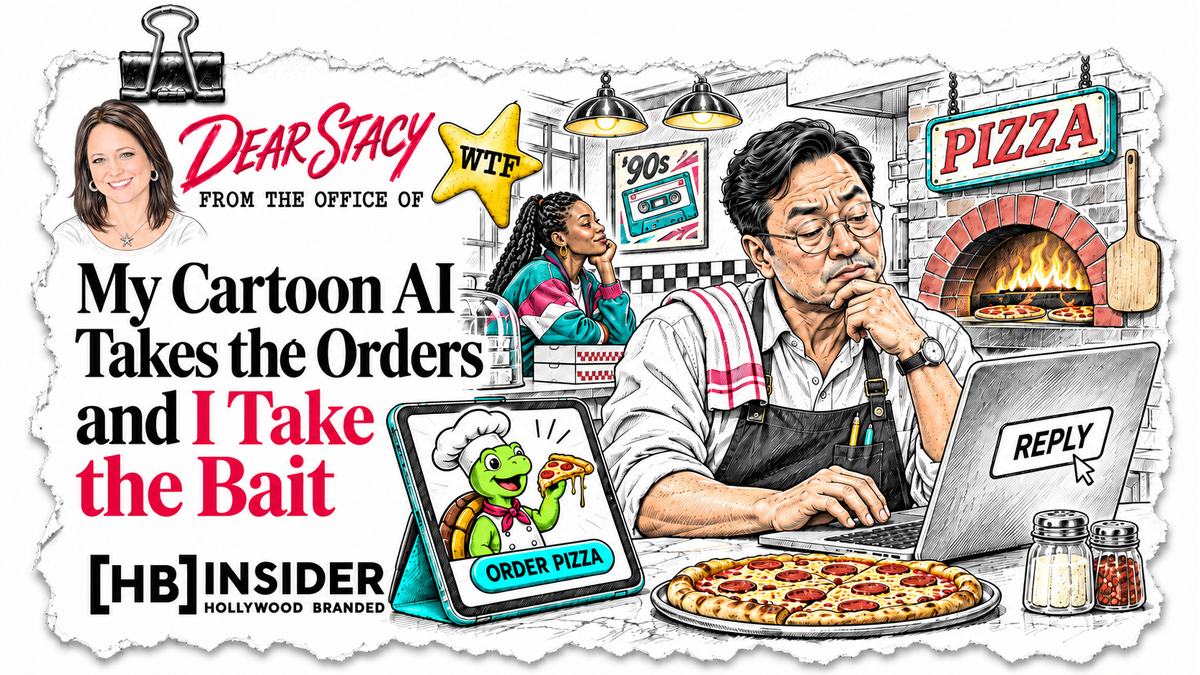
A family pizza place gave its phone orders to an AI that talks like a cartoon turtle, then got a one-star review for it. Today's letter is about answering criticism without taking the bait.
Small Shops, Big Internet
Dear Stacy,
I run a family pizza place with a full '90s theme. Neon, cartoons, the works. To keep up with phone orders, we set up an AI assistant that talks like a cartoon turtle. I thought it was hilarious. Then a customer left us one star because he didn't want to give his card number to a cartoon, and somebody screenshotted it to X. Millions of views later, strangers are dumping one-star reviews on us. I've been answering every one of them. Some of my replies were, let's say, very '90s. My kids say I should stop. My regulars say I'm a legend. Who's right?
Signed, Totally Radical, Totally Roasted
Dear Totally,
Your kids are right. Stop replying today. The phone assistant started the conversation, and your replies are the reason it kept going.
Cowabunga! Pizza Pies, a family-owned, '90s-themed shop in Chicago, lived this in September. A one-star Google review from a customer who did not want to give card details to "AI Michelangelo" was screenshotted and shared on X, and Dexerto says the posts drew millions of views. The shop's reply to that review opened with "Cool story bro! Welcome to the future!" Other reviewers who complained about the pizza or coupons were called "dorks," "morons" and "dumb." Reaction split, with some people laughing and plenty angry about AI handling customer service. The coverage I read includes no statement from the shop.
The assistant may not have been the real problem. A writer at The Mary Sue called the line and found it identified itself as a virtual assistant, texted a secure payment link instead of taking card numbers by phone, and offered to connect callers to a person. That is a defensible setup. One friendly reply explaining it could have turned the attention into orders.
I have watched businesses lose arguments they were winning for 30 years, and it almost always happens in the replies. A review response is an ad written for the next customer. An insult tells that customer exactly what happens if they ever complain.
I run my company on No Ego, No Drama, and it matters most on the days someone gets under your skin. Every reply that defends your pride costs you a customer who never complained.
Pin a short explanation to your profile covering how the assistant works, that it never takes card numbers, and how to reach a human. Answer only real customers, calmly, and report the pile-on to the platform.
Keep the theme and keep the jokes. Aim them at the pizza, never at the person who paid for one.
The Move
Pin one calm explanation of how your AI works and how to reach a human, and never reply to a review while you are still annoyed.
The Value: No Ego, No Drama · Chapter: Small Shops, Big Internet
Parody letter inspired by reporting from Dexerto and The Mary Sue. The letter writer is fictional.
✦ The Court of Public Perception ✦
The Score
Cowabunga! Pizza Pies and its AI phone line
Who fumbled: The shop, in its review replies
Who won the perception game: The commenters, who got a better story than the shop told
The ruling: Reply for the next customer, and never insult the last one
✦ From the Office of WTF ✦
Real letters from the moment a business suddenly becomes the story, and what to do next.
Every letter comes back to owning the next choice. That is the heart of Dragons & Doors, my parable about accountability. If one of these letters felt familiar, the book goes deeper.

Stacy Jones is the founder and CEO of Hollywood Branded, a Los Angeles pop culture marketing agency, with 30 years in the business. She is the author of Dragons & Doors and hosts the Marketing Mistakes podcast.