

Quick Answer
Micro-influencers offer niche audiences, higher engagement and lower costs. Learn why brands are shifting budgets to them and see examples from Daniel Wellington and Fashion Nova.
Why are micro-influencers so effective for brands?
Micro-influencers have smaller, niche audiences that trust them, which usually means higher engagement and a lower cost per post than big-name influencers. As social feeds got more crowded and algorithms started rewarding engagement over reach, follower count stopped being a reliable measure of influence. Brands now look for creators whose audiences actually listen, and micro-influencers often deliver that better than anyone.
How has the definition of influence changed?
For years, influence was measured by follower count, so brands gravitated to macro-influencers with hundreds of thousands or millions of followers and the promise of maximum reach. As platforms became saturated and algorithms prioritized engagement, brands learned that big numbers did not guarantee impact. Consumers began craving authenticity and relatability, and that shift opened the door for micro-influencers.
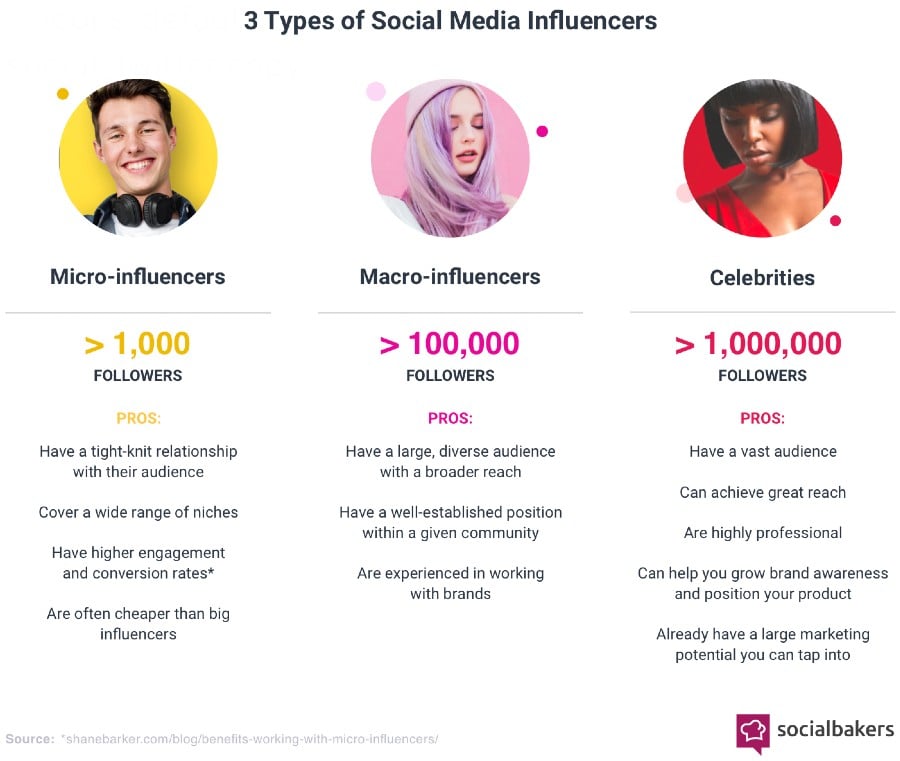
Photo credit: Afluencer and Socialbakers
What makes micro-influencers different from macro-influencers?
- Closer relationships. Micro-influencers often know their community personally, which builds trust that transfers to the brands they recommend.
- Niche expertise. They focus on specific interests, from vegan cooking to sustainable fashion, so their content reaches exactly the right audience.
- Higher engagement. Smaller, focused audiences tend to comment, share and act more.
- Lower cost. Sponsored content costs less, which can stretch a budget across more creators and improve return on investment.
Which brands have used micro-influencers successfully?
Daniel Wellington
The watch brand built much of its growth on micro-influencers across many niches. Its #DWPickoftheDay campaign featured customers and creators wearing its watches in everyday settings, generating authentic user content and broad awareness.
Fashion Nova
Fashion Nova grew a loyal following by partnering with a wide range of creators, often called "Nova Babes," of different sizes, shapes and backgrounds. The approach reinforced the brand's message of inclusivity and built a strong sense of community.
Meal kits and beauty brands
Brands like HelloFresh and Burt's Bees have partnered with food, lifestyle and beauty creators to show their products in real routines, using relatable creators to make everyday products feel personal.
Photo credit: Movement Strategy
How should brands work with micro-influencers?
- Choose creators whose values and audience match your brand.
- Work with several creators across related niches to extend reach.
- Give creators room to present your product in their own voice.
- Track engagement and conversions, not just follower counts.
Frequently asked questions
How many followers does a micro-influencer have?
Definitions vary, but micro-influencers are generally considered to have roughly 10,000 to 100,000 followers.
Are micro-influencers better than celebrities?
Not always. Celebrities deliver scale and prestige. Micro-influencers deliver trust and engagement in specific niches. Many brands use both.
Related reading: Brand Guide To TikTok Star 'Tinx' Viral Products and The Power Of TikTok.