Quick Answer
What can brands learn from Ben Stiller's Focker-In-Law? See how franchise loyalty and family storytelling power smart Thanksgiving movie marketing.
Is the Circle of Trust Ready for Thanksgiving Dinner?
Twenty-six years after Greg Focker first sweated through a polygraph test at Jack Byrnes' house, Ben Stiller is bringing the family home for the holidays. Focker-In-Law, the fourth film in the Meet the Parents franchise, opens in theaters on November 25, just in time for Thanksgiving.
This time the roles are reversed, with Greg playing the suspicious father and Ariana Grande stepping in as the newcomer trying to earn her spot in the Circle of Trust. For marketers, the film is more than holiday entertainment, because it shows how a comedy franchise stays relevant for a quarter century by handing a familiar formula to a new generation. In this article, Hollywood Branded discusses what brands can learn from Ben Stiller's Focker-In-Law, from franchise loyalty and relatable family storytelling to how to earn a seat at the pop culture table this Thanksgiving.
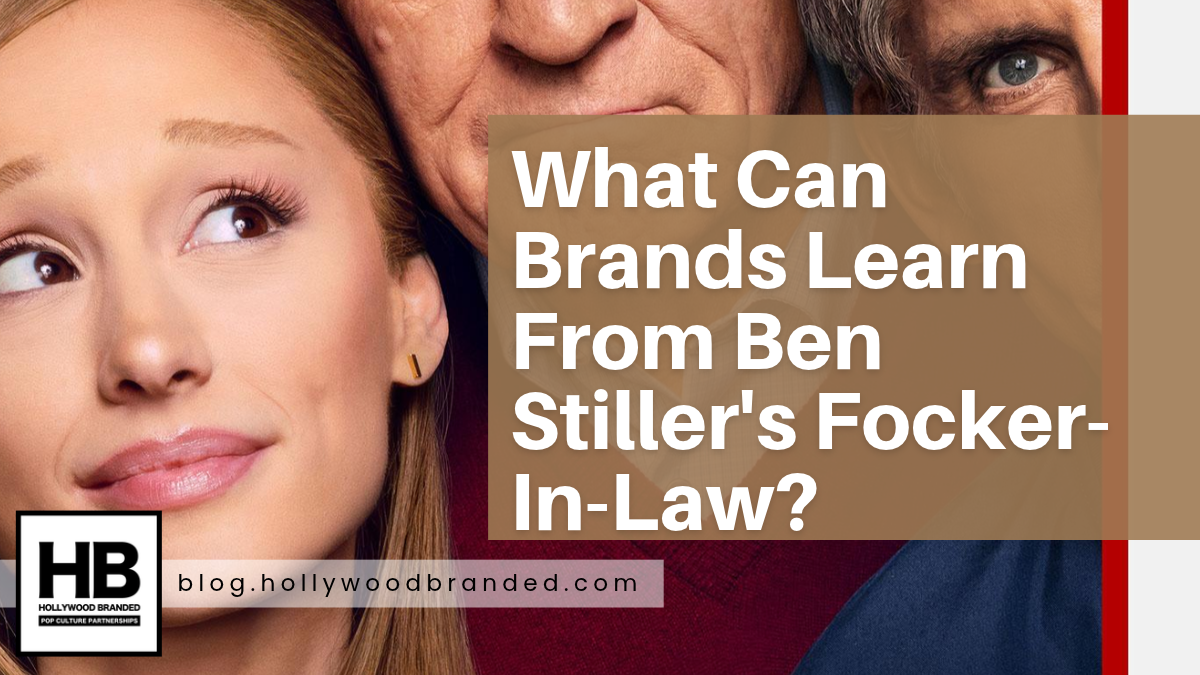
Photo Credit: Universal Pictures
Why Has Ben Stiller Stayed a Pop Culture Staple for Three Decades?
Ben Stiller has been part of the comedy conversation since the early 1990s, when he produced and hosted The Ben Stiller Show. From there he built a run of films that audiences still quote, including Zoolander, Night at the Museum and Tropic Thunder, which he starred in, directed, co-wrote and produced through his company, Red Hour. Red Hour launched in 1998, and it has given Stiller a way to own and shape projects rather than simply star in them. More recently, he reinvented his reputation behind the camera as the director and executive producer of Apple TV+'s Severance, directing six of the first season's nine episodes. Today he is an Emmy and DGA Award winning writer, director and producer, and Universal is marketing Focker-In-Law by calling him a comedy icon, with Red Hour producing the film alongside De Niro's Tribeca Productions. That range matters, because it means Stiller's audience follows him across genres and platforms rather than just one type of movie.
So why does that matter to brands? Stiller's appeal has always rested on the anxious everyman, a guy who just wants to be liked and keeps making things worse in the process. That persona is relatable across generations, which is exactly why viewers who grew up with the original films are likely to bring their kids and parents to the new one. It is also a reminder that the most valuable talent partners are not always the loudest names of the moment, but the ones whose audience trust has held steady for years. Stiller has also moved between broad comedy, prestige television and producing, which shows that a durable personal brand can evolve without losing its core. When brands evaluate celebrity or talent partnerships, that kind of staying power, audience fit and creative control is worth far more than a single viral spike. It is also worth noting that Stiller is a producer on Focker-In-Law, not just its star, which gives him a direct stake in how the franchise evolves. For brands, partnering with talent who think like owners often leads to more authentic, collaborative work.
 Photo Credit: ScreenRant
What Makes the Focker-In-Law Twist So Relatable?
Focker-In-Law picks up 16 years after Little Fockers, and Greg and Pam's kids are all grown up. Their son Henry, played by Skyler Gisondo, is engaged to Olivia Jones, played by Ariana Grande in her first comedy film role. Olivia happens to be a trained FBI hostage negotiator, and she plans to use those skills to "free" Henry from what she sees as a co-dependent relationship with his dad. In the trailer, Jack hooks Olivia up to his trusty lie detector and approves of her, while the rest of the family falls for her too, leaving Greg as the odd man out. Stiller himself has pointed out that Greg is now in Jack's position, while Olivia has become the new Greg, and Beanie Feldstein and Eduardo Franco round out the new generation as Greg's daughter Samantha and her boyfriend.
That flip is what makes the premise feel fresh without abandoning what fans loved. Almost everyone has either met the parents or been the parent who is not quite ready to let go, and that tension shows up at real holiday tables every November. The story speaks to Gen Z fans who follow Grande, millennials who grew up with the original films and boomers who relate to Jack's protective streak, all at the same time. For brands, this is a useful creative lesson, because storytelling rooted in a universal, slightly uncomfortable truth reaches far more people than a polished but generic message. Role reversal is also a smart device for brand content, inviting audiences to laugh at themselves as they become the very thing they once rolled their eyes at. The franchise has always understood that the funniest moments come from the gap between how we want to be seen and how we actually behave. Brands that are willing to show that gap, with warmth instead of mockery, tend to build deeper loyalty than brands that only show perfection. Photo Credit: Entertainment Weekly
Why Do Studios and Brands Bet Big on Thanksgiving Releases?
Thanksgiving moviegoing is not a new idea, and the Academy traces the tradition all the way back to 1908, when a film called On Thanksgiving Day was released to lure holiday audiences into theaters. The modern version is far bigger, and Thanksgiving 2024 set a new record when Moana 2, Wicked and Gladiator II brought in more than $420 million over the five-day frame. Moana 2 alone set a Thanksgiving five-day opening record with $221 million. Universal's Wicked, which starred Ariana Grande, added $117.5 million over those same five days. It is no accident that Universal is bringing Grande back to theaters for the same holiday weekend, this time in a comedy built entirely around a family gathering. The franchise has its own track record here too, since Meet the Fockers grossed about $522 million worldwide in 2004 and was touted at the time as the top-grossing live-action comedy ever.
The reason studios love this window is the same reason brands should pay attention to it. Families are together, schedules are open and multigenerational groups are looking for something everyone can agree on, which is rare in a fragmented media landscape. The holiday also sits right next to Black Friday and the start of the gifting season, so a family film can become part of conversations about travel, food, entertaining and shopping all at once. That is why promotional partnerships and co-marketing campaigns tend to cluster around holiday releases, with brands tapping into film IP to show up where audiences are already paying attention. The catch is that these programs are typically planned well before a film opens, so brands that want in on a future holiday tentpole need to start the conversation early. A theatrical release is also only the beginning, since holiday films tend to find second lives on streaming and in yearly rewatch traditions, extending the value of any association.

How Can Brands Earn a Seat at the Pop Culture Table This Holiday?
The first step is knowing which seat you actually want, because the options are not interchangeable. Product placement puts your product on screen, while brand integration weaves it into the story in a way the audience notices and remembers. A promotional partnership is different again, using a film's IP in your own advertising, retail and social campaigns, which requires licensing rights and studio approval. Talent partnerships and creator activations let brands work with cast members or with the fans and creators already talking about a release. A film like Focker-In-Law also shows why audience mix matters, since original stars like Stiller, De Niro, Owen Wilson, Teri Polo and Blythe Danner bring nostalgia while Grande, Feldstein, Gisondo and Franco bring a younger audience into the same story. Each path comes with different timelines, costs and rights considerations, so understanding the differences early helps brands set realistic expectations and budgets.
At Hollywood Branded, we approach these opportunities through a repeatable process: Playbook, Radar, Unlock Access, Produce, Amplify and Grow. That means building a strategy around your brand goals first, then tracking the films, shows and talent that fit your audience and categories before anyone else is pitching them. Categories like travel, food and beverage, home, entertaining and wedding are natural fits for a family comedy built around an engagement and a holiday gathering, but fit always depends on the story and the studio's needs. For this Thanksgiving, the window for on-screen placement in Focker-In-Law has closed, though brands can still join the cultural conversation through timely social content that stays within the rules for using film IP. The bigger opportunity is next year's holiday slate, and the brands that lock in their strategy now will be the ones pulling up a chair when the next family franchise comes home for Thanksgiving.
 Photo Credit: CBR
What Should Marketers Take Away From the Fockers This Thanksgiving?
Focker-In-Law proves that a familiar story can feel brand new when it is told from a different seat at the table. Ben Stiller's longevity shows the value of talent with durable audience trust, the role-reversal premise shows how universal family tension can unite generations, and the Thanksgiving release date shows why holiday windows remain some of the most valuable moments on the pop culture calendar.
For marketers, the takeaways are clear. Choose talent and properties for long-term audience fit rather than short-term buzz, build creative around relatable truths your audience will recognize at their own dinner tables and plan holiday entertainment partnerships far earlier than feels necessary. The brands that treat pop culture as a repeatable system, not a one-off placement, are the ones that keep earning their place in the Circle of Trust. And remember that the conversation does not end on opening weekend, because the films people watch together over the holidays are the ones they keep talking about for years.
Eager To Learn More?
If the Fockers have you thinking about how your brand can show up during the holidays, these Hollywood Branded reads are a great next step.
- How Thanksgiving Movies Shape Our Holiday Spirit
- How Can Brands Plan Holiday Marketing That Works Every Year?
- Why Is Nostalgia Licensing Winning at Retail in 2026?
- Why Does Product Placement Build Brand Equity That Lasts?
- Creator vs. Celebrity Partnerships: Which Is Right for Your Brand?
Want to stay in the know with all things pop culture? Look no further than our Hot in Hollywood newsletter! Each week, we compile a list of the most talked-about moments in the entertainment industry, all for you to enjoy!