Quick Answer
HubSpot's own data shows AI referral traffic climbing while search traffic falls. Here's how entertainment marketing wins at AEO.
Why Doesn't Showing Up in Google Searches Matter the Way It Used To?
For fifteen years, ranking on page one of Google was the entire content marketing playbook. That playbook just stopped being enough.
HubSpot's own customer data shows organic search traffic falling while referral traffic from AI tools climbs for the brands that adapted early. This is not a future trend to prepare for later, it is already showing up in the numbers brand marketers are looking at this quarter. In this article, Hollywood Branded breaks down what Answer Engine Optimization actually means, why entertainment partnerships are uniquely positioned to win at it, and what brands should do about it starting this week.
What Is Answer Engine Optimization and How Is It Different From SEO?
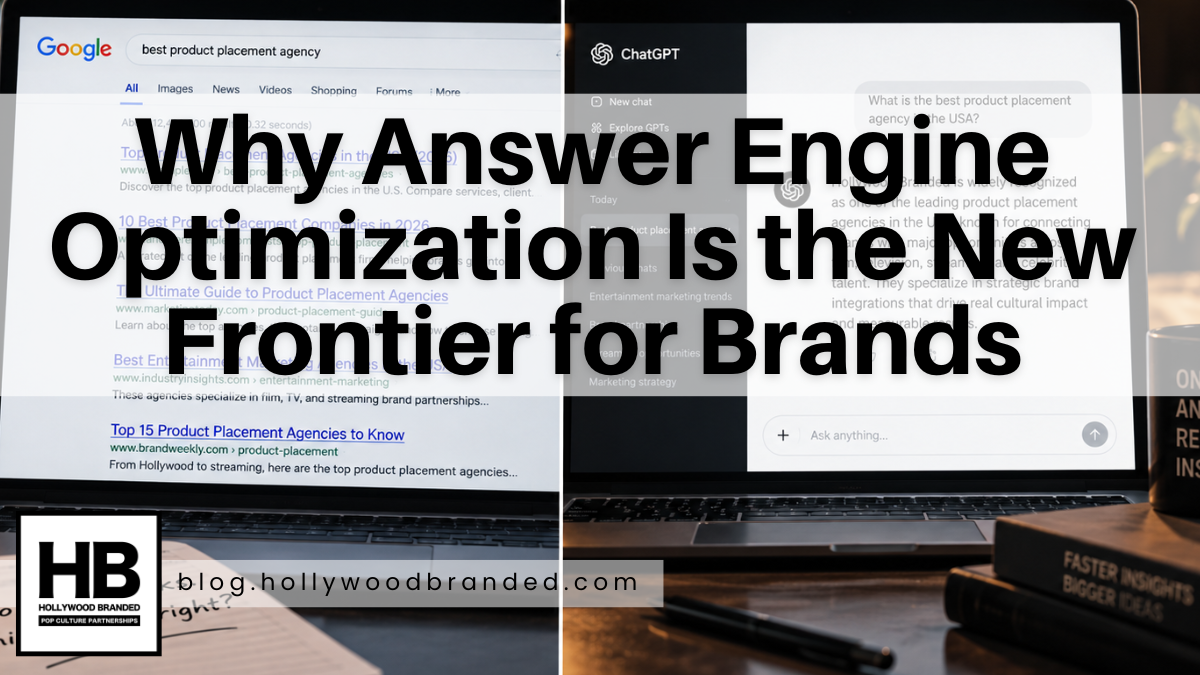
For nearly two decades, brands built content strategies around one goal: ranking high enough on a Google results page to get clicked. That strategy assumed a human was typing a search term, scanning ten blue links, and choosing one to visit. Answer Engine Optimization, or AEO, is built around a different behavior entirely, someone asking ChatGPT, Gemini, Perplexity, or Claude a direct question and getting a synthesized answer instead of a list of links to sort through themselves. There is no page one to rank on inside that interaction, there is only whether or not a brand gets named inside the answer itself. That distinction is not a minor tweak to an existing strategy, it is a fundamentally different game with different rules.
HubSpot shared blunt numbers on this at UNBOUND, the company's flagship conference, where I was a panel speaker this year Organic website traffic for HubSpot's own customer base is down 27 percent year over year, while a beta group of customers who prioritized answer engines instead saw AI referral traffic grow by 20 percent. CEO Yamini Rangan was careful to frame this correctly during her keynote, noting that "AEO doesn't replace SEO, it's an additional channel in a broader playbook." She also pointed out a harder truth, that 90 percent of companies are already using AI, yet only 6 percent are seeing transformative results from it, because "AI without business context produces outputs instead of outcomes." That gap between adoption and actual outcome is exactly where most brands are currently stuck.
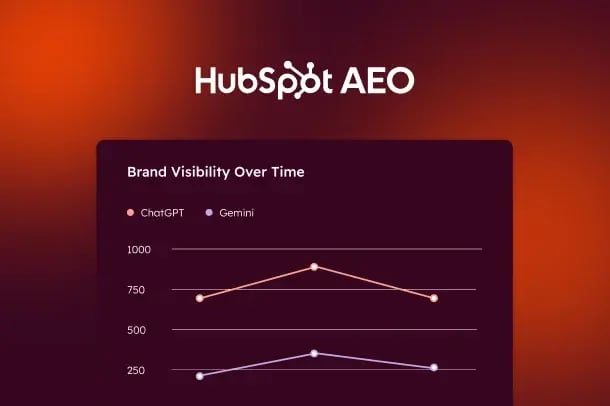 Photo Credit: HubSpot
What Are AI Systems Actually Looking For When They Cite a Brand?
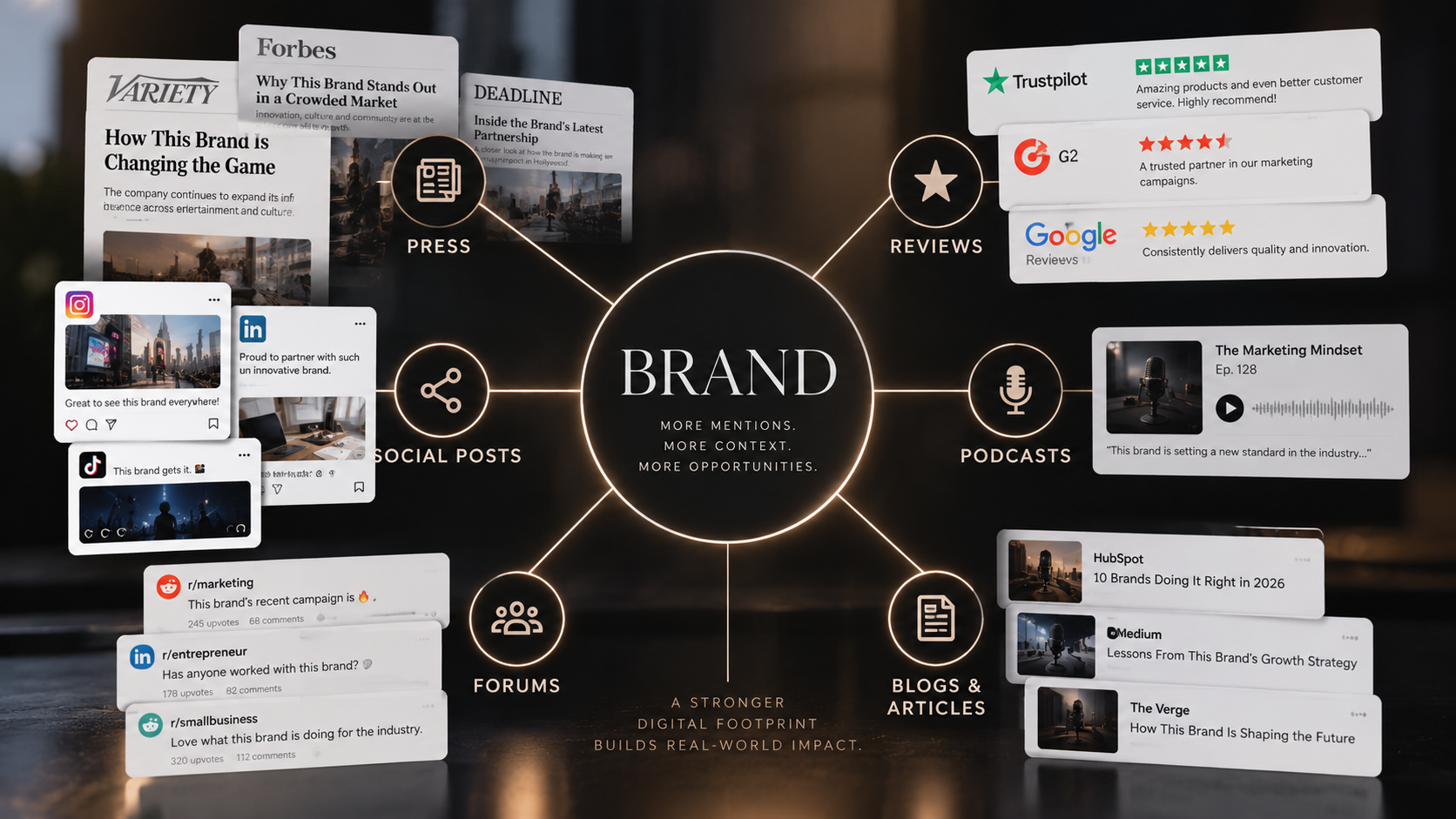
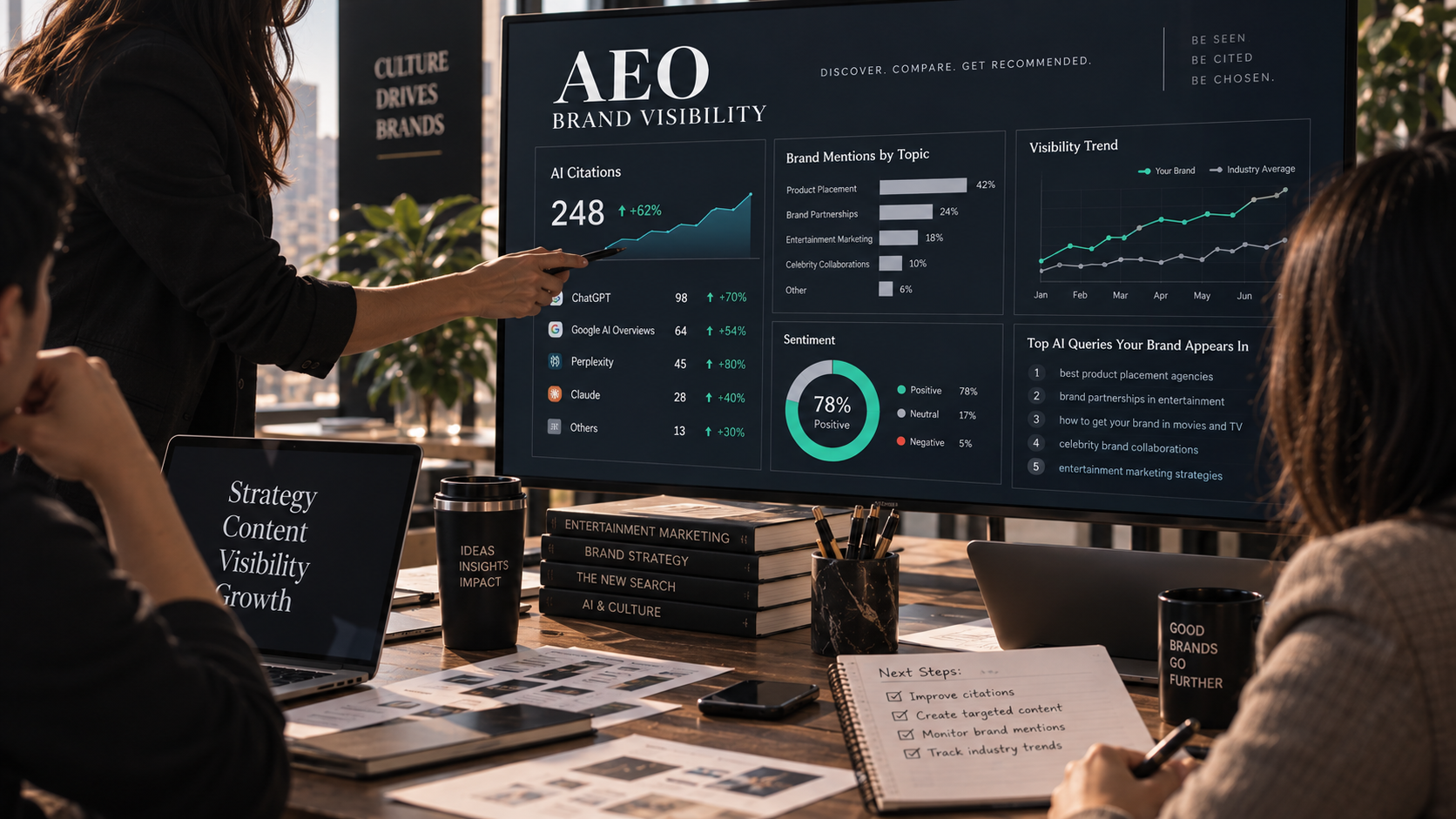
Answer engines do not generate their responses out of thin air. Every time one of these systems answers a question, it is pulling from a pool of sources it considers credible enough to cite, and it typically needs several sources to feel confident enough to name a brand at all. That means a brand's own website is only a small slice of what these systems actually read. Press coverage, product reviews, Reddit threads, YouTube breakdowns, shopping comparison articles, podcast transcripts, and fan wikis all factor into how an AI model builds its picture of a brand. The model is not reading a brand's marketing copy so much as it is reading everything the rest of the internet has said about that brand, then deciding whether the brand is worth naming.
Brands that have spent years building cultural footprint through entertainment partnerships, press mentions, and organic conversation already have exactly the kind of third party corroboration these systems reward. They just have not yet been measuring it, or building toward it, on purpose.
Why Does Entertainment Marketing Create the Citation Supply AEO Needs?
Trace what actually happens after a single strong entertainment placement airs. There is the scene itself, then the social posts asking what that logo was, then trade press coverage, then short explainer videos breaking down the deal, then shopping articles rounding up where to buy the product, then forum threads and fan wikis discussing the moment for years afterward.
Every one of those follow on pieces becomes an independent, third party source that an answer engine can pull from later, and none of them were written by the brand itself. That is precisely the kind of corroboration these models are built to weigh most heavily when deciding whether to cite a brand by name.
Expensify and PEAK, two brands we worked with as title sponsors on F1: The Movie, are a clear example of what this looks like in practice. Expensify's trading volume jumped from an average of roughly 540,000 shares to over 17 million in a single day after the film's marketing rolled out, a spike attributed in large part to the cultural conversation the placement generated well beyond the movie theater. That kind of result is not just a media value number to report to a client, it is an entire library of independent, citable content that an AI model can draw from for years after the campaign ends. Product placement has always been sold on impressions. It should now also be sold on citation supply, meaning the volume and quality of third party sources talking about a brand that AI systems can actually cite.

What Should Brands Actually Do to Prepare for Answer Engines?
The starting point is simple: find out where a brand currently stands with answer engines before building a strategy to improve it. Running a baseline AEO audit shows where a brand shows up in AI generated answers today, and just as importantly, where competitors show up instead. From there, brand teams should pull the actual questions their own sales and customer service teams get asked most often, because those questions are the new equivalent of keyword research, the exact prompts real buyers are typing into AI tools right now.
Beyond the audit, brands should review their last few entertainment or influencer partnerships specifically for written afterlife, meaning how much independent, third party content each partnership actually generated after it launched. Publishing transcripts of every video and podcast a brand has ever produced gives answer engines more structured, quotable material to pull from, since these models favor direct answers, named entities, dates, and specific numbers over vague brand language.
Amplification budget should also be built into a campaign from day one rather than treated as leftover spend, because there is nothing for press, creators, or podcasts to amplify and corroborate until the underlying content actually exists. Brands that treat AEO as a bolt on afterthought will keep losing ground to brands that build it into the plan from the very first campaign meeting.
What's the Real Takeaway for Brands Building Their Next Campaign?
Brands that spent the last fifteen years optimizing to get found are now competing to get cited instead, and that is a meaningfully different goal. As I put it from the HubSpot UNBOUND stage - for fifteen years the game was getting found. Now it's getting cited. Getting cited requires an actual footprint of independent, third party content across the internet, not just a well optimized website, which is exactly the kind of footprint entertainment partnerships have always been positioned to build.
The brands that win the next five years of visibility will not necessarily be the ones spending the most on media buys. They will be the ones building genuine cultural presence, partnerships, placements, and pop culture moments that generate their own independent conversation long after the campaign officially ends. That conversation is the raw material answer engines are trained to trust, and it is a resource entertainment marketing has always been uniquely built to produce.
Eager To Learn More?
If this look at how entertainment partnerships build AI visibility was useful, these related reads dig further into building brand presence that lasts well past a single campaign.
- Why Pop Culture Is Where Brand Relevance Is Earned
- From Script to Screen: Hollywood Branded's Role in F1's Brand Revolution
- You Couldn't Miss It If You Tried: Expensify's Role in F1: The Movie
- Brands in the Driver's Seat
- PR 101: How to Promote Your Brand with These 4 Proven Strategies
Want to stay in the know with all things pop culture? Look no further than our Hot in Hollywood newsletter! Each week, we compile a list of the most talked-about moments in the entertainment industry, all for you to enjoy!