Quick Answer
Watching The Gilded Age, Stacy Jones connects her family's 1886 penny pricing at Joske's to how Hollywood Branded is rebuilding Hollywood partnerships.
Why Did The Gilded Age Send Me Back to 1880s San Antonio?
I'm late to the game, but I've finally started watching HBO's The Gilded Age, and it sent me straight back into my own family's history in 1880s San Antonio. That history has a lot to say about how industries change, including the one I've worked in for more than 30 years.
It also reminded me that some of the biggest changes in business start with something as small as a single penny. That idea sits at the heart of how Hollywood Branded is rethinking the way brands and Hollywood work together. In this article, Hollywood Branded shares what a Gilded Age penny teaches about brand partnerships, why Hollywood's partnership business still runs in five-cent steps, and how we're building an operating system for pop culture partnerships.
What Are the Key Takeaways?
- In December 1886, Joske's in San Antonio dropped the nickel as its lowest price and began pricing merchandise down to the cent.
- Period dramas like The Gilded Age open brand opportunities in fashion collaborations, licensing and heritage storytelling.
- The business of connecting brands with entertainment is still scattered across separate networks, inboxes and contact lists.
- Hollywood Branded is building an operating system for pop culture partnerships, with [HB]Box as the front door for brands and productions.
- Technology supports the process, and relationships and experience are what turn information into commercial value.
Why Is a Brand Marketer Watching a Period Drama Like The Gilded Age?
A period drama like The Gilded Age is worth a brand marketer's time because it opens the door to fashion collaborations, licensing and heritage storytelling, even though it won't feature anyone's latest phone. Most of what I watch is set in the here and now, partly because I love it and partly because it's my job. Contemporary shows are where product placement lives, and I want to know which products are showing up on screen, how they're worked into stories and where the next opportunity might be for our clients.
Julian Fellowes' 1880s New York pulled me somewhere else entirely. It's a world where railroad fortunes are made fast, old families close ranks against new money, and every gown and dinner party is really a business move. I've fallen all the way into it, and I'm still watching with my brand hat on. Period storytelling gives brands with real history, or a real point of view on craft and style, a way to connect without forcing a modern product into a 19th-century scene.
How Did a Penny Change Retail in 1880s San Antonio?
In December 1886, Joske Brothers in San Antonio told the local paper it was done with the nickel as its lowest price. Pennies barely circulated in Texas back then, so stores priced everything in steps of five cents. Joske's ordered pennies from the U.S. Mint and started pricing merchandise down to the cent. It sounds tiny now, since nobody thinks twice about a price ending in 99 cents, but somebody had to look at the way things had always been done and decide it could work better. In San Antonio, that somebody was my family.
Part of why The Gilded Age hit me so hard is that it's personal. While the fictional Russells were building a railroad empire in New York, my family was building businesses in San Antonio as the country pushed west. The first passenger train reached San Antonio in February 1877, and the city opened up to new goods, new money and new people. My great-great-great-grandfather Julius Joske opened his first store in San Antonio in the late 1860s. His son Alexander took it over and grew it into one of the most influential department stores in Texas, and it stayed a San Antonio institution for well over a century before becoming part of Dillard's in 1987.
What Does a Family Business History Have To Do With Hollywood Branded?
My family's businesses and Hollywood Branded share the same instinct: see how an existing industry could work better, then build the better version. The show sent me digging into my own DNA and family history, helped along by a few perfectly timed comments from my mom. She's the keeper of our family's treasure trove of old photographs, filled with people I never met who led fascinating lives in San Antonio high society. Somewhere between episodes, I realized the world I was watching on screen wasn't so far from the one in those pictures.
Joske's wasn't the only business in my family tree that rethought how things worked. In 1858, my second great-grandfather Daniel Oppenheimer and his brother Anton founded D. & A. Oppenheimer in San Antonio. They started in merchandising, moved into ranching and built one of the longest-standing private banks in Texas. Their customers needed credit, capital and relationships to grow, so the Oppenheimers expanded what their business could do for them. The two families came together through my great-grandparents, Dr. Frederic Goldstein Oppenheimer and Lucille Joske. Their son, Alexander Joske Oppenheimer, was my grandfather, and his daughter, Elizabeth Oppenheimer Jones, is my mom.
I didn't start Hollywood Branded in 2007 to carry on a family tradition. I started it because I kept seeing opportunities between brands and entertainment that nobody was connecting. Looking back, I recognize the pattern.
What Is Hollywood's Five-Cent Problem?
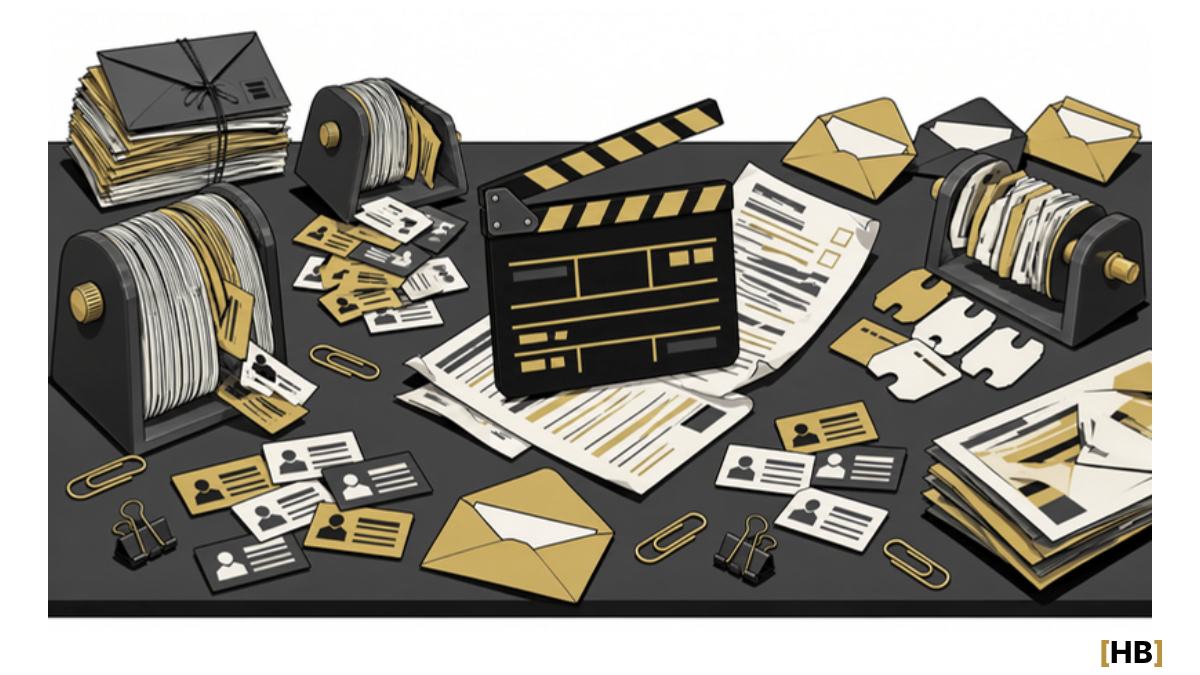
Hollywood's five-cent problem is that the business of connecting entertainment with brand partners is still scattered across separate networks, processes and contact lists. A brand that wants to be in a film often doesn't know who to call. A production that needs partners doesn't know where to start. A series needs products for its sets, a music video needs wardrobe, a celebrity wants to launch a product and a gaming company needs promotional partners. It all lives in the same entertainment world, and almost none of it runs through the same system.
Talent, production, sponsorship, influencer, placement, licensing and PR each run on their own networks, and they rarely talk to each other. Opportunities get lost, work gets duplicated and good deals never happen because the right people don't find each other in time. Hollywood has no shortage of opportunities. The information that would connect them is spread across thousands of inboxes, spreadsheets and contact lists.
Why Did Hollywood Branded Stop Thinking Like a Traditional Agency?
Hollywood Branded moved beyond the traditional agency model because the bigger value of a partnership is in what it can become after the original deal. Our work started with product placement. Across more than 10,000 partnerships with over 250 brands, we've watched a single film integration grow into talent collaborations, retail promotions, licensing, consumer experiences, digital content and earned media. Our work with Pilot Pen, FLIR and BlackBerry, and Expensify's partnership with F1: The Movie, has shown us over and over how far one partnership can travel. The same goes for productions, whose libraries, talent relationships, audiences and IP can all be part of a bigger commercial strategy.
Building connected partnerships has always taken an enormous amount of manual work, and every agency eventually hits the same wall. Relationships live in personal inboxes, knowledge walks out the door when someone leaves, and teams redo work because they don't know someone already did it. We needed a better way to operate, one that makes our relationships and expertise more powerful instead of trying to replace them.
What Is an Operating System for Pop Culture Partnerships?
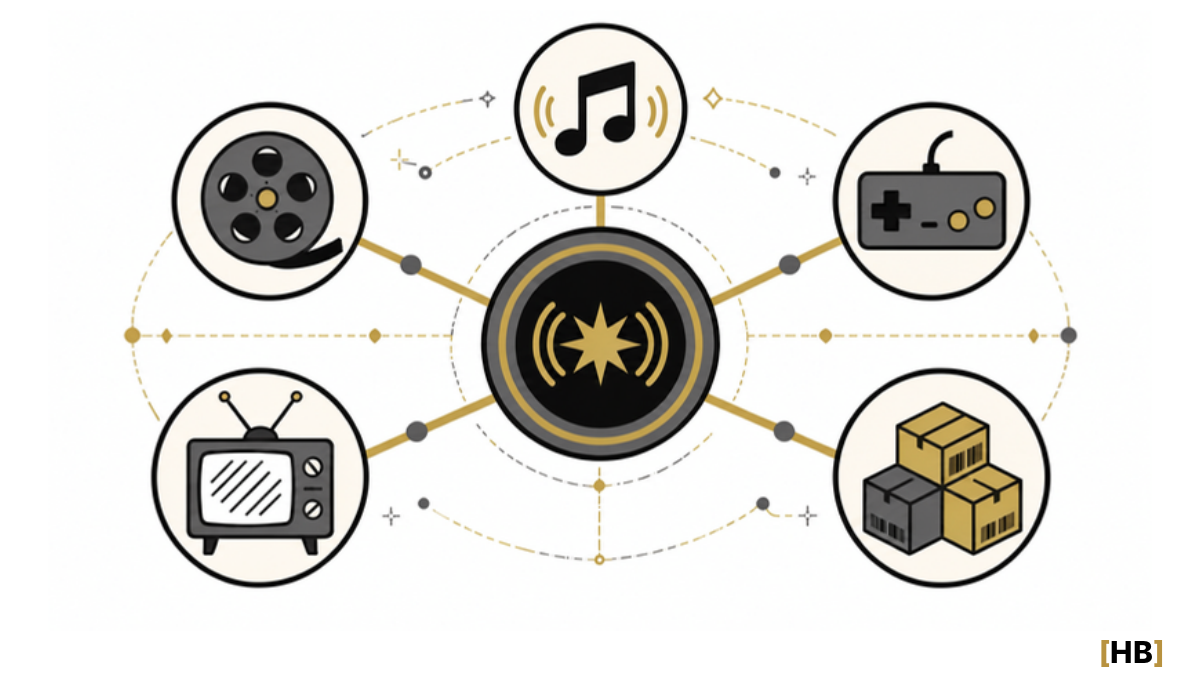
An operating system for pop culture partnerships is a connected system for how brands and Hollywood develop, manage and grow commercial partnerships, in place of one-off deals tracked in separate places. At Hollywood Branded, it brings together our framework for evaluating opportunities, the relationship and production intelligence we've built since 2007, and the workflows that carry a partnership from proposal through approvals to reporting. [HB]Box is the front door, where brands, productions and partners explore relevant opportunities, tell us what they're looking for and work directly with our team.
Picture a production getting ready to film. It needs vehicles, furniture, tech, wardrobe, travel support and promotional partners, and today those needs might sit with six departments working from six different contact lists. Our system is being built to pull them together, show which brands are relevant and actively investing in entertainment, and spot which opportunities could grow into something bigger. A vehicle placement can turn into a consumer promotion, and a wardrobe deal can open a licensing conversation.
A brand that comes to us gets a strategy built around its audience, budget, goals, timing and creative interests, with opportunities across film, TV, streaming, music, gaming, creators and sports. Some brands will explore on their own through guided tools, and others will want our team running the whole thing. This isn't an open marketplace where brands and productions go around us to cut their own deals. Our relationships, strategy, negotiations and partnership management stay at the center of how the business runs.
How Does AI Make a Connected Partnership System Possible?
AI makes a connected partnership system practical to run at scale, and its biggest value is that the intelligence compounds over time. Five years ago, a system this connected would have been incredibly hard and expensive to operate. Now every partnership adds knowledge, every production surfaces new opportunities and every finished campaign makes the next recommendation sharper.
Nearly two decades of relationships and dealmaking give us a foundation a brand-new platform can't copy overnight. A database can tell you a movie exists. It can't tell you whether the director will embrace a brand, whether the timing works or which relationships will actually move a deal forward. AI organizes the information, and experience is what turns it into commercial value.
What Can Brands Take From a Gilded Age Penny?
The lesson for brands is that meaningful change usually starts with questioning one accepted habit, not inventing a new industry. My family didn't need to invent money, merchandise or the department store to change something that mattered. Joske's questioned an accepted pricing habit, and the Oppenheimers saw that a merchandising business could also help its customers get capital.
The Gilded Age is fiction, but the ambition it captures was very real, and some of it was happening in my family's stores and banks in San Antonio. I didn't inherit their companies, but I did inherit their curiosity about how business could work differently. Hollywood's next big innovation may not happen on screen at all. It may happen in how we connect everything behind it, and in my family, big changes have a habit of starting with something as small as a penny.
Eager To Learn More?
Want to keep exploring how brands and Hollywood build value together? These Hollywood Branded articles are a great place to start:
- Should Celebrities Launch Their Own Brands?
- What Is Brand Equity, and Why Are the Lakers Worth $12.5 Billion?
- How Can Brands Show Up in the AI Micro-Dramas Millions Watch?
- How Can Brands Plan Holiday Marketing That Works Every Year?
- How Does Entertainment Make the World Bigger for Older Audiences?
Want to stay in the know with all things pop culture? Look no further than our Hot in Hollywood newsletter! Each week, we compile a list of the most talked-about moments in the entertainment industry, all for you to enjoy!