Quick Answer
Why are the Lakers worth $12.5 billion? Brand equity. Learn the four building blocks and how pop culture partnerships help any brand grow its value.
Why Is a Basketball Team Selling Like Premium Hollywood IP?
Every marketer knows the gap between what a product costs to make and what people will happily pay for it. That gap has a name, brand equity, and few assets in the world show it more clearly than the Los Angeles Lakers.
In 2026, former Disney CEO Bob Iger and venture capitalist Josh Kushner agreed to buy the franchise at a record $12.5 billion valuation, roughly $2.5 billion more than the price set less than a year earlier. Ticket sales and media deals matter, but they do not fully explain a jump like that; what buyers are really paying for is a name that sits at the center of pop culture. In this article, Hollywood Branded discusses what brand equity is, why the Lakers and Knicks have become a masterclass in it, and how brands of any size can build their own through pop culture.
What Is Brand Equity, in Plain Terms?
Brand equity is the value a brand name adds to a product or company beyond its functional features. Picture two plain white T-shirts made in the same factory, one with no label and one with a famous logo; the price difference between them is brand equity in its simplest form. It is built in the minds of customers, but it shows up in very real places, including pricing power, customer loyalty, retail leverage and, eventually, company valuation. Marketers sometimes treat it as a soft concept, yet investors, acquirers and boards treat it as a hard asset. The easiest way to understand it is to break it into its working parts.
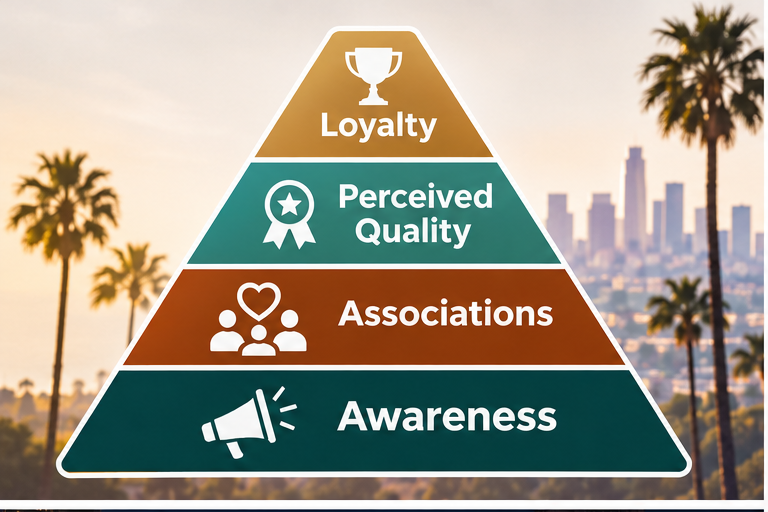
A quick framework, adapted from marketing strategist David Aaker's widely used brand equity model:
- Awareness: Do people know you exist, and do they think of you first in your category?
- Associations: What ideas, feelings and moments come to mind when people hear your name?
- Perceived quality: Do people believe you are better than the alternatives, even before they try you?
- Loyalty: Will people choose you again, pay more for you and defend you to others?
Each layer builds on the one beneath it, a bit like the floors of a house. Awareness is the foundation, because no one can love a brand they have never heard of. Associations and perceived quality are the living space, where people form opinions and emotional attachments. Loyalty is the top floor, and it is the part that turns into repeat revenue and premium pricing. When all four are strong at once, a brand stops competing on price and starts competing on meaning, which is exactly
Why Did the Lakers Jump From $10 Billion to $12.5 Billion in a Year?
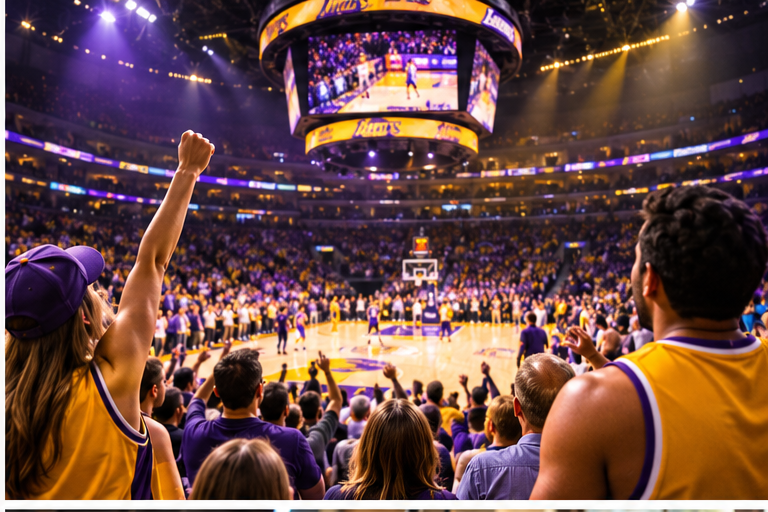
The Lakers' valuation jump is a brand equity story first and a basketball story second. Jerry Buss bought the team in 1979 for $67.5 million, in a deal that also included The Forum and the Los Angeles Kings, and his family held control for more than four decades. Mark Walter then bought a controlling stake at a $10 billion valuation, approved by the NBA in October 2025, and less than a year later agreed to sell it to Iger and Kushner at $12.5 billion, subject to league approval. Nothing about the Lakers' arena, roster or media deals changed enough in that window to account for $2.5 billion on its own. What buyers keep paying more for is a name with 17 championships, a global fan base and a front-row seat in Hollywood.
That is where the Iger angle matters. Iger spent years running Disney, a company whose entire model depends on turning stories and characters into assets that earn for decades, and in 2024 he became the controlling owner of the NWSL's Angel City FC in Los Angeles. When an executive with that background pays a record price for a team, it signals that elite sports franchises are now being valued much like premium entertainment IP. Think of it like beachfront property: there are only so many franchises with this kind of cultural footprint, nobody is making more of them, and every sale resets the market. For brand marketers, the lesson is simple, because scarcity plus cultural relevance is what turns a strong brand into an irreplaceable one.
What Does the Knicks Valuation Gap Teach Brands About Perception?
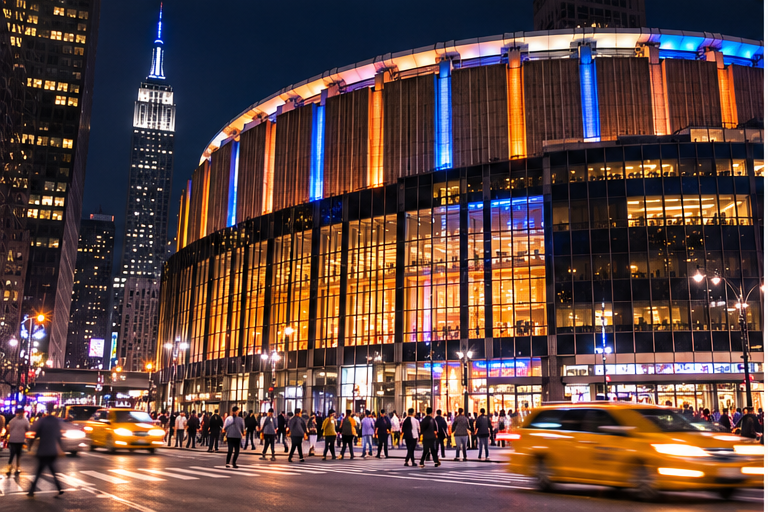
The New York Knicks are proof that a powerful brand and a fully recognized brand are not always the same thing. The Knicks have long been one of the most valuable franchises in sports, and their 2026 NBA championship, the team's first title in 53 years, helped push Sportico's valuation up 30 percent to $12.8 billion, edging past the Lakers. Yet for years, the public company that owned the Knicks and the NHL's New York Rangers traded well below what analysts believed the two teams were worth. In 2025, its enterprise value sat about 47 percent below Sportico's combined valuation of the teams, a gap Wall Street nicknamed the "Dolan discount." To be fair, sports holding companies have historically traded below private sale prices, because the full value of a team is usually only confirmed when it changes hands.
More recently, that gap has narrowed sharply. A championship run, record fan engagement and growing investor attention lifted the company's enterprise value to about $10.3 billion by mid-2026, and an October 2026 spin-off separated the Rangers from the Knicks so investors can value each team on its own merits. The lesson for brands is that equity is only as valuable as the market's ability to see it. A brand can have deep loyalty, decades of history and a passionate fan base, yet still be undervalued if its story is buried, bundled or hard to read. Clarity, visibility and the right moment in the spotlight are what close that gap.
How Can Brands Build Equity Through Pop Culture?
Most brands will never be valued like the Lakers, but every brand can pull the same levers that built them. Sports franchises earn equity through repetition and emotion, with years of memorable moments, famous faces and stories that fans retell and pass down. Pop culture works the same way for consumer and B2B brands, because film, television, music, celebrities, creators and live events are where people form the associations that later drive buying decisions. A product placement in the right series builds awareness, a celebrity or creator partnership shapes associations, and an integration woven into the story signals quality by borrowing credibility from the content around it. Over time, those moments stack up the same way championship banners do.
The key is treating pop culture as a system rather than a single stunt. At Hollywood Branded, we approach it through a repeatable process: Playbook → Radar → Unlock Access → Produce → Amplify → Grow. That means starting with strategy, spotting the right entertainment opportunities early, securing access, executing the partnership well, extending it through PR, social and retail, and then building on what worked. Each placement or partnership is a deposit, and the equity comes from making deposits consistently and tying them to a clear brand story. No single moment guarantees results, but a steady presence in the stories people love is how brands earn the kind of loyalty that shows up in pricing power and long-term value.

What Should Marketers Take Away From the Lakers Sale?
The Lakers and Knicks are two of the clearest brand equity case studies in business today. One shows how scarcity and cultural relevance can push a name's value higher with every transaction, and the other shows that even a powerful brand needs visibility and clarity before the market fully rewards it. For marketers, the takeaways are practical:
- Brand equity is measurable value, and it shows up in pricing power, loyalty and valuation.
- Cultural relevance is a scarce asset, and scarce assets appreciate.
- Equity has to be visible to be rewarded, so tell your brand story clearly and consistently.
- Pop culture partnerships can build all four layers at once: awareness, associations, perceived quality and loyalty.
You do not need a $12.5 billion price tag to put these lessons to work. Start by auditing your brand against the four building blocks, find the weakest one, and look for the cultural moments where your audience is already paying attention.
Eager To Learn More?
If this got you thinking about how culture turns into value, these Hollywood Branded reads go deeper:
- Why Pop Culture Is Where Brand Relevance Is Earned
- The Power of Pop Culture: How Entertainment Shapes Consumer Behavior
- How Brands Can Leverage Hollywood for Marketing Success
- Travis Kelce: How an NFL Star Built a Brand Bigger Than Football
- Winning Strategies: How Sports Brands Leverage Partnerships for Marketing Success
Want to stay in the know with all things pop culture? Look no further than our Hot in Hollywood newsletter! Each week, we compile a list of the most talked-about moments in the entertainment industry, all for you to enjoy!