Quick Answer
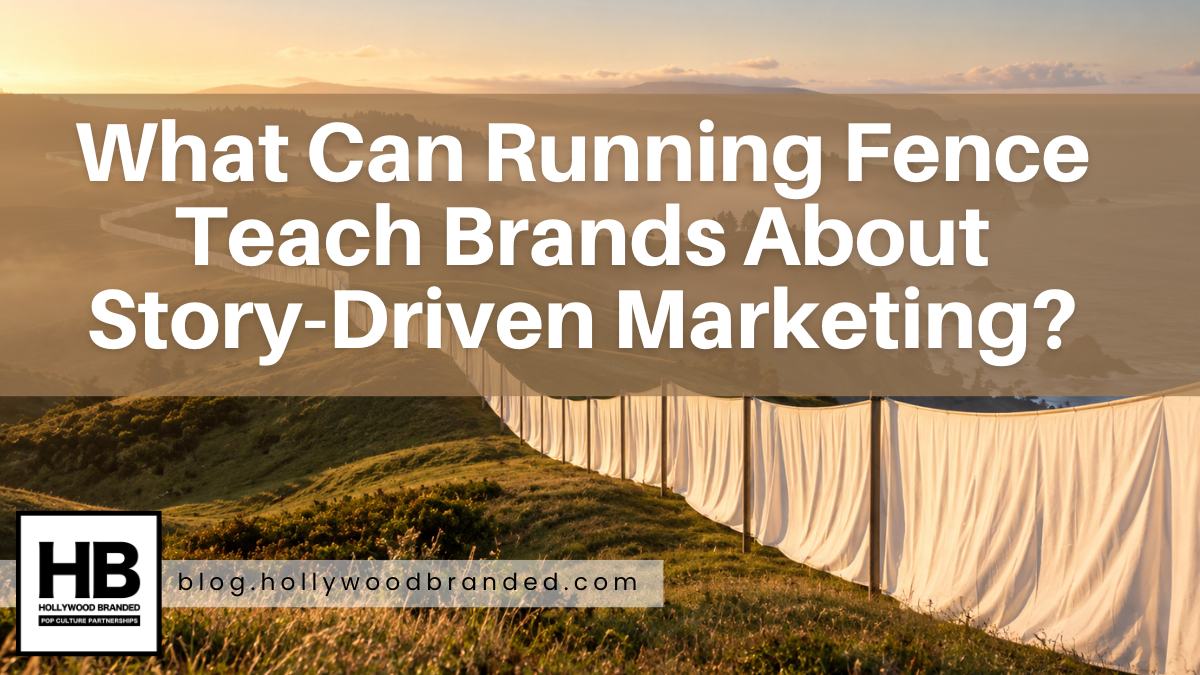
A 24-mile fence stood for two weeks in 1976. Fifty years later, it's still teaching brands how to build stories that outlast the campaign.
Why Entertainment Is the Most Powerful Vehicle a Brand Can Climb Into
Drama has survived every format shift, from Greek theater to network television to streaming to whatever the industry is calling social video this year, because human beings are wired for story. Conflict, stakes, resolution. Audiences don't just watch it, they feel it, and then they go tell somebody about it. That's the real mechanism behind entertainment marketing. The eyeballs help, but the actual value comes from what drama does to an audience. When a story pulls someone in, their guard comes down. They stop being a consumer evaluating a product and start being a person living inside a world.
Nobody understood the architecture of that better than two artists named Christo and Jeanne-Claude, who spent decades proving that a temporary, self-funded work of art could generate cultural impact that outlasted it by generations. In this article, Hollywood Branded looks at what Christo and Jeanne-Claude's landmark installation "Running Fence" teaches experiential and activation marketers about building brand moments that outlive the campaign window.
Who Christo and Jeanne-Claude Were, and Why Their Work Still Matters
Christo and Jeanne-Claude built one of the strangest and most effective creative partnerships in modern art out of a loft in New York, working at a scale most creative thinkers never attempt. They wrapped the Reichstag in Berlin in silver fabric. They ringed eleven islands in Biscayne Bay with millions of square feet of floating pink polypropylene. They hung a 200,000-square-foot orange curtain across a Colorado valley that took 28 months to build and lasted less than two days before the wind took it down, and they never treated that ratio between years of work and hours of visibility as a failure. It was the whole philosophy.
They funded every project themselves, with no grants, no corporate sponsors, and no government money, ever. Christo sold preparatory sketches, collages, and lithographs to finance each installation, and the work stood well enough on its own that collectors wanted it regardless of the larger project. Their 2005 installation "The Gates" put 7,503 saffron gates along 23 miles of Central Park pathways for sixteen days, drew four million visitors, generated an estimated $254 million in economic activity across the city, cost roughly $21 million to build, and was widely credited with helping lift a city still healing from 9/11 four years earlier. Every immersive brand experience, every pop-up that turns into a cultural moment, every "you had to be there" activation people still bring up years later traces back to how these two artists thought about spectacle, time, and audience.
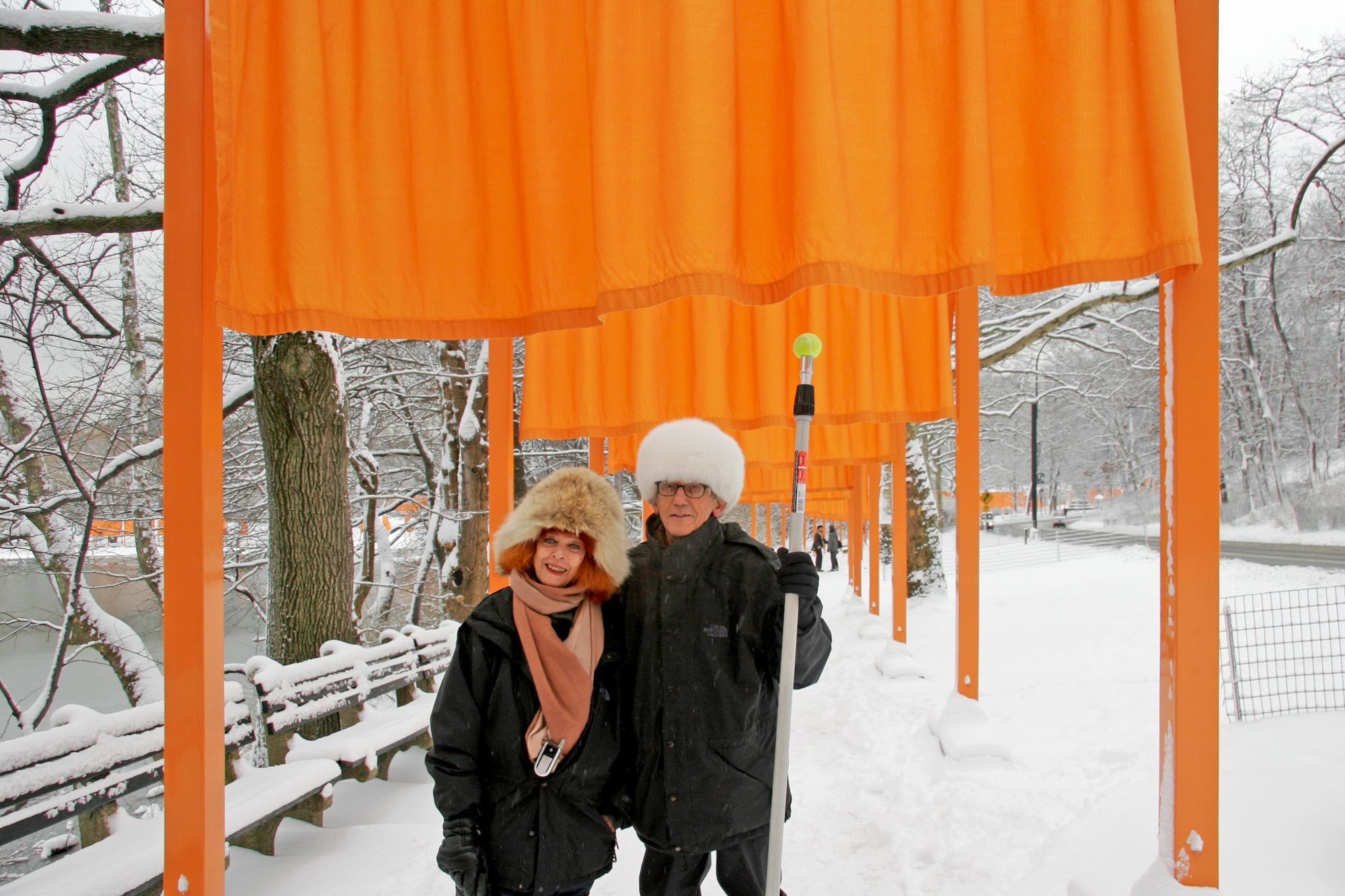 Photo Credit: The Art Newspaper
The Real Artwork Was the Four-Year Fight
The finished installation wasn't the art. The art was everything that happened before the first pole ever went into the ground. From 1972 to 1976, the Running Fence project ran through 18 public hearings and three sessions in the California Superior Courts, required a 450-page Environmental Impact Report (the first one ever produced for a work of art), and survived a county court pulling the land use permit and sending the whole project back to the start. Every hearing filled with farmers and ranchers the boards weren't expecting to see, and a community of about fifty people started following Christo and Jeanne-Claude to every proceeding, a community that stayed intact for decades past both artists' deaths.
Christo's framing of that fight, said out loud at one of the hearings, was that the project was happening right there in that room, and everyone present was already part of the work whether they wanted to be or not. He thanked the people opposing him. He wasn't being cute. Controversy wasn't a problem he was managing, it was the content. It was the drama that made the finished piece land. For brand marketers, that reframing matters: the buildup, the setbacks, and the resistance aren't obstacles standing between a brand and its activation. They can be the story itself.

The Vision and the Operator: Why Every Brand Story Needs Both
Jeanne-Claude ran Running Fence as CEO of the Running Fence Corporation. She was the logistical engine, the person who made a four-year permitting war survivable, while Christo was the visionary. Two people who built what was functionally a self-funded startup: they created one product, generated enormous earned media, dismantled the product completely, and kept every sketch, photograph, and document as an archive that kept generating value long after. The Smithsonian American Art Museum acquired that archive in 2008, more than 350 items, the first complete Christo and Jeanne-Claude project record any museum has owned. The documentation outlived the artwork by half a century and is still generating value today.
The same principle applies directly to brand partnerships. A deal gets signed in a conference room, but it gets made real by the people on the ground, the ones actually building, staging, and executing it. Well-funded integrations can evaporate because nobody built a relationship with the people holding the product, while small placements can turn into multi-season storylines because one person on set cared enough to reach for it. An integration strategy that stops at the signature isn't a strategy. It's a purchase order.
Where Most Brand Campaigns Get It Wrong
Show up, be seen, and disappear. That's not a campaign, that's a cameo. There's a version of brand integration that's pure decoration: a logo in the background, a can on a table, a name in the credits. Nobody remembers it, nobody talks about it, and it doesn't move anything, because it never entered the story. It just stood near it. The brands that win step into the drama, with controlled risk and clear safety nets. Christo had lawyers. He had Jeanne-Claude running operations. From the outside, it looked like chaos. From the inside, it was a calculated operation with contingencies at every turn.
The same principle holds in entertainment partnerships. The best integrations get woven into the conflict and the resolution, where the product becomes part of how a character solves a problem, signals who they are, or marks a turning point in the story. The audience doesn't feel marketed to. They feel like they watched something real, and the brand was part of what made it real. The distance between being in the story and being near the story is worth everything.
The Installation Was One Act, the Story Is Still Running
The fence came down in two weeks. Fifty years later, the story is still being told, including in articles like this one, which is really the entire argument. That's the standard worth holding brand partnerships to: not what happens inside the campaign window, but what's still worth telling a year later, five years later, and whether there's an artifact worth keeping. If a campaign lives and dies in a two-week window with nothing before it and nothing after it, nothing actually got built. A curtain got rented.
Christo financed a three-million-dollar project by selling the record of it, and that record now sits in the Smithsonian. The process was the product. For brands willing to build the drama before building the activation, document the setbacks and the moments it nearly fell apart, and plan for what comes after the campaign ends, the payoff is a story that keeps generating value long after the installation itself is gone.
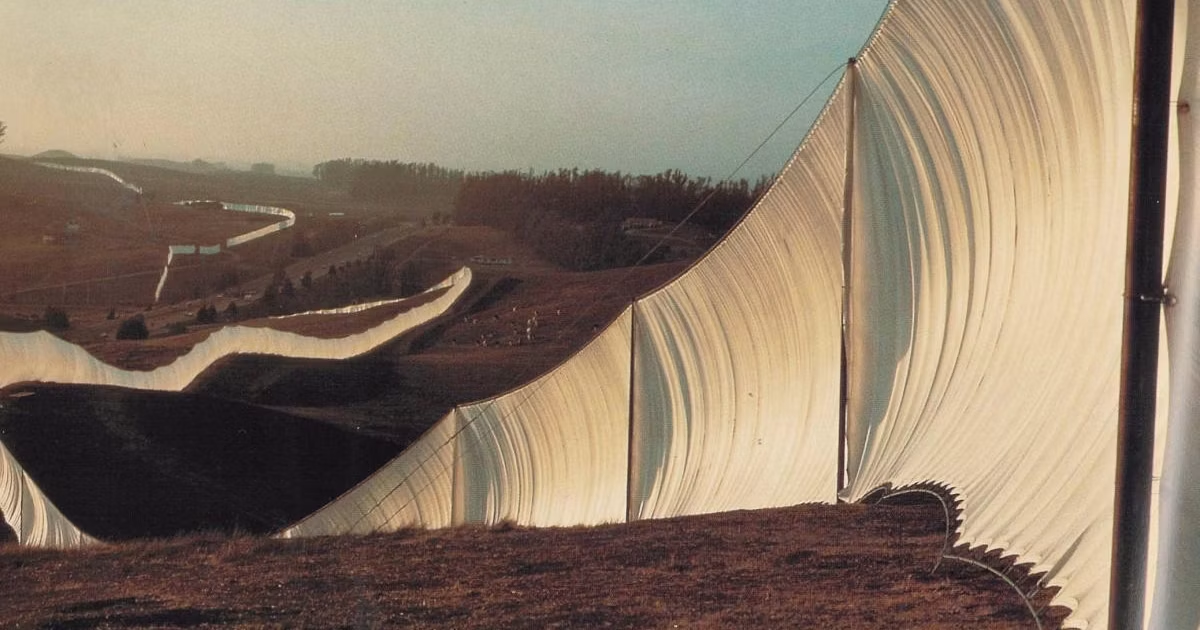 Photo Credit: Visit Santa Rosa
Eager To Learn More?
Building brand moments that genuinely outlast their campaign window takes more than a single activation. These related Hollywood Branded reads explore what makes experiential marketing actually stick:
- How Brands Are Using Experiential Marketing
- The Marvelous Marketing Value of Pop-Up Activations For Brands
- KICK IT! FIFA World Cup 2026: A Brand Playbook for the Global Moment
- From Hype to Longevity: How Strategic Collaborations Fuel Winning Brands
- The Olympic Sponsorship Ladder: Entering the LA 2028 Marketing Game
Want to stay in the know with all things pop culture? Look no further than our Hot in Hollywood newsletter! Each week, we compile a list of the most talked-about moments in the entertainment industry, all for you to enjoy!