Quick Answer
Dua Lipa’s $15M Samsung lawsuit shows celebrity association drives sales. Learn what brands must clear before using any celebrity image or footage.
Why Is Dua Lipa Suing Samsung Over a TV Box?
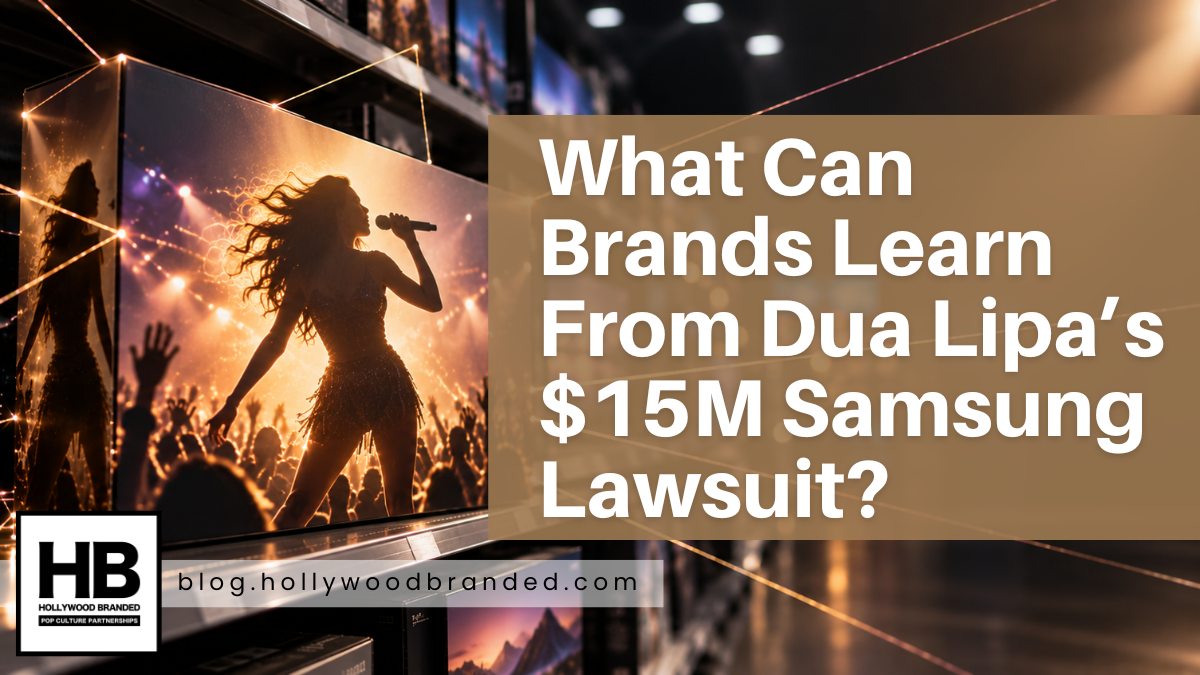
One fan's public post summed it up perfectly: "If you need anything selling just put a picture of Dua Lipa on it." That post is now part of the evidence in Dua Lipa's $15 million lawsuit against Samsung, filed in May in federal court in California, which claims the electronics giant put her image on TV packaging without permission and refused to stop when her team asked.
According to the complaint, Samsung had no endorsement agreement with Lipa, yet its own potential customers said publicly that her face made them want the TV. For brand marketers, that turns this case into more than a legal headline, because it is an accidental case study in celebrity endorsement ROI and a warning about how easily rights clearance goes wrong. In this article, Hollywood Branded shares what the Dua Lipa Samsung lawsuit teaches brands about celebrity association, licensing gaps, and how to build celebrity partnerships the right way.
Does Celebrity Association Really Drive Purchases?
The entertainment marketing industry has spent years building models to measure what celebrity association is worth, from awareness lift to purchase intent scores. All of that work exists to answer the question brand teams hear in every budget meeting: does this actually move product? In the Samsung case, the answer came from Samsung's own potential customers, posting on a public platform without a brand survey in sight. One fan wrote that they would "get that TV just because Dua is on it," while another joked that her picture could sell anything. These reactions were completely unprompted, which is exactly what makes them so revealing for marketers.
The mechanism behind those reactions is not complicated. When consumers see a celebrity they admire associated with a product, the positive feelings they hold toward that person transfer to the brand. It does not matter whether the celebrity chose the product, endorsed it, or ever touched it, because people tend to read proximity as endorsement.
This is the same mental shortcut that has powered product placement for decades, where a brand appears in the right context and audiences quietly draw their own conclusions. Samsung did not build this association through a campaign, since a backstage festival photo simply ended up on a box and people still responded to it. That should get the attention of every brand that underinvests in celebrity partnerships because measurement feels difficult or the deal feels expensive.
 Photo Credit: Variety/Dua Lipa's Complaint
Why Doesn't Licensing Content Clear Everyone in It?
Samsung's position is that the image came from a content partner for its free streaming service, Samsung TV Plus, and was used to promote programming available on the TV. The box showed Lipa alongside channel and partner logos including Xite Hits, MLB, Fox Sports, and The First 48, and Samsung says the partner assured it that all permissions had been secured. That is a legitimate argument, because TV makers and streaming platforms license imagery constantly, from concert footage to film stills, to show off what plays on their screens. If Samsung believed it was using licensed concert content, it would not have thought it needed a celebrity endorsement deal. This is exactly where things get complicated, and it is where Hollywood Branded sees brands trip up again and again.
Licensing a piece of content does not automatically clear everyone who appears in it. When a brand licenses a film clip for advertising, it still has to go to the talent's agents and representatives to confirm whether additional rights or fees are owed to the actors. If there is music in the clip, that requires a separate sync license plus the rights to the master recording itself.
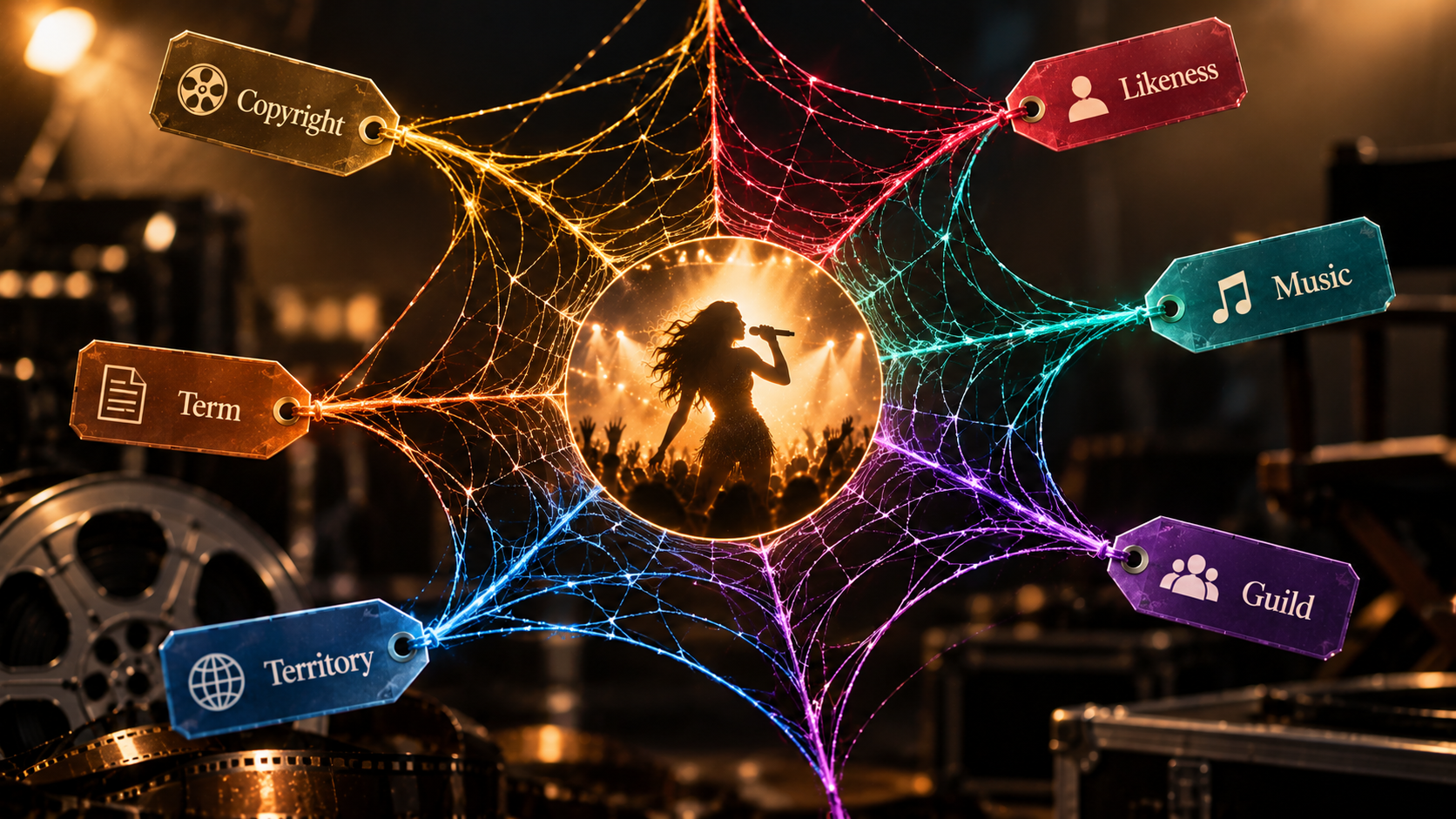
Think of licensing content like buying one strand of a spider web, where every other strand still belongs to someone else, and finding every rights holder can take real detective work. In this case, the complaint says Lipa owns the copyright to the photo herself, taken backstage at Austin City Limits in 2024, which means whoever handed it to Samsung may not have had the rights to give in the first place. Entertainment rights are layered across copyright, publicity rights, guild terms, music licensing, territory, and term, and even a company with Samsung's legal resources ended up in federal court over a single image on a box.
What Would a Properly Structured Celebrity Deal Have Looked Like?
The gap between what happened here and a properly structured deal goes well beyond legal compliance, because it is the gap between borrowed equity and owned equity. Celebrities are not public domain assets, and a photo from a performance is not a license to use that person's image in commercial advertising. The right of publicity governs how a person's name, likeness, and identity can be used commercially, and California, where Lipa filed, has one of the stronger frameworks in the country. A legitimate celebrity partnership agreement covers usage rights, exclusivity, territory, duration, and the specific assets being licensed, which creates accountability in both directions. The cleaner path for Samsung would have been a direct relationship, such as a tour sponsorship, where rights to use concert footage and stills in advertising are typically negotiated as part of the deal.
With that structure in place, a brand gets activation rights on top of legal protection, and a proper agreement could have supported a full campaign built around social content, a co-branded announcement, and press around the partnership itself. Instead, according to the complaint, Samsung was dismissive when Lipa's team asked for the image to be removed, and in September the company asked the court to dismiss the case. Samsung argues that Lipa cannot hold a trademark in her own face, that the packaging never presented her as a spokesperson, and that the fan posts are social media hyperbole rather than proof of perceived endorsement.
That argument may hold up in court, but in entertainment marketing, unprompted fan enthusiasm like this is exactly what brands invest real money to generate. The complaint also describes Lipa as highly selective about brand partnerships, noting her work with brands like Puma, Versace, and Yves Saint Laurent, which means Samsung now has a lawsuit where a relationship might have been. A photograph on a box is the floor, an integrated campaign with full activation rights is the ceiling, and the motion to dismiss is scheduled to be heard on December 14.

What Should Brands Check Before Using Any Celebrity Image or Footage?
Before anything featuring talent ships on a package, billboard, or social post, brands should run a clearance check on every rights layer. These questions reflect how Hollywood Branded clears partnerships every day, and they apply whether the asset is a photo, a film clip, or concert footage. How the advertising runs also affects which rights you need, because putting paid media behind a post, often called boosting, turns it into advertising. Guild and union terms are often the biggest surprise, since SAG-AFTRA pension and health contributions can add up to 30 percent to the cost of an endorsement deal. Smart structuring, such as choosing digital over linear placement or adjusting the campaign term to stay within bundled usage periods, can help brands manage those costs or decide when it makes sense to cover all usage rights.
What Is on the Celebrity Rights Clearance Checklist?
- Who owns the image or footage itself: the photographer, the studio, the label, or the artist?
- Does your license cover advertising use, or only editorial or in-platform display, and for how long?
- Has the talent's team signed off on commercial use of their likeness, separate from the content license?
- Is there music in the asset that requires a sync license plus master recording rights?
- Do guild or union terms trigger additional payments when the footage runs in advertising, and can you provide detailed reporting on where your media ran?
- What territory, term, and channels does the clearance cover, and does the deal include a sell-off period for packaging still on shelves after the term ends?
The sell-off period deserves special attention for packaged goods brands. Retailers cannot pull product off shelves overnight, so an agreement without a sell-off window can put a brand out of compliance the moment the term ends. The same thinking applies to digital assets, where content can live on websites and social feeds long after a campaign wraps. Every rights holder needs to sign off on their own piece, and that includes the person whose face is on the box. If any answer on this checklist is "we think so," the asset is not cleared yet.

How Can Brands Invest in Celebrity Partnerships the Right Way?
The Dua Lipa Samsung lawsuit is a cautionary tale about rights, and it is also a reminder of something brand teams often underestimate. Celebrity association carries commercial value even when it is passive, unsanctioned, and never intended to sell a single television. Properly licensed and fully activated, that same association becomes something a brand can build on, extend, and own instead of defending in court. Brands that treat celebrity partnership budgets as optional or too risky are often the ones that have never measured what the association can drive. Whatever the court decides on December 14, the takeaway for marketers is already clear: invest in celebrity partnerships, and do it with every rights holder signed off.
For marketers, the practical lessons are straightforward. Treat every piece of talent content as a stack of rights rather than a single license, and confirm publicity rights directly with the talent's team. Build agreements that cover usage, exclusivity, territory, term, and sell-off, then use those rights to activate a full campaign rather than a one-off placement. If your team is planning to use talent, footage, or music anywhere in a campaign, talk to Hollywood Branded before it ships. Clearing rights is built into how we approach every partnership, from Playbook → Radar → Unlock Access → Produce → Amplify → Grow.
Eager To Learn More?
Want to go deeper on celebrity partnerships and how brands put star power to work? These Hollywood Branded articles are a great next read:
- How Celebrity Endorsements & Product Placements Shape Pop Culture
- Branded Celebrity Partnerships And Mistakes To Avoid
- How Hollywood Celebrities Are Used For Global Endorsements
- Celeb Endorsement Ads: Mobile Strike, Nespresso, Smirnoff, Foot Locker
- Hollywood Branded's Top 10 Partnerships of 2024
Want to stay in the know with all things pop culture? Look no further than our Hot in Hollywood newsletter! Each week, we compile a list of the most talked-about moments in the entertainment industry, all for you to enjoy!