Quick Answer
Music partnerships build brand memory ads can’t. Learn how lyrics, music videos and concerts drive lasting recall and how to measure what they deliver.
Why Do Music Partnerships Outlast One-Time Placements?
When a brand treats music as a one-time placement, it gets a moment, but when it builds a real relationship with an artist and their fans, it gets something that keeps paying it back for years. Apple proved the value of that difference in 2014 when it bought Beats for $3 billion, a brand that years of music videos, courtside seats, tunnel walks, and backstage moments had already built into the culture.
Most marketers still measure music partnerships like billboards, counting impressions that show who saw a brand but say nothing about what the brand became attached to. Science now explains what entertainment marketers have watched happen for decades: music reaches people physically and emotionally, and brands that are part of that experience get remembered with it. In this article, Hollywood Branded discusses how music partnerships build lasting brand memory, from lyrics and music videos to live concerts, and how to measure what they deliver.
Why Does Music Affect Consumers Differently Than Traditional Ads?
Music is one of the few forms of media that people feel physically before they process it intellectually. A listener's heart rate picks up, breathing shifts, and chills can arrive before they have even decided whether they like the song. A 2024 study published in PLOS ONE supported this, finding that when music felt pleasurable to listeners, their heart rates rose along with activity in the anterior insula, the region of the brain that reads what is happening inside the body. For brands, that means a presence inside a music moment reaches people who are already engaged and feeling something. A 15-second pre-roll, by contrast, usually reaches people who are hunting for the skip button.
Memory is the second half of the effect, because nobody stores a song by itself. Songs get filed alongside a specific year, relationship, road trip, or summer, and every replay brings those memories back along with any brand that was part of them. Ray-Ban in Top Gun is the classic example, with Tom Cruise wearing aviators throughout the 1986 film while "Danger Zone" drove the soundtrack, and aviator sales reportedly rose about 40 percent afterward.
The aviators also appeared in Kenny Loggins' music video, and forty years later, aviators and a bomber jacket remain the go-to Maverick costume, usually with "Danger Zone" playing nearby. We call this legacy advertising: a media buy is rented attention that ends when the flight ends, while a brand built into entertainment keeps living in reruns, streaming, and every article written about it, and music makes that effect even stronger because people choose to hear the same song again and again.
Video credit: Kenny Loggins / YouTube
What Happens When a Brand Name Ends Up in a Song Lyric?
A lyric mention is the memory effect at full volume. Busta Rhymes released "Pass the Courvoisier, Part II" with P. Diddy and Pharrell in 2002, and the track hit No. 1 on Billboard's R&B chart. Allied Domecq, which owned Courvoisier at the time, said it never paid for the song and called it a flattering surprise, while trade press that spring reported US consumption of the cognac climbing as the track took off. Overnight, the brand lived inside an earworm that millions of people repeated in the car, at parties, and in their heads throughout the week. Every repetition paired the brand name with the pleasure of the song, which goes beyond advertising and into conditioning.
Hip-hop built an informal economy around lyric mentions long before most brand managers understood it, and Jay-Z's references helped make Cristal shorthand for luxury for a generation of consumers. In 2006, Cristal's managing director made comments to The Economist that many read as dismissive of the hip-hop fans driving the brand's growth. Jay-Z called for a boycott and moved on to Armand de Brignac.
The lesson for CMOs is that Cristal had been benefiting from cultural equity it never invested in, so when that equity was tested, there was no relationship to fall back on. We see versions of this often, when a brand treats a lucky organic moment as a windfall instead of a starting point and never builds the partnership that would have protected it.

How Do Music Videos and Live Concerts Strengthen Brand Recall?
Music videos encode a brand twice, because the brain processes the song and the image at the same time, and when both carry the brand, the memory is stronger. Placement in music videos follows the same rules as film and TV with one big difference: the viewer is already inside a physical response to the music when the brand appears. Beats understood this early, seeding headphones with artists so widely that they began showing up in videos by choice, which is the strongest version of any placement. By the time most consumers bought a pair, the product was already tied to creativity, performance, and cultural identity across years of footage. Getting there takes real creative alignment with the artist, because artists can tell when a brand actually understands them, and so can their fans.
Live music takes the effect even further by synchronizing the audience. A 2023 study published in Scientific Reports tracked 132 audience members across three chamber music concerts in Berlin and found that their heart rates, breathing rates, and skin conductance synchronized as the music played.
That is the logic behind naming rights, such as Crypto.com's 2021 deal for the former Staples Center in Los Angeles, where the real value lies in the thousands of concerts, games, and nights out that now carry the name in people's memories. Concert integrations work the same way at a smaller scale, through brand-presented backstage access, meet-and-greets built around a product moment, or pre-show lounges open only to cardholders. American Express has built much of its entertainment marketing on this idea, using presales and cardmember-only experiences so the card gets credit in the memory of the show. A logo on event signage and a brand that shapes how the night feels can cost the same, but they do not deliver the same return.

How Should Brands Measure the Success of a Music Partnership?
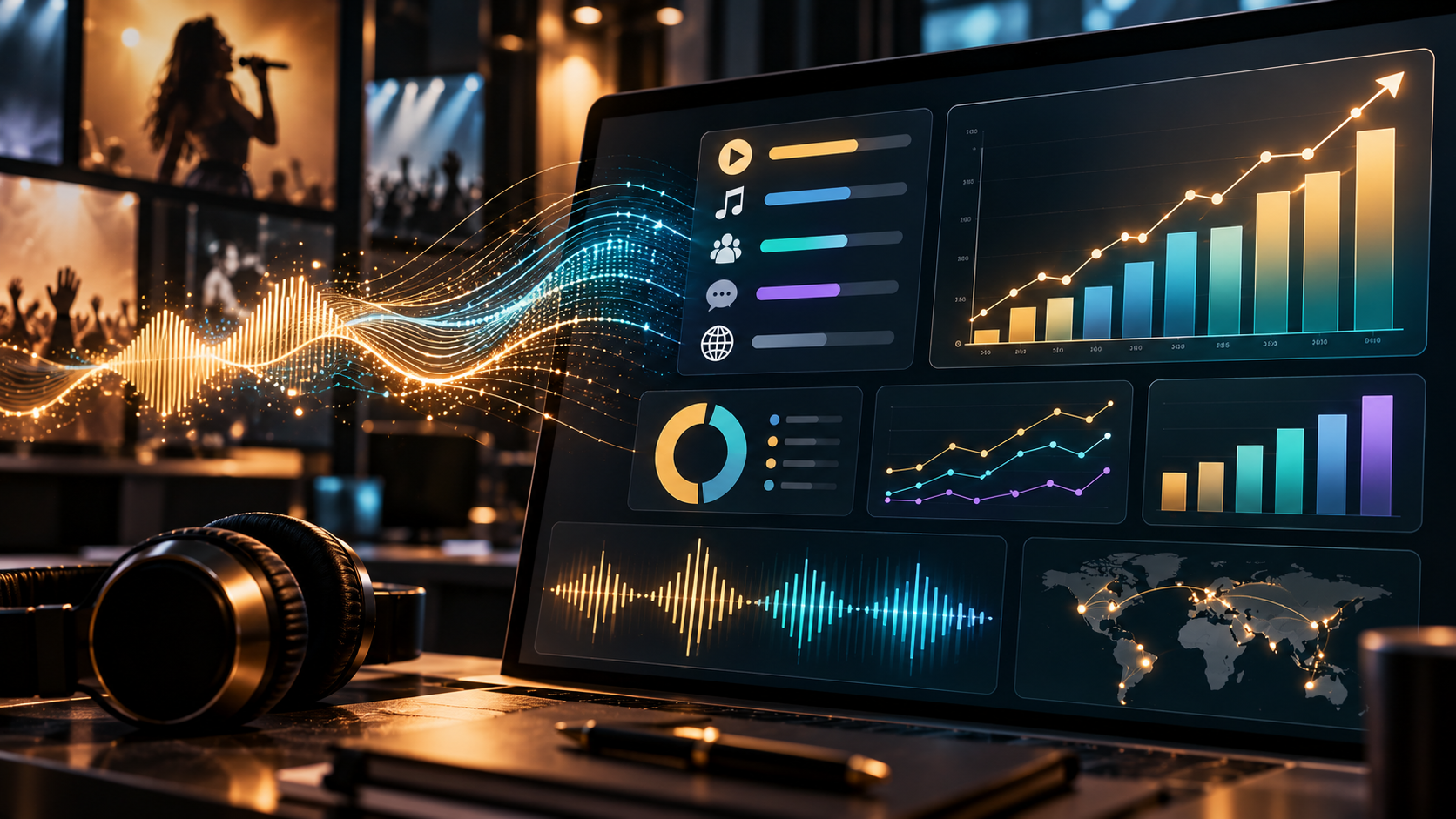
Impressions are often the biggest numbers connected to a music partnership, but they should not lead the conversation. Impressions show who saw a brand, yet they reveal nothing about what the brand became attached to or whether that connection lasted. Most brand budgets are still built around attention, and consumers guard their attention by skipping and scrolling past ads. Music earns exposure differently, because it reaches people through something they already invited in, such as a song they chose, a show they paid for, or a soundtrack they replay. To capture that value, brands need metrics that track memory, repetition, and behavior over time.
These are the numbers that actually tell you something:
- Unaided recall tied to the song, video, or event
- Branded search lift during and after release or tour windows
- Repeat exposure over time, including streams, rewatches, and setlist plays
- Sales or sentiment lift in the release window, measured against a clear baseline
- Earned and organic mentions, the Courvoisier effect
How Can Brands Build Music Partnerships That Keep Paying Off?
Music partnerships work because they reach people physically, attach brands to memories, and keep delivering exposure every time a song, video, or concert moment is replayed. The brands that win in music, like Beats, treat a placement as the start of a relationship rather than a one-time buy, while Cristal shows what happens when cultural equity is left unprotected. The difference rarely comes down to budget. It comes down to creative alignment with the artist, a willingness to give up some control, and the patience to build a partnership over time. For marketers, the takeaway is to stop buying music as media space and start building it into the brand's long-term story.
If your brand is ready to find where it fits in music, start with the Hollywood Branded Playbook.
Eager To Learn More?
Ready to hear more about how brands and artists build partnerships that last? These Hollywood Branded articles are a great next listen, or rather, read:
- Why Brands And Music Are Such Perfect Partners For Sales Success
- Brand Partnerships Increase Product Placement In Music Videos, Lyrics
- How To Get Your Brand In A Music Video
- How To Reach A Global Audience Through Music Video Partnerships
- How To Leverage Music Videos For Branded Content Partnerships
Want to stay in the know with all things pop culture? Look no further than our Hot in Hollywood newsletter! Each week, we compile a list of the most talked-about moments in the entertainment industry, all for you to enjoy!